Reverse Osmosis Water Filters on Sale for Emergency Prep
Aug 31, 2026
Reverse osmosis water filters are a common pick for preppers who want reliable, point of use drinking water. They are not cheap up front, but sales and smart comparison can make a quality unit affordable for a family emergency plan. This guide focuses on what matters for prepping: daily output, ongoing filter costs, installation effort, off grid considerations, and how to vet Amazon and big box discounts so you do not buy a bad deal.
What to prioritize when an RO system is on sale
- Output capacity and real world flow. Look for rated gallons per day or GPD. A 50 GPD unit can supply drinking and cooking water for a household in normal conditions, but peak needs or filling storage will take time. Consider peak fill tasks when sizing for prep use.
- Replacement filter and membrane costs. The initial sale price is only part of the equation. Pre filters, carbon filters, and the RO membrane each have replacement intervals and costs. Budget for annual maintenance before deciding.
- Waste water and recovery. All RO systems produce reject water. More efficient units save water but may cost more or need a booster pump. For prepping, plan where reject water will go or collect it for nonpotable use.
- Installation complexity. Countertop units and some under sink kits are DIY friendly. Whole house RO systems or models that need a booster pump or dedicated drain line may require a plumber.
- Off grid compatibility. Most RO systems need water pressure and sometimes electricity for pressurized pumps. If you plan to use one off grid, select a model compatible with a 12 volt or solar powered booster pump or consider manual/portable alternatives for field use.
- Certifications and contaminant claims. NSF or ANSI certifications offer assurance about what a system actually removes. For prepping, prioritize systems that list common contaminants of concern in your area and include membrane type.
How to evaluate a sale so you do not get fooled
- Check historical prices. A displayed sale price is meaningful only if you know the baseline. Use price trackers or the seller's price history where available. Sudden category-wide price inflation followed by a “discount” is a common retailer tactic.
- Confirm the exact model and parts. Sellers sometimes show a name brand but ship a different model or a more limited parts kit. Match SKU or UPC numbers and read the fine print about included filters and warranties.
- Watch for bundled upsells. Coupons that require purchasing an expensive filter bundle can look like a deal. Verify one time price versus the required bundle price before clicking buy.
- Check seller reputation. On marketplaces, note whether the offer is sold by the brand, a third party, or the marketplace itself. Return policies and warranty support differ between seller types.
- Factor shipping and returns. Heavy systems can have high freight costs or restrictive return windows. A low sticker price followed by high shipping is not a deal for prepping purchases.
Quick math: compare cost per gallon under sale prices
Cost per gallon gives context to the upfront expense. Use this simple formula:
- Total first year cost = sale price of system + expected first year filter replacements
- Annual gallons produced = estimated daily use times 365
- Cost per gallon (year one) = Total first year cost divided by Annual gallons produced
Example calculation (illustrative):
- Sale price: $250
- First year replacement filters: $120
- Daily use for drinking and cooking: 100 gallons per month equals about 1,200 gallons per year
- Year one cost per gallon = (250 + 120) / 1,200 = 0.31 dollars per gallon
- Ongoing annual cost per gallon after year one = 120 / 1,200 = 0.10 dollars per gallon
This shows how the initial purchase drives up the first year per gallon cost but that ongoing maintenance is the recurring driver. Run the numbers with your household use estimates to compare sale offers fairly.
Practical tips for prepping use and off grid scenarios
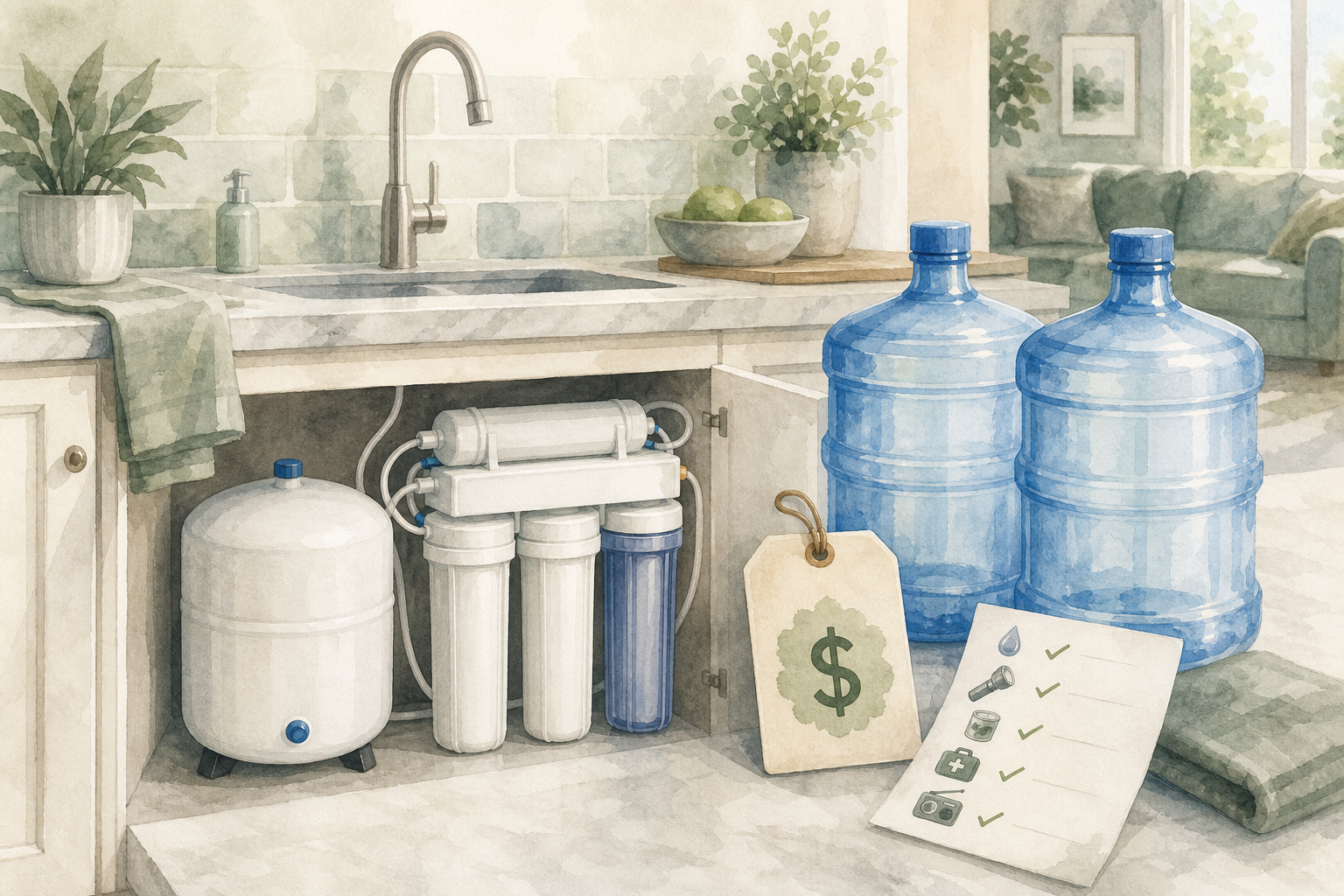
- Plan storage with your RO. RO systems are point of use. For emergency readiness, pair the RO with food grade water storage jugs or barrels. Fill storage during normal operation so you have reserve potable water without needing to run the RO during a crisis.
- Stock spare filters and a membrane. When a sale on a system is good, also check the price of replacement filters. It is often worth buying a spare set while the discount is active.
- Consider a booster pump or solar kit. If your household water pressure is low or you want to run an RO off grid, plan for a booster pump that can run from a 12 volt source or a solar inverter. Confirm compatibility before buying.
- Collect reject water. Use reject water for flushing toilets, cleaning, or irrigation. That practice extends overall water utility for a prepper household.
- Define critical use cases. Use RO for drinking and cooking water quality concerns. For large volume emergency needs, combining RO output with stored water is more practical than relying solely on continuous RO production.
Buying checklist for families when an RO is on sale
- Confirm model SKU and included filters.
- Verify seller, warranty, and the return policy.
- Check replacement filter and membrane prices and estimated replacement interval.
- Estimate household daily gallons and run cost per gallon math.
- Decide installation path: DIY under sink, counter top, or pro-installed whole house.
- Plan off grid needs: booster pump, solar compatibility, and power source.
- Buy spare filter set if the sale makes it cost effective.
Seller-specific deal checks for Amazon and big box retailers
- On Amazon: Compare the listing to manufacturer pages, check the seller name and fulfilled by Amazon status, and look at recent reviews for delivery or product mismatch complaints. Use price history tools to ensure a sale is real.
- At big box stores: Confirm model numbers on the shelf and online listing. In-store clearance can be a true deal but check return and installation support policies.
- Watch for fake discounts: Coupons or lightning deals that require add-on purchases can mask the true per component cost. Always recalculate effective price per included filter and per expected yearly maintenance.
Short FAQ
- Is reverse osmosis water good for long term drinking? RO water is effective at removing contaminants and is widely used for drinking water. It also removes some minerals, which affects taste. For long term use, some people add a remineralization stage or ensure a diet that supplies essential minerals.
- What are the main downsides of RO systems for prepping? Main considerations are upfront cost, waste water, and dependence on pressure and potentially electricity. Those limits are manageable with proper planning and storage.
- How often do filters need replacing? Prefilters and carbon filters often need replacing every 6 to 12 months depending on use and water quality. RO membranes typically last 2 to 5 years. Check manufacturer guidance and local water conditions.
- Can an RO be used off grid? Yes, with the right configuration. Many RO units need adequate water pressure. A booster pump that runs on 12 volts or a solar power solution can make off grid use practical. Alternatively, consider gravity or portable filtration for field use.
Choosing an RO while it is on sale is a balance between the upfront discount and the long term running costs. Practical buyers compare sale price, replacement costs, and real output to decide whether the sale is meaningful for their prepping plan. For time sensitive deals, it helps to have a quick checklist and the cost per gallon math ready so a buying decision is fast and evidence based.
BestPrepping.Deals is built to speed that work. When reverse osmosis systems or replacement filter packs go on meaningful discount, the feed highlights the sale price, seller source, and percentage off so you can run the checks above and buy with confidence.
Discover More Featured Deals
Explore our hand-picked selection of the best deals, curated daily just for you.