Why the new food pyramid matters for your emergency pantry
Sep 07, 2026
Why the new food pyramid matters for your emergency pantry
The recent shift to the new food pyramid refocuses nutrition on high quality protein, dairy, healthy fats, vegetables, fruits, and whole grains. For preppers that often measure readiness in calories and shelf life, the new food pyramid is a useful tool to rethink what should fill pantry shelves. This article turns that guidance into a practical emergency-food rotation plan you can build on a budget.
What changed and why it matters for stored food
The new food pyramid puts nutrient-dense foods at the top and less nutritious foods lower down. That means, for emergency planning, prioritize shelf-stable sources of protein, dairy, healthy fats, fruits, and vegetables ahead of empty-calorie options. The result is better endurance, less reliance on supplements, and more palatable meals during a prolonged disruption.
Shelf-stable items mapped to each food group
Below are practical shelf-stable picks that match the new food pyramid food groups. Use these as building blocks for family-sized packs and rotating supplies.
- Protein: canned tuna and salmon, canned chicken, canned beans and lentils, freeze-dried meat entrees, ready-to-eat pouches, protein bars, powdered eggs, MRE entrees.
- Dairy and dairy equivalents: shelf-stable UHT milk, powdered milk, shelf-stable evaporated or condensed milk for cooking, powdered whey or casein, shelf-stable cheese spreads and shelf-stable yogurt pouches when available.
- Vegetables: canned vegetables, vegetable soups, freeze-dried vegetables, tomato products, vegetable powders, pickled vegetables with long shelf life.
- Fruits: canned fruit in juice, freeze-dried fruit packs, dried fruit, applesauce cups, fruit purées.
- Healthy fats: olive oil in shelf-stable bottles, canned coconut milk, ghee in jars, nut butters in jars or pouches, shelf-stable trail mixes with nuts.
- Whole grains and complex carbs: instant oats, steel-cut or rolled oats, brown rice, quinoa, whole grain pasta, whole grain crackers, high-fiber instant cereals.
- Seasonings and extras: salt, pepper, bouillon, honey, long-life vinegar, hot sauce, multivitamins for gaps, powdered drink mixes for electrolytes.
Simple rotation rules that reduce waste and keep nutrition fresh
Rotation keeps your food edible and your diet balanced. Use these rules to make rotation an easy habit rather than a chore.
- First In, First Out: label new items with the date received or purchase date. Move new stock behind older stock on the shelf.
- Monthly check: quick scan for swollen cans, torn packaging, or near-expiry items. Use or repackage the closest-to-expire products first.
- Quarterly taste test: open one or two shelf-stable items from each food group and cook them as intended. This prevents surprise texture or flavor problems later.
- Annual deep rotation: plan a cook-through weekend to use items that will expire within 12 months and replace with current stock.
- Labeling system: simple numbered stickers or a white permanent marker work fine. Keep a master list on the pantry door.
Build a balanced 72-hour family pack on a budget
Below is a conservative, balanced sample for a family of four for 72 hours. It focuses on variety, nutrition, and cost efficient choices you can find on major retailers during sales.
- Breakfast: instant oats with powdered milk and freeze-dried fruit; instant coffee or tea.
- Lunch: canned chicken or tuna with whole grain crackers and a nut butter packet; fruit cup.
- Dinner: freeze-dried or canned stew with added rice or pasta; canned vegetables on the side.
- Snacks: protein bars, trail mix, dried fruit.
- Hydration and extras: bottled water or water treatment tablets, electrolyte drink powders, salt, basic seasonings.
Buy smaller, ready-to-eat packs for quick meals and larger cans or bulk items for rotation into regular meals. Freeze-dried entrees are lightweight and shelf stable, but canned proteins and beans are often cheaper per serving and easier to rotate into family meals without specialty equipment.
Budget shopping checklist for a 2-week bug-in pantry
Use this checklist to prioritize purchases. Start with proteins and shelf-stable dairy, then add fruits, vegetables, and whole grains.
- Proteins: 8 to 12 cans of mixed proteins, 6 to 8 packs of protein bars or pouches.
- Dairy: 6 to 8 quarts of shelf-stable milk or equivalent powdered milk containers.
- Vegetables and fruits: 12 to 16 cans or equivalent freeze-dried packs split between vegetables and fruits.
- Grains: 5 to 10 pounds total of rice, pasta, and oats; whole grain crackers for variety.
- Fats and condiments: 1 bottle olive oil, 2 jars of nut butter, salt and pepper, small spice set.
- Hydration and medical: water supply plan plus treatment method, electrolyte mix, basic first aid and two-week supply of any prescriptions.
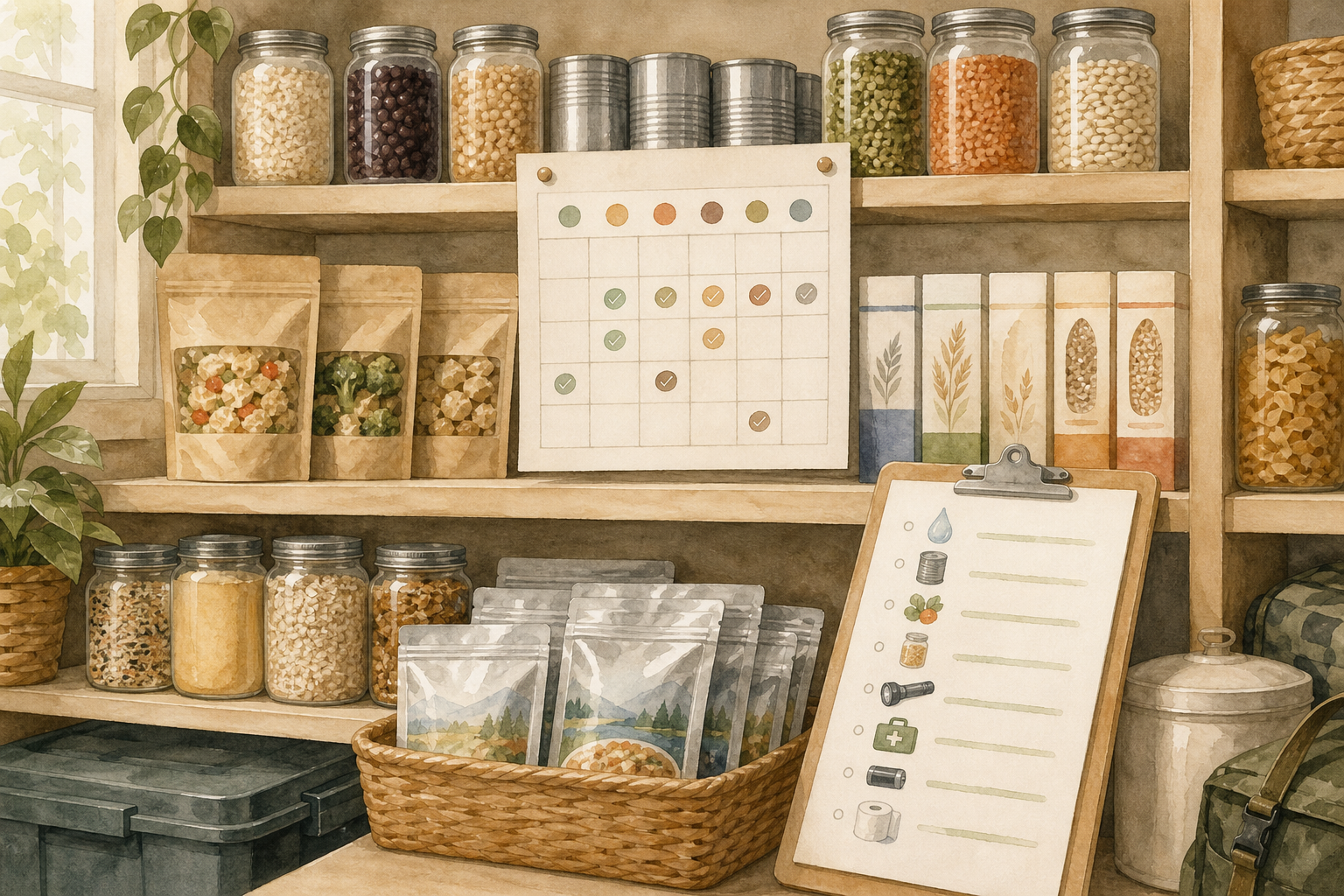
- Rotation supplies: labels, permanent marker, clipboard or printable rotation calendar, storage bins.
Rotation calendar - a simple schedule you can follow
This calendar is intentionally simple. Print it once, pin it to a pantry shelf, and check the boxes.
- Weekly: quick visual check for leaks or damaged packaging.
- Monthly: update dates on newly received items, move older items forward.
- Quarterly: use two items from each food group and replace them.
- Annually: full inventory, cook-through the soon-to-expire stock, replenish to baseline levels.
Smart saving tips and where AI helps
Stretching a prepping budget means buying at the right time and choosing the right format. Consider these practical saving moves.
- Buy canned proteins and beans in bulk during store sales for regular rotation items.
- Use freeze-dried entrees for lightweight emergency kits and canned goods for home bug-in supplies.
- Buy variety packs when available to cover multiple food groups without separate single-item purchases.
- Watch for markdowns on shelf-stable dairy alternatives and protein bars that are near but not past a usable date for rotation use.
- Search AI-curated deal feeds to find meaningful discounts quickly rather than scanning dozens of product pages. Fast deal discovery saves time and keeps costs down when restocking.
Practical storage and nutrition notes
Store food in a cool dry place away from sunlight. For long-term storage, rotate humidity-sensitive items and keep oxygen absorbers in sealed containers when repackaging. Pay attention to sodium and sugar levels. The new food pyramid values whole foods, so when possible choose low-sodium canned beans and unsweetened freeze-dried fruit to keep meals healthier.
From a founder perspective, building an automated feed that surfaces verified discounts was a direct response to how time consuming deal hunting can be. The goal is to let families spend less time searching and more time implementing a sensible rotation plan that follows current nutrition guidance.
Where to go next
Start by mapping your current pantry to the food group list above. Create a shopping priority from the checklist and schedule the first monthly and quarterly rotation tasks. When you shop, use curated deal listings to reduce cost without losing quality. Combining the new food pyramid with disciplined rotation will lower waste, improve nutrition, and make your emergency pantry more reliable.
Frequently asked questions
- Can freeze-dried food cover all food groups?
Freeze-dried food covers most groups, especially fruits, vegetables, and entrees. It is lightweight and long lasting. For dairy and healthy fats, you may need to include powdered milk, nut butters, or oil jars to match the pyramid fully.
- How often should I rotate canned goods?
Rotate canned goods annually for long-term stock, and replace items that will expire within 12 months during your annual deep rotation. Monthly checks help catch damaged packaging earlier.
- Is powdered milk a good substitute for fresh dairy?
Powdered milk is a practical and nutritious substitute for many uses, from rehydrating for drinking to adding to cooked meals. Keep some shelf-stable UHT cartons if you prefer ready-to-drink options in short-term situations.
- How do I keep meals palatable during long events?
Rotate in condiments, spices, and different texture sources like crackers or tortillas. A small variety of seasonings and a few high-quality freeze-dried meal options can make a big difference in morale.
For families who value quick, focused restocking, combining a clear rotation plan grounded in the new food pyramid with fast deal discovery can cut cost and time. If saving hours on product search matters, curated deal listings that filter for prepping essentials help translate the plan above into an affordable shopping cart.
Discover More Featured Deals
Explore our hand-picked selection of the best deals, curated daily just for you.