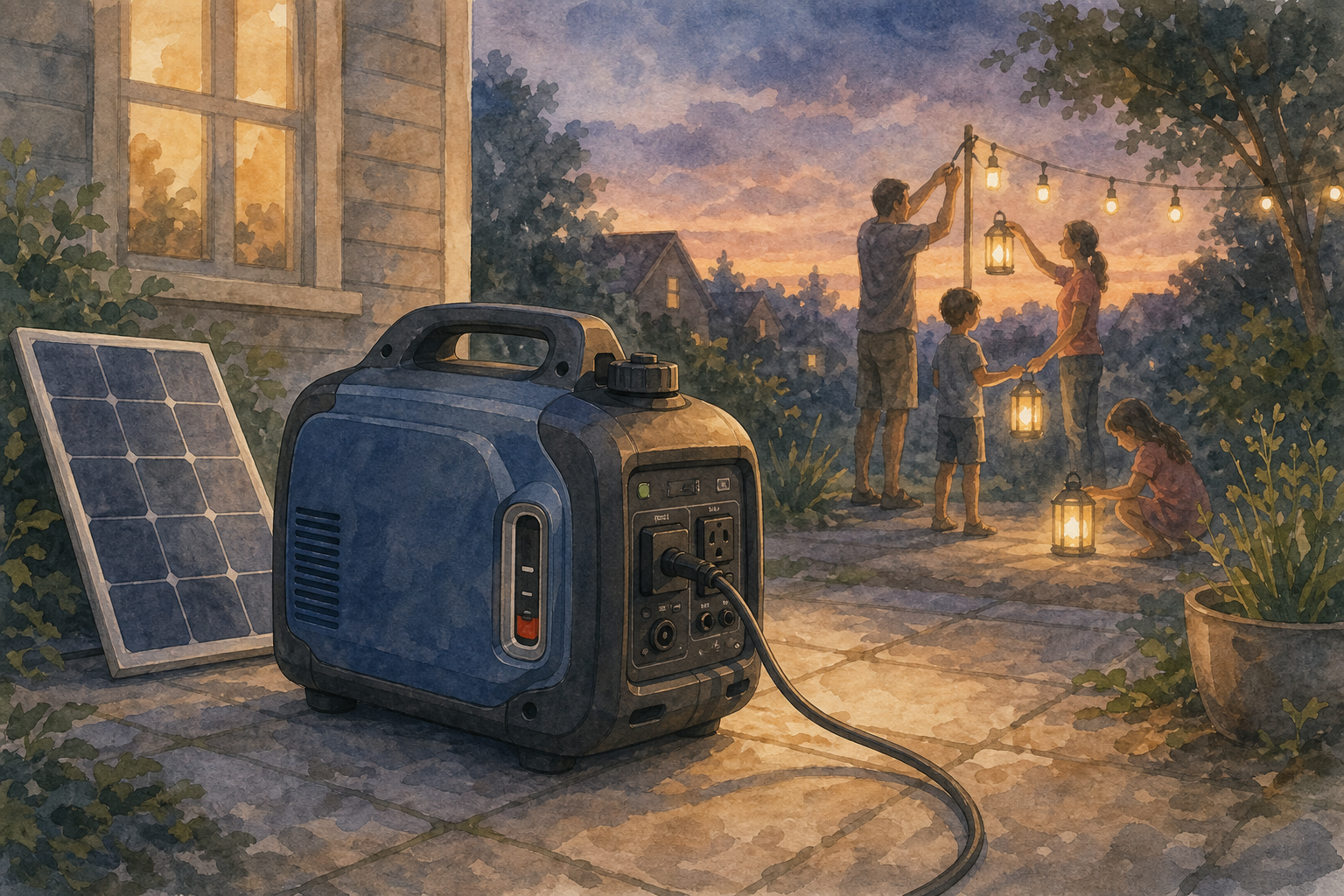
Score Portable Generator Deals for Home Emergency Power
Jul 20, 2026
Portable generators are a high-impact prep purchase. Price and specs both matter, and timing can save hundreds. Below is a concise AI-curated deals roundup format, followed by a practical buyer checklist, three common buyer profiles, tips for pairing a small solar setup, and safe storage guidance you can act on today.
AI-curated portable generator deals - quick picks
Best Prepping Deals scans prep-focused listings daily and surfaces discounted portable generator offers with price history, discount percentage, and retailer source. Prices change frequently. Check the live feed for current clickable offers.
- Example pick 1 - Model name • Discount: shown • Current price: shown • Previous price: shown • Retailer: shown
- Example pick 2 - Model name • Discount: shown • Current price: shown • Previous price: shown • Retailer: shown
- Example pick 3 - Model name • Discount: shown • Current price: shown • Previous price: shown • Retailer: shown
Use the feed to compare discounts across retailers and to confirm spec details before purchase. The AI flag highlights strong price drops and recent listings so you can act quickly on a deal that matches your needs.
Short buyer checklist: choose the right portable generator
1. Figure wattage needs
List essentials you want to run during an outage. Include starting watts for motors like refrigerators and sump pumps. A small fridge may need 700 to 1,200 starting watts. Add starting and running watt totals and size a generator at 20 to 30 percent above that total. That gives headroom without overspending.
2. Fuel type and availability
- Gasoline - Widely available, higher energy density, requires rotation and stabilizer for long term storage.
- Propane - Cleaner storage, longer shelf life in tanks, lower energy density so expect shorter runtime per tank.
- Dual-fuel - Offers flexibility during supply issues but often costs more.
- Battery / inverter systems - Not traditional generators but useful paired with solar or for quiet, low-power needs.
3. Runtime and tank capacity
Look at runtime at 25 to 50 percent load. Longer runtime reduces refueling frequency. For bug-in family use, prioritize models that run 8 to 12 hours on a single tank at typical load.
4. Inverter vs conventional
Inverter generators provide cleaner power for sensitive electronics and are usually quieter and lighter. Conventional portable units are better for raw power and budget buys when noise and weight matter less.
5. Portability and weight
Consider wheels and fold-down handles for home backup. For bug-out or hiking use pick compact, light inverter models under 50 pounds.
6. Outlets and transfer options
Match outlet types to your needs: 120V household outlets, 120/240V for larger loads, and RV-ready TT-30 outlets if applicable. For home integration, plan for a transfer switch or generator interlock and consult an electrician.
7. Safety features
- Automatic low oil shutdown
- CO shutdown or CO alarm monitoring practices
- GFCI-protected outlets if using outdoors in wet conditions
Three buyer profiles and recommended specs
Family bug-in
- Wattage: 3,500 to 7,500 running watts to cover refrigerator, furnace fan, lights, and a few circuits.
- Fuel: Gasoline or dual-fuel for flexibility.
- Features: Electric start, wheels, transfer switch compatibility, decent fuel tank for 8+ hour runtime.
- Tip: Prioritize reliable starting watts for compressors and larger motors.
Lightweight bug-out
- Wattage: 1,000 to 3,000 watts.
- Fuel: Small gasoline or inverter models; consider integrated lithium power stations for silent, fuel-free use.
- Features: Compact weight under 60 pounds, low noise, inverter output for electronics.
Camping and RV
- Wattage: 2,000 to 4,000 watts depending on RV appliances and AC needs.
- Fuel: Inverter generators are popular for quiet operation and clean power for electronics.
- Features: RV-ready outlet options, fuel efficiency, and low-noise mufflers.
Pairing a portable generator with a small solar setup
- Use the generator to charge battery banks or to top up a battery-based inverter when days are cloudy. This lowers runtime and fuel use.
- Prefer inverter generators when charging sensitive battery electronics because they typically provide cleaner AC.
- For hybrid setups, an MPPT charge controller and a proper battery inverter make charging more efficient. Size the generator so it can comfortably keep batteries topped without being run at maximum load continuously.
- Consider charging a portable power station from the generator and then using the power station for quiet, overnight loads.
Safe storage and maintenance tips
- Store fuel in approved containers and use a stabilizer for gasoline if storing more than a few months.
- Rotate fuel every 6 to 12 months and run the generator under load for 20 to 30 minutes monthly to keep it healthy.
- Follow manufacturer oil change and spark plug schedules. Keep a basic maintenance kit and replacement filters on hand.
- Never run a generator indoors. Place it at least 20 feet from doors and windows and direct exhaust away from occupied areas.
Practical buying steps for budget-conscious preppers
- Decide the primary use case and target wattage as a first filter.
- Check AI-curated listings for recent discounts and price history to spot genuine savings.
- Compare similar models for inverter vs conventional, fuel type, weight, and outlets.
- Factor in accessories: transfer switch, heavy-duty cords, fuel stabilizer, and maintenance parts.
- Buy from a retailer with a reasonable return policy and warranty to avoid getting stuck with a DOA unit.
The site's founder started Best Prepping Deals after repeatedly losing time hunting scattered discounts. The daily AI-assisted feed and clear deal snapshots are designed to get you from research to checkout faster while still choosing the right spec for your needs.
FAQ
What size portable generator will run my house?
For whole-house backup you likely need 7,500 watts or more depending on HVAC and appliances. For most families prioritizing essentials, plan 3,500 to 7,500 watts and power only critical circuits via a transfer switch.
Can I run a generator inside my garage?
No. Generators must be run outdoors, away from doors and windows, with exhaust directed away from the home to avoid carbon monoxide poisoning.
Is an inverter generator worth the extra cost?
Yes for electronics and low-noise needs. Inverter units provide cleaner power and are usually quieter and more fuel efficient, which matters for camping and electronics-heavy setups.
Check the live AI-curated portable generator feed at Best Prepping Deals to compare current discounts, see price history, and decide quickly. The goal is to find a model that pairs with your prep plan and stays within your budget without sacrificing safety or runtime.
Discover More Featured Deals
Explore our hand-picked selection of the best deals, curated daily just for you.