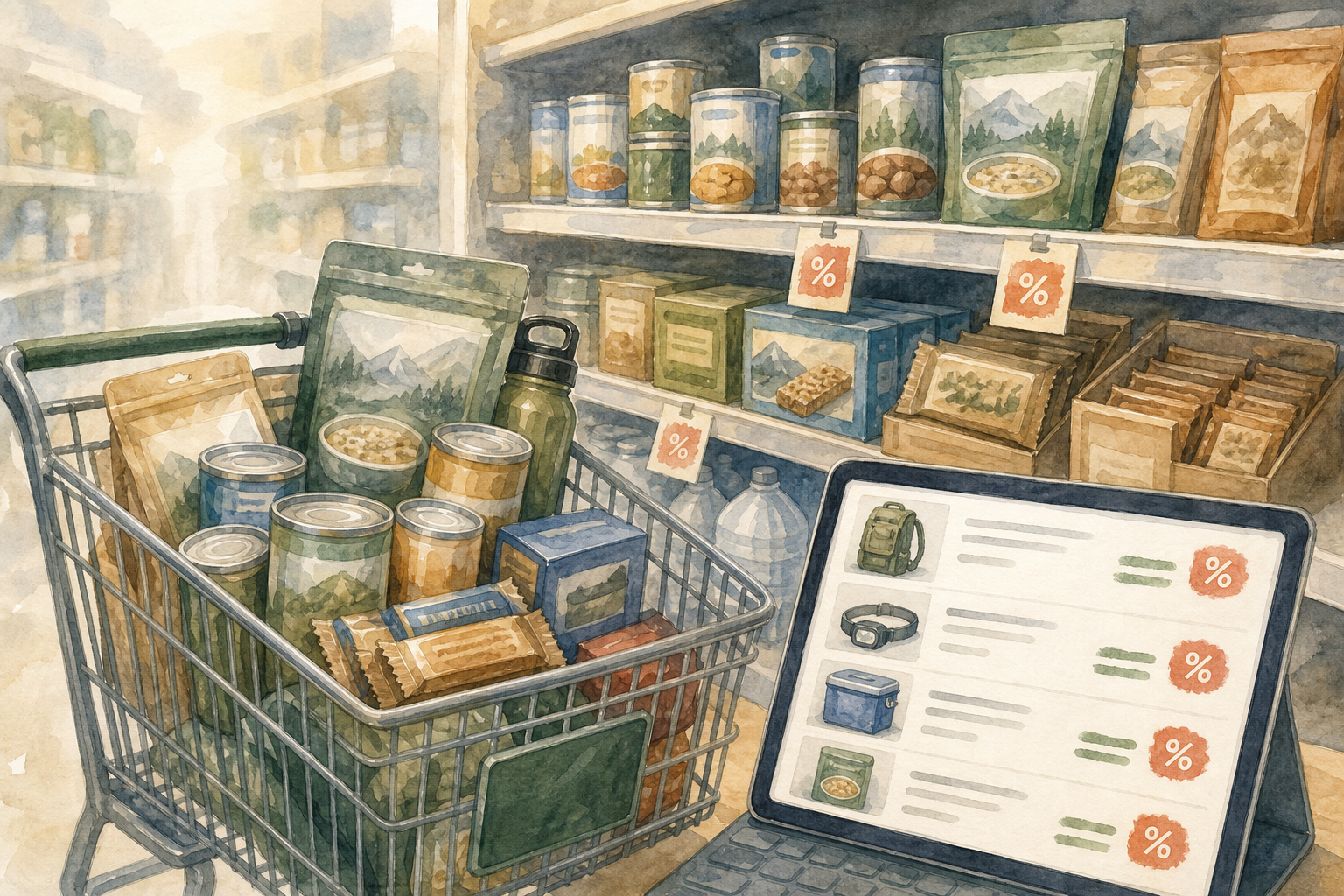
How to Use Giant Food Sales to Build an Emergency Pantry
Aug 07, 2026
Grocery sales at Giant Food are a practical starting point for building an emergency pantry without blowing the budget. This guide walks through timing, smart product choices during common sale cycles, family-size versus single-serve tradeoffs, rotation and storage methods, and how to combine local bargains with online deals for heavier or longer-term items.
How Giant Food sales work and when to shop
Giant Food runs weekly circulars, digital coupons, and loyalty-reward specials that repeat on predictable cycles. Learn the store rhythm and you can plan purchases around the best price windows.
- Weekly ad - New flyers usually drop with a 7-day window. Scan the ad early in the week to pick targets.
- Loyalty and digital offers - Use the Giant app or loyalty card for exclusive discounts and digital coupons you can clip ahead of time.
- Seasonal cycles - Canned goods, baking staples, and bulk items often go on sale near holidays. Summer brings grilling and bottled water deals. Back-to-school and winter prep weeks can trigger discounts on comfort foods and shelf-stable meals.
- Clearance and last-day deals - Check marked-down shelves late in the day and seasonal end racks for deeper discounts on nonperishable lines.
What to buy on sale: a prioritized checklist
Focus on items that store well and move the needle for family preparedness. Prioritize calories, protein, long shelf life, and multipurpose items.
Pantry basics
- Canned vegetables and fruit - rotate regularly for freshness and variety.
- Canned beans and legumes - ready protein and fiber; look for multipacks on sale.
- Pasta and rice - buy larger bags on sale for cost per serving savings.
- Tomato products - canned tomatoes, sauce, paste for flavor bases.
- Dry goods - oats, pancake mix, boxed mashed potatoes.
Proteins and fats
- Canned meats - tuna, chicken, salmon.
- Peanut butter and nut butters - high-calorie, long-stable and versatile.
- Cooking oil - vegetable oil and smaller bottles of olive oil when on sale.
Comfort foods and kid-friendly items
- Instant meals and boxed mac and cheese for fast, easy prep.
- Granola bars and emergency food bars - keep a mix of snacks and denser emergency bars.
- Dry milk or powdered milk alternatives when discounted.
Water and beverages
- Bottled water multipacks for short-term outages.
- Electrolyte drinks and powdered mixes for hydration needs.
Non-food essentials
- Trash bags, paper products, and basic toiletries when on sale.
- Basic first aid supplies and batteries.
- Can openers, disposable plates, and reusable storage containers.
Family-size versus single-serve: choosing what fits you
There is no single right answer. Match packaging to storage, waste tolerance, and household needs.
- Family-size - Better per-unit price and ideal if you will use items regularly and have proper storage. Choose for staples like rice, pasta, canned beans.
- Single-serve - Useful for grab-and-go kits, car stashes, or when you expect limited cooking. Good for snack bars, single-serving soups, and bottled water.
- Mix - Keep a core of family-size staples for daily meals plus a set of sealed single-serve items for evacuation or short outages.
Shelf-stable swaps and smarter buys
When comparing sale items, prefer the version that gives you flexibility and the longest useful life for the intended purpose.
- Swap fresh dairy for powdered or shelf-stable milk when stocking a long-term kit.
- Choose canned fruits packed in juice rather than syrup for fewer added sugars and broader use.
- Opt for vacuum-sealed or retort pouch meals in place of perishable refrigerated options if you need long shelf life.
Shopping strategy - step by step
- Scan the weekly ad and clip digital coupons. Make a short list of priority items with target price points.
- Compare unit price rather than package price to spot real savings.
- Buy multiples of deeply discounted essentials if you have room to store them safely.
- Keep an eye out for BOGO and multi-pack deals; these often deliver the best unit prices for staples.
- Use end-of-day clearance for nonperishables and seasonal overstock.
Storage and rotation: keep it simple and reliable
Good rotation prevents waste and keeps your pantry ready. Aim for easy systems you will actually follow.
- FIFO method - First in, first out. Place newly bought items behind older stock and use the oldest first.
- Labeling - Mark purchase or best-by dates with a permanent marker when you buy bulk items.
- Storage conditions - Keep pantries cool, dry, and dark. Ideal spots are 50 to 70 degrees Fahrenheit if possible. Avoid garages or attics with large temperature swings.
- Pest proofing - Use airtight containers for dry goods and keep sealed packaging to deter pests.
- Inventory checks - Do a quick monthly audit and pull items into weekly meals to rotate stock.
Stretch your budget by pairing in-store bargains with online prepping deals
Grocery sales are best for everyday staples. For bulk water storage, long-term freeze-dried meals, heavy or specialty gear, look online where deep discounts can offset shipping for heavy items.
- Buy canned goods, rice, and pasta at Giant to fill short- to mid-term needs.
- Use curated online deals to stock: buckets of long-shelf-life food, water storage barrels, gravity filters, and high-calorie emergency bars that are less commonly found in-store.
- Track price histories and coupon bundles online before buying large freeze-dried kits. An AI-curated deals feed can save time by surfacing verified discounts across retailers.
Sample 4-week buying plan for a family of four on a budget
This plan assumes weekly trips to Giant with targeted sale purchases and one online order during the month for larger items.
- Week 1: Buy 10 to 12 pounds of rice, two large cans of tomato products, 6 cans of tuna, peanut butter, and a case of bottled water if discounted.
- Week 2: Pick up canned beans, three cans each of mixed vegetables, box of pasta, and instant mashed potatoes.
- Week 3: Stock up on snacks and bars, powdered milk or creamer, cooking oil, and toiletry bulk packs on sale.
- Week 4: Buy comfort items and single-serve meals, plus a multipack of batteries and a basic first aid kit if on sale. Place an online order for one long-term item such as a 72-hour kit or a bucket of freeze-dried meals when a verified deal appears.
Practical founder-level note on efficiency
We built our deal tools to save the time most people do not have for deep price tracking. Combine weekly in-store discipline with occasional online bulk buys and you will cover a lot of readiness ground on a modest budget. Treat local sales as short-term stocking and curated online discounts as the method for long-term, heavier items.
FAQ
How much should I aim to buy during a Giant Food sale?
Buy what fits your storage and rotation plan. For staples, multiples that replace a normal month of use are a good starting point. Avoid overbuying perishables you cannot rotate.
Are sale prices on canned goods trustworthy for long-term storage?
Sale canned goods are fine for long-term storage if packaging is intact and they are stored properly. Check cans for dents, rust, or swelling before purchase and rotate them into regular meals periodically.
When should I choose online vs in-store for emergency food?
Buy everyday staples at the grocery and use online deals for specialized long-shelf-life products, water storage, or heavy bulk that is inconvenient to transport from the store.
How do I track what I already have so I do not overbuy?
Keep a simple list on paper or a notes app with quantities and approximate best-by dates. Do a monthly check and update quantities after each shopping trip.
Using sale cycles at Giant Food to build the core of your emergency pantry is practical and cost-effective. Pairing those in-store wins with targeted online purchases for long-term items gives balanced coverage without overspending. For quick savings on freeze-dried meals, emergency bars, filters, and other prep gear, an AI-curated deals feed can highlight verified discounts so you can act fast and avoid endless searching.
Discover More Featured Deals
Explore our hand-picked selection of the best deals, curated daily just for you.