Portable Power Station Picks for Home Outages and Prepping
Sep 04, 2026
Portable Power Station Picks for Home Outages and Prepping
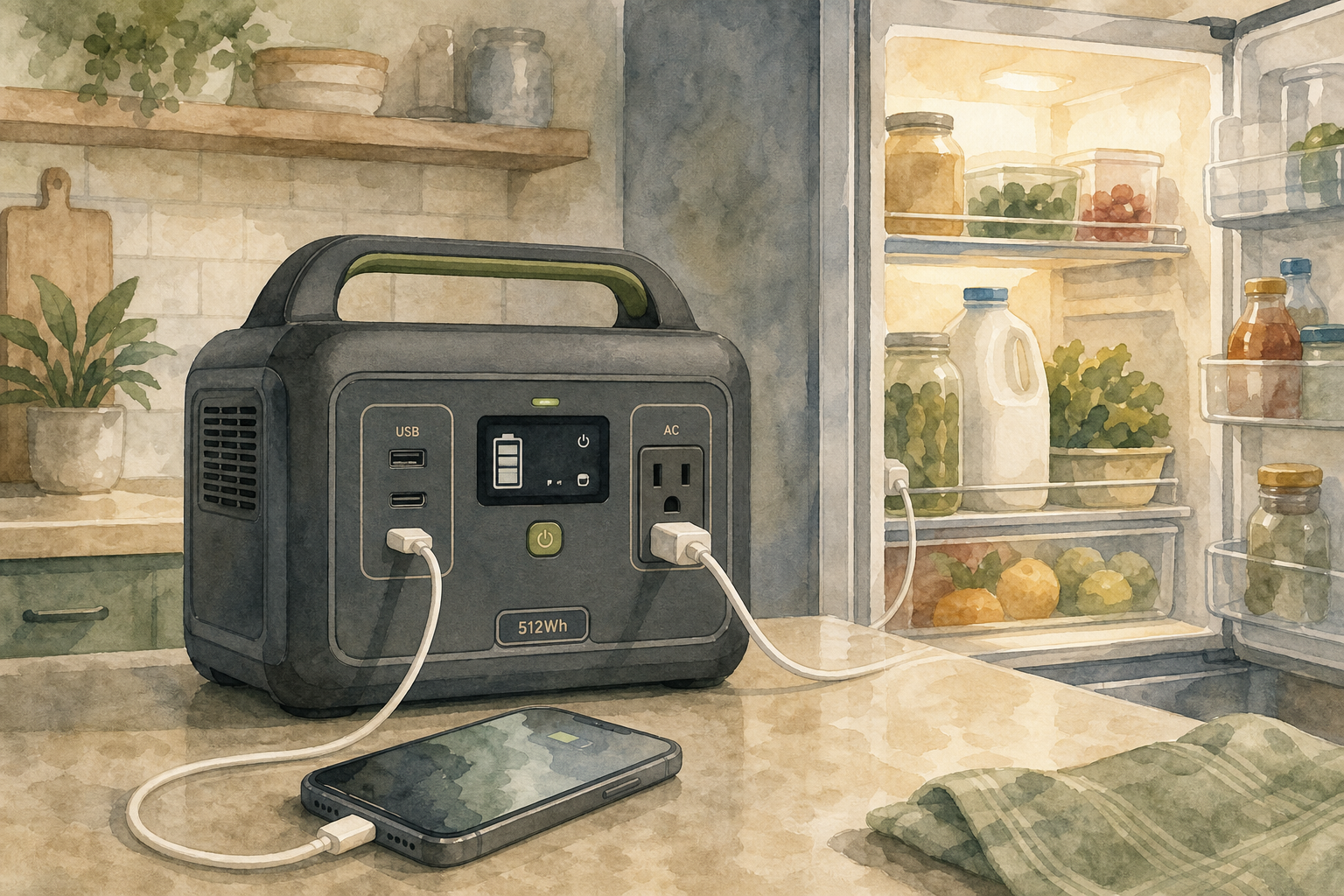
Portable power stations are one of the highest-impact prep purchases for families. They are quieter and cleaner than gas generators, easy to move, and can keep essential devices running during short and medium-length outages. This guide helps budget-conscious households match appliances to watt-hours and run time, choose the right size, and act on curated discounted offers quickly.
How to think about portable power stations
- Watt-hours (Wh) measure stored energy. More Wh equals longer run time.
- Continuous watts is the steady output the inverter can supply. This matters for items like microwaves or electric kettles.
- Surge or peak watts handle brief startup draws from motors, such as refrigerators and sump pumps.
- Ports and outputs matter for real use: AC outlets, 12V DC, USB-A, USB-C PD. Match ports to devices you really need to run.
- Recharge options include wall AC, solar input, and car charging. Recharge speed decides how fast you can recover capacity during prolonged outages.
Simple watt-hour calculator (step-by-step)
Use this quick method to estimate how big a power station you need.
- List devices you want to run and their wattage. If device wattage is not printed, use typical values below.
- Decide how many hours per day you want each device to run.
- Multiply watts times hours for each device to get device Wh.
- Add device Wh totals to get total daily Wh.
- Add a 20 to 30 percent safety margin for inverter loss and unexpected draws.
Example calculations using conservative typical draws:
- Phone charging 10W x 3 hours = 30 Wh
- LED lights 10W x 6 hours = 60 Wh
- Wi-Fi router 12W x 24 hours = 288 Wh
- Refrigerator (average running) 120W x 8 hours = 960 Wh
- Total = 1,338 Wh. With 25 percent margin = about 1,673 Wh.
So a family wanting to run those items for a day should look at a power station with at least 1,700 Wh usable capacity, or a smaller unit supplemented by solar recharging.
Common appliance watt estimates (approximate)
- Phone or tablet charge: 5 to 20 W
- LED light (room): 8 to 20 W
- Router: 10 to 15 W
- CPAP (without heated humidifier): 30 to 70 W
- Small chest freezer or refrigerator running: 100 to 200 W (startup surge 500 to 1,000 W)
- Microwave: 600 to 1,200 W
- Electric kettle: 1,000 to 1,800 W (short runs only)
Price bands and who they suit
- Under $200: Small, highly portable units (100 to 300 Wh). Good for phone charging, lights, and short device use. Not suitable for refrigerators or long CPAP runs.
- $200 to $600: Mid-range units (300 to 700 Wh). Useful for small families to keep lights, phones, routers, and occasional small appliances running for several hours.
- $600 to $1,500: Full household backup starters (700 to 1,500 Wh). Can handle refrigerators, medical devices, and longer outage windows. Look for higher continuous watts and strong surge capacity.
- $1,500+: Large-capacity systems (1,500 Wh and up) or expandable modular setups. These are investment purchases for prolonged outages or off-grid living. Prioritize cycle life, expandability, and solar compatibility.
Key features to prioritize
- Pure sine wave inverter for sensitive electronics and medical devices.
- Surge capacity that covers refrigerator startup needs.
- Pass-through charging if you need to use the station while it recharges.
- Fast recharge time from AC or solar to shorten downtime.
- Durable construction and carry handles for quick relocation.
- Cycle life and warranty to understand long-term cost of ownership.
Must-have accessories
- Heavy-duty extension cord and short surge-protected power strip for appliances.
- Solar panel with compatible input connector if you plan to recharge off-grid.
- Padded transport bag or case to protect the unit in storage.
- Replacement fuses and user manual stored nearby.
- Power monitor or simple meter if your station does not report detailed usage.
Quick buying checklist
- Calculate your required Wh using the simple calculator above.
- Confirm continuous and surge watt ratings cover your highest single load.
- Prioritize models with pure sine output for electronics and medical gear.
- Check recharge options and time from AC and solar.
- Read verified user reviews focused on real-world runtime and durability.
AI-curated model picks to watch
To save time, look for deals on models that match the capacities and use cases above. Our AI-curated feed highlights discounted listings and shows date posted, discount percentage, current price, previous price, and retailer source so you can act fast. Models commonly surfacing in prepper-focused searches include:
- Compact 200 to 500 Wh units - best for phone charging, lights, and small devices. Good for short-term outages or camping.
- Mid-range 600 to 1,000 Wh units - good balance for families who want overnight fridge support plus device charging.
- High-capacity 1,000 Wh+ - for running refrigerators, CPAPs, and more prolonged outage coverage.
- Expandable or modular systems - useful if you plan to scale capacity with extra battery packs or solar arrays.
Examples of models you may see in a discount feed: Jackery Explorer series, EcoFlow River and Delta lines, Anker SOLIX or Eufy variants, and Goal Zero Yeti models. Check each listing for surge ratings, usable Wh, and whether the listing includes a manufacturer warranty.
How our curated feed helps you buy quickly
- Each deal entry shows the date posted so you know how fresh the offer is.
- Discount percentage and previous price help you judge if the current price is a genuine sale.
- Retailer source links take you directly to the merchant page for checkout.
- Filtering by Wh band and recharge method speeds selection to match your needs.
Founder perspective
Best Prepping Deals started because researching dozens of listings for one purchase wastes time people would rather spend on practical preparedness. The site applies AI to sift offers and surface deals that matter for preppers. That same approach guides this article: match realistic energy needs to a sensible price band, then use a curated deal feed to move from decision to purchase without hunting dozens of pages.
FAQ
-
How long will a 1,000 Wh power station run my refrigerator?
Estimate by using the fridge running wattage. If your fridge runs at 120 W on average, 1,000 Wh / 120 W = about 8.3 hours. Add a 20 to 30 percent margin for startup cycles and inverter losses. Real runtime will vary by fridge size and cycle frequency.
-
Can I charge the power station while using it?
Many models support pass-through charging, but check the manual. Continuous pass-through may increase heat and slightly shorten battery life on some units.
-
Is solar charging worth it?
Solar is valuable for extended outages or off-grid use. If you expect prolonged outages, prioritize a power station with a high solar input rating and match it to panels rated for that input to shorten recharge time.
Ready to compare options? Use the watt-hour calculator above, pick the price band that fits your outage plan, and scan a curated deals feed to grab a real discount. Our feed is designed to present prepping-relevant offers quickly so families can convert planning into a practical purchase without the extra research overhead.
Discover More Featured Deals
Explore our hand-picked selection of the best deals, curated daily just for you.