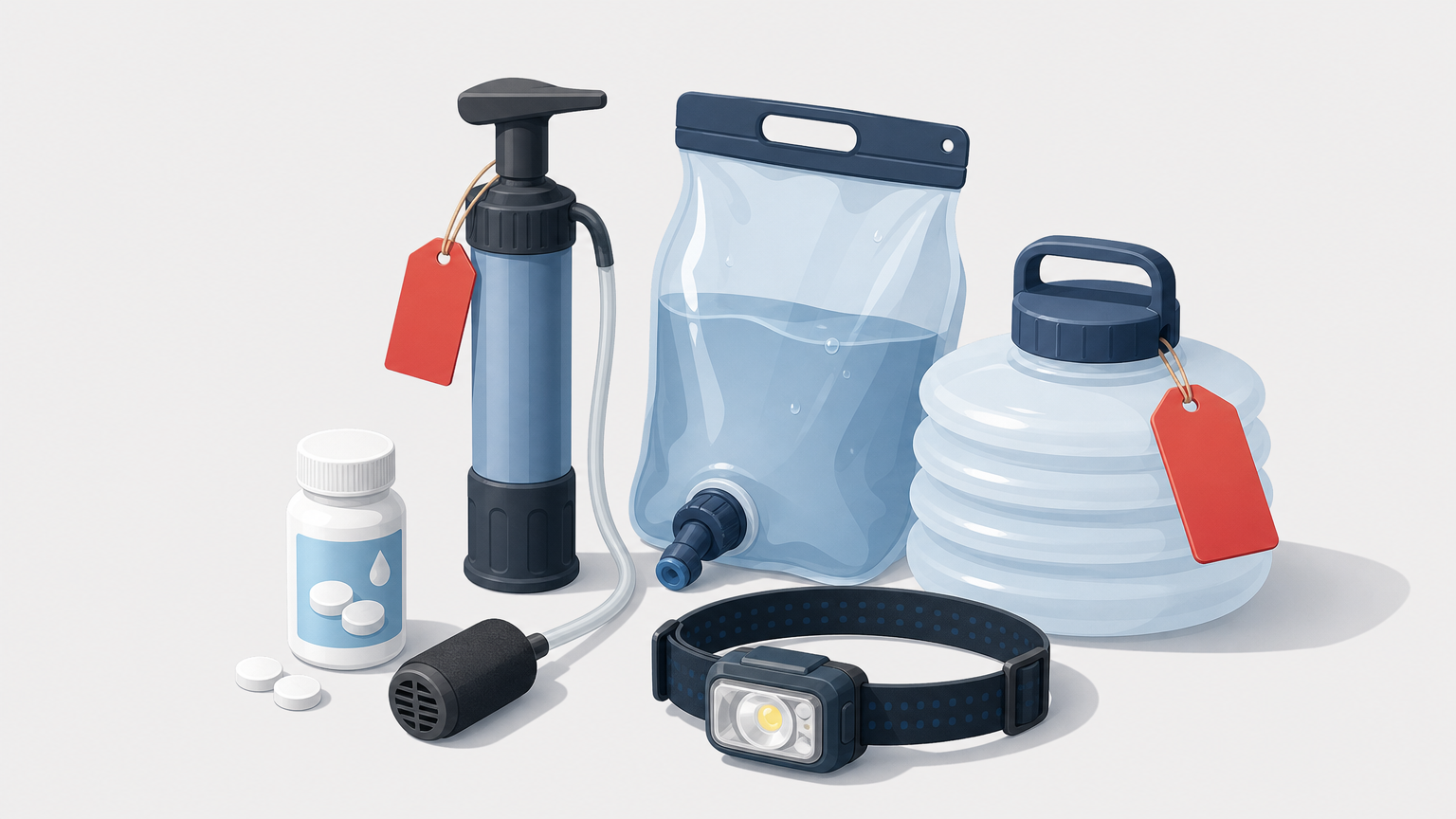
Top Water Filters on Sale for Emergency Prep
May 07, 2026
Top Water Filters on Sale for Emergency Prep
When the priority is safe drinking water, speed and reliability matter as much as price. This short guide pairs deal-worthy water filter recommendations with practical buying rules so you can pick the right option fast. The picks below focus on common prep scenarios: solo use, family bug-in, vehicular or bug-out kits, and longterm storage. Check current discounts before you buy and favor filters with clear replacement part pricing.
Quick-buy picks by prep scenario
1. Solo hiker or day-trip kit
- Recommended type: Lightweight pump or squeeze-style microfilter.
- Why: Small, fast, and treats bacteria and protozoa without chemicals.
- Pros: Low weight, easy to pack, immediate on-the-trail use.
- Cons: Not always rated for viruses; requires inline hoses or bottles.
- Deal note: Look for compact pump and squeeze filters on sale; even older model bundles often show meaningful discounts.
2. Family bug-in (home use for multiple people)
- Recommended type: Gravity-fed filter or countertop filter with higher flow and larger reservoirs.
- Why: Can process several liters without constant pumping; simple to top up for families.
- Pros: Higher capacity, minimal effort, good for children and older adults.
- Cons: Bulkier to store, replacement cartridges can add ongoing cost.
- Deal note: When discounted, gravity systems give the best price-per-liter for household use. Compare cartridge lifespans when evaluating deals.
3. Bug-out bag or car kit
- Recommended type: Straw filters, chemical tablets, or compact UV pens.
- Why: Ultra-portable, low weight, and quick to use for one or two people.
- Pros: Minimal maintenance, long shelf life for tablets, fast discharge.
- Cons: Chemical taste for some tablets, UV needs batteries, does not remove particulates unless pre-filtered.
- Deal note: Bundles that pair tablets with a collapsible bottle or include extra batteries often represent good value.
4. Longterm storage and emergency backup
- Recommended type: Large-capacity gravity or ceramic systems plus sealed water containers and purification tablets.
- Why: Provides ongoing access when municipal supply is disrupted and supports household rotation plans.
- Pros: Scales to family needs, redundancy with tablets for worst-case scenarios.
- Cons: Requires storage space and periodic maintenance of cartridges and stored water.
- Deal note: Seasonal sales on larger systems can cut the cost of outfitting a home. Consider clearance offers for discontinued filter cartridges if they match your system.
How to choose: a short checklist
- Contaminant coverage: Verify whether the filter removes bacteria, protozoa, and viruses. For virus protection, look for chemical treatment or UV systems.
- Capacity and flow: Match liters per minute to your household. Solo use can accept low flow; families need higher throughput.
- Filter lifespan: Note rated liters per cartridge and realistic field performance. Calculate replacement cost per liter.
- Maintenance requirements: Some filters need backflushing, others require no maintenance but cost more per use.
- Weight and portability: Choose compact pumps or straws for backpacks and heavier gravity systems for home storage.
- Spare parts and availability: Ensure replacement cartridges and seals are sold by reliable retailers and check current discounts on bulk spares.
- Certification and claims: Prefer products with independent testing or NSF/ANSI ratings when possible.
Filter types explained, with pros and cons
Mechanical microfilters (pump, squeeze, straw)
- Pros: Remove bacteria and protozoa without chemicals, immediate flow, light weight.
- Cons: Usually do not remove viruses; clog with sediment if not pre-filtered.
- Maintenance cost: Medium. Replace cartridges or elements after rated liters; some can be cleaned.
Gravity filters
- Pros: High volume, low effort, good for families and group use.
- Cons: Bulky, slower start-up, replacement cartridges add long-term cost.
- Maintenance cost: Medium to high depending on cartridge lifespan and frequency of use.
Chemical treatments (iodine, chlorine dioxide tablets)
- Pros: Lightweight, long shelf life, effective against viruses when used correctly.
- Cons: Taste issues, contact time required, less effective with turbid water unless pre-filtered.
- Maintenance cost: Low per dose, but ongoing expense for regular use.
UV purifiers
- Pros: Fast, effective against bacteria, protozoa, and viruses; no taste change.
- Cons: Requires batteries or power source, not effective in cloudy water without pre-filtering.
- Maintenance cost: Low to medium. Battery replacements and eventual bulb or lamp end-of-life are considerations.
Buying tips to get the best discounted value
- Compare total cost of ownership. A cheap filter with expensive cartridges can be more costly over time than a pricier system with long-life elements.
- Search for bundled offers that include spare cartridges, carrying gear, or compatible containers to save on accessories.
- Watch for clearance of older models. Functionally similar units are often discounted when a newer version ships.
- Prioritize filters with easily sourced spares. A deep discount means little if replacement parts are rare or expensive.
- When buying for family use, prioritize flow rate and cartridge life over initial sticker price.
As the founder who built an AI-assisted deal feed focused on prepping gear, the emphasis has always been on saving time and avoiding research overload. Practical buying decisions come from pairing the right filter type with realistic maintenance costs and current discounts. For quick action, favor systems with widespread replacement availability and transparent performance specs.
To make purchase decisions faster, our curated feed highlights current price drops and lists the retailer source and discount percent so you can compare offers without digging through dozens of listings. That approach is especially useful when a short-term sale drops the effective cost of higher-capacity household systems into the same range as lower-cost single-use options.
FAQ
1. Which filter is best for a family of four?
For a family, a gravity-fed system or a high-capacity countertop filter is usually best. Prioritize liters-per-cartridge, ease of use, and replacement part availability.
2. Can I rely on chemical tablets alone?
Chemical tablets are effective against viruses and bacteria but work best with clear water or after pre-filtering. They are a reliable backup but may be inconvenient for daily household use.
3. How often should I replace cartridges?
Replacement frequency depends on rated liters and water quality. Track actual liters used and check manufacturer guidance; buying spare cartridges during sales reduces ongoing costs.
4. Are UV pens worth the price?
UV pens are fast and effective as long as water is clear and batteries are available. They are a good lightweight choice for bug-out bags and short-term use.
Choosing a water filter on sale is about matching the device to how you will use it and the total cost over time. Use the checklist above, compare cartridge costs, and favor systems with dependable spare parts. Quick deals can be smart buys when they reduce the lifetime cost of a setup that actually meets your needs.
Discover More Featured Deals
Explore our hand-picked selection of the best deals, curated daily just for you.