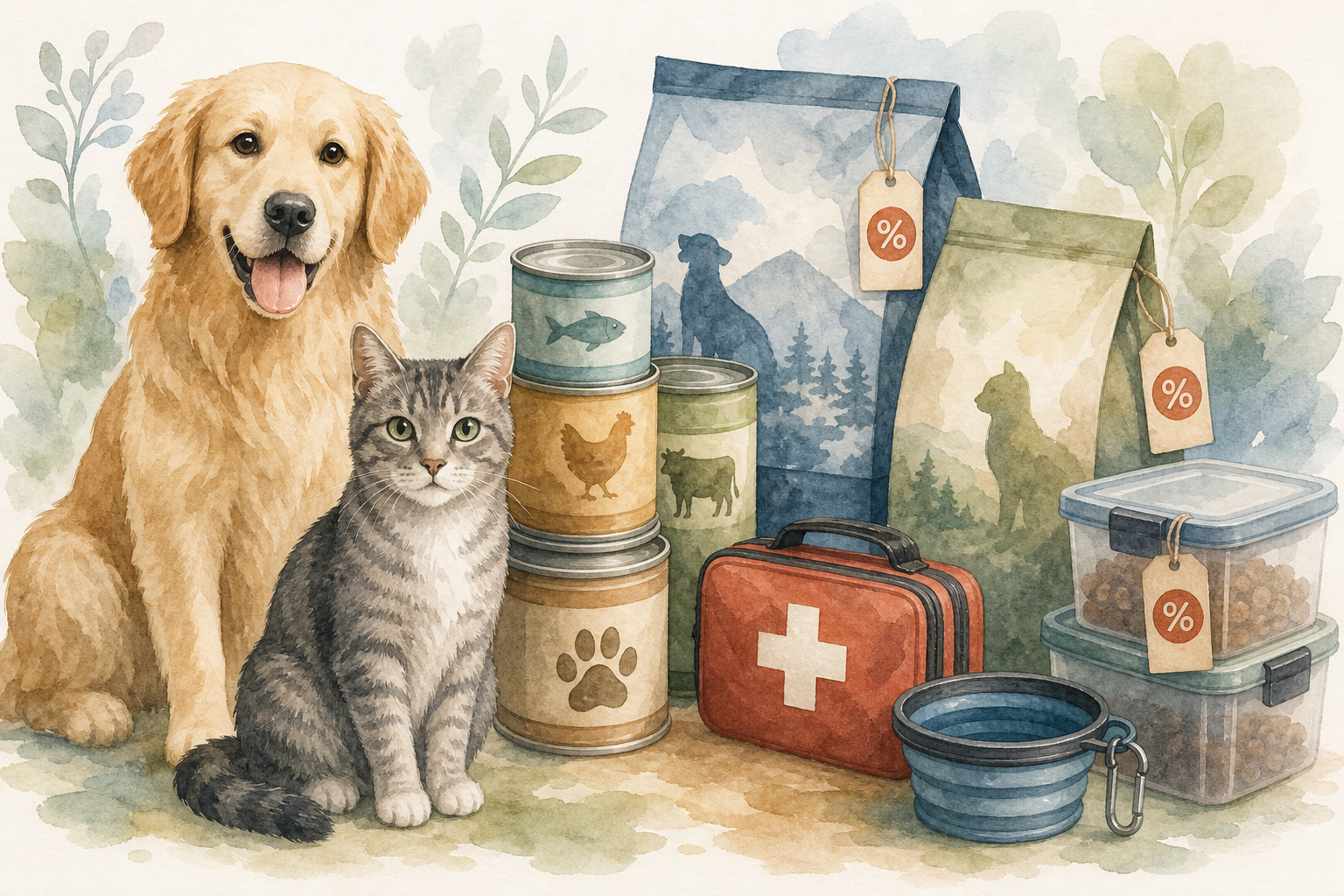
Pet Store Deals for Emergency Pet Food and Kits
Jun 14, 2026
Pet Store Deals for Emergency Pet Food and Kits
When an outage or disruption arrives, pets depend on you. Building a compact 7 to 14 day emergency kit from discounted pet store finds is a high-value way to protect animals without breaking the budget. This guide focuses on practical, deal-first choices: what shelf-stable foods to prioritize, low-cost first aid and hydration items, smart storage and rotation to avoid waste, a quick bug-out pet checklist, and simple rules for spotting real deals online and in-store.
1. Plan by consumption, not guesswork
Start with how much your pet actually eats and drinks now. Use the feeding guide on their bag or can, or record a typical 3 day average. Multiply that daily amount by 7 or 14, then add a 10 percent buffer for stress, appetite changes, or unexpected delays. This keeps purchasing focused and reduces waste.
2. Shelf-stable foods to prioritize from pet stores
- Dry kibble: Lightweight, compact, and easy to portion. Choose the same formula your pet eats so you avoid digestive upset.
- Canned wet food: Higher moisture content helps hydration. Buy tins or pouches that are easy to store and check unopened best-by dates.
- Shelf-stable pouches: Single-serve pouches can be convenient for travel or bug-out bags because they need no refrigeration once opened for immediate use.
- Freeze-dried or dehydrated options: Good for long-term storage if your pet tolerates them; rehydrate ahead of time or add water as needed.
- Treats and training rewards: Small, high-value treats can help manage stress during emergencies and encourage eating.
3. Affordable first aid and hydration items to add from pet stores
- Collapsible water bowl and lightweight food bowl.
- Extra leash, harness, and quick-release carrier for cats or small pets.
- Basic pet first aid kit: adhesive bandages, gauze, antiseptic wipes, tweezers, a small towel, and a pet-safe wound gel if available.
- Medications: a 7 to 14 day supply of prescribed meds in labeled containers and dosing instructions.
- Electrolyte or recovery solutions approved for pets, or vet-recommended alternatives.
- Waste bags and a small litter scoop or travel litter for cats.
4. Storage and rotation strategies that prevent waste
- Label everything: Mark purchase date and open date on bags and cans. Use waterproof labels or permanent marker on tape.
- First in, first out: Store newer purchases behind older ones. Use clear plastic tubs for opened bags to extend freshness.
- Keep food sealed: Use original packaging when possible, then place sealed bags or cans in sturdy containers to protect from pests and humidity.
- Store cool and dry: Avoid attics, garages, or places that see temperature swings. Stable, shaded interior closets are best.
- Rotate by schedule: Set a calendar reminder to inspect and rotate supplies every 3 to 6 months. Feed slightly older stock to pets during routine weeks so nothing expires unused.
5. Quick bug-out pet packing checklist (for 7 to 14 days)
- Food: Pre-measured daily portions in individual resealable bags or pouches.
- Water: Bottled water or large jugs plus collapsible bowls.
- Medications: Labeled doses and administration notes.
- Leash, harness, and carrier with padding.
- Copies of vaccination records and vet contact info, plus a recent photo of your pet.
- Small pet first aid kit and grooming supplies (nail clippers, brush).
- Waste bags and a small litter solution for cats.
- Comfort items: a towel or small blanket and a few favorite treats.
6. How to spot real pet store deals quickly
- Check unit price: Compare cost per ounce or per serving, not just the sticker price. Larger bags are not always cheaper per serving after discounts.
- Look at expiration dates: A steep discount on product expiring soon can be a good short-term buy if you will use it before the date.
- Bundle and subscribe options: Subscribe-and-save or multi-pack discounts can reduce cost if your pet likes the food and you can rotate it into supply.
- Watch seller reputation: On marketplaces verify the seller and read recent reviews. Avoid purchases from unknown sellers if the product is perishable.
- Price history tools: Use simple price trackers or curated deal feeds to spot genuine markdowns versus temporary list price inflation.
- Test small before you commit: If trying a new formula on sale, buy a small size first to ensure your pet accepts it.
7. Budget tips that actually work
- Buy what your pet will eat. No savings offset a wasted bag.
- Mix wet and dry strategically to stretch servings while keeping meals palatable.
- Use store loyalty programs and digital coupons, but verify the final unit price.
- Keep a small rolling emergency fund of pet essentials so you can buy during sales rather than at full price later.
8. Practical founder perspective on curated pet store deals
At Best Prepping Deals the goal is to remove shopping friction. Founders built the feed to surface discounted pet store items that fit common emergency plans so you can assemble a useful kit in one shopping session. The process is straightforward: calculate consumption, pick shelf-stable items your pet already eats, add core first aid and hydration gear, and store with rotation in mind.
9. Final checklist before you click buy
- Confirm the food matches your pet's current diet.
- Verify best-by dates and seller reputation.
- Calculate total servings and account for a 10 percent buffer.
- Choose packaging that fits your storage plan, like resealable bags or cans that stack.
FAQ
- How much water should I pack for my pet?
Use your pet's normal daily intake as a baseline. Multiply by the number of days in your plan and include a small extra supply for emergencies. For travel, bottled water and collapsible bowls are easiest to manage.
- Can I rotate human emergency food to feed pets in a pinch?
Human emergency foods are not formulated for pets and can cause digestive problems. Stick to pet food when possible and use human foods only for short-term emergencies and with veterinary guidance.
- Should I buy specialty or prescription diets on sale?
Only buy a specialty or prescription diet if it is prescribed by your vet and you can safely rotate it without causing issues. Confirm shelf life and return policies before purchasing discounted specialty formulas.
- How do I keep dry kibble fresh after opening?
Store opened kibble in airtight containers, keep them in a cool dry place, and write the open date on the container. Use older stock first and check for off smells before serving.
With a practical plan and a few targeted purchases from pet stores and online retailers, you can assemble a reliable 7 to 14 day emergency kit for your pet without overspending. If you want to save time, Best Prepping Deals curates current pet store offers and filters for meaningful discounts so you can shop faster, compare unit prices, and click through to purchase the items that fit your pet and budget.
Discover More Featured Deals
Explore our hand-picked selection of the best deals, curated daily just for you.