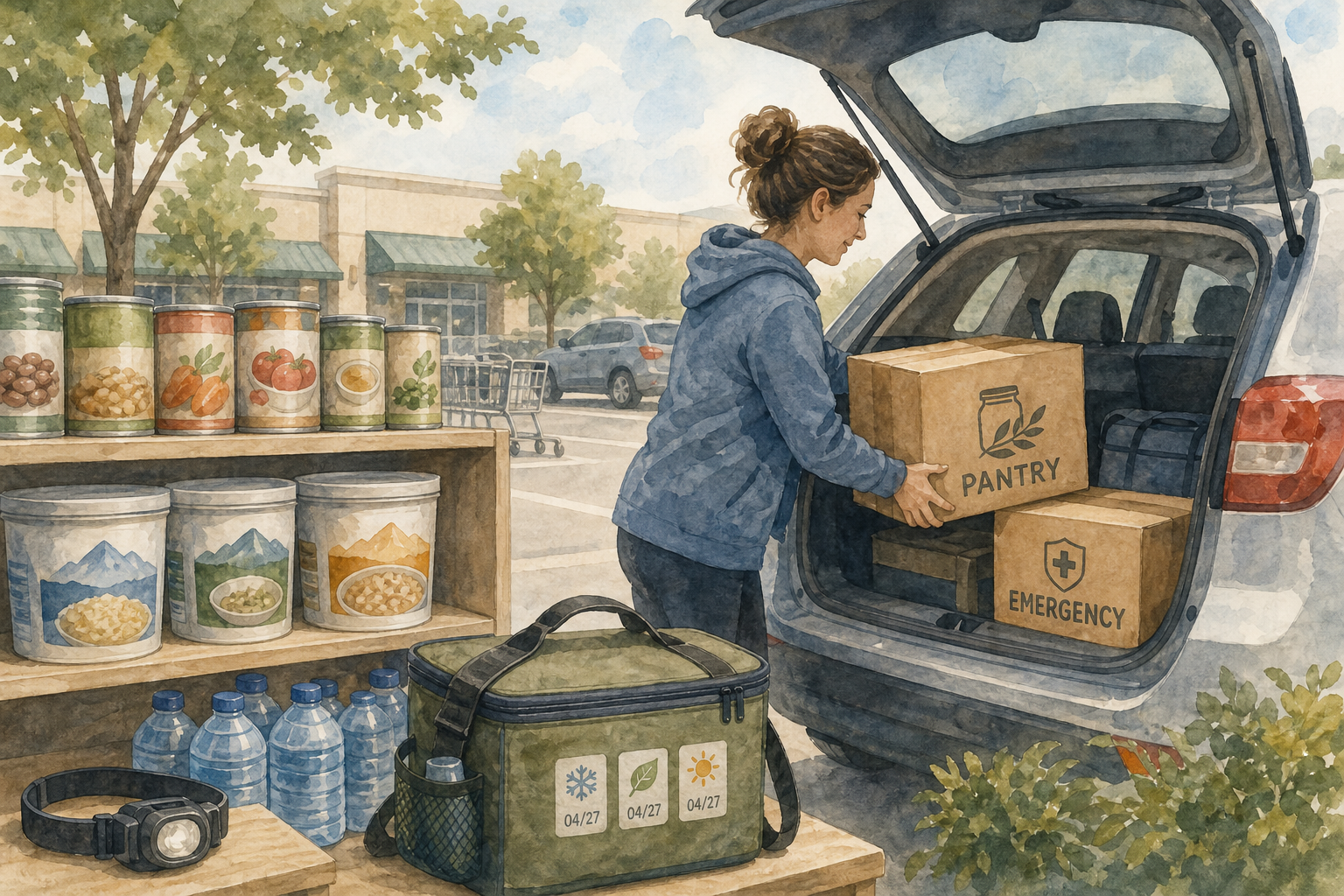
Find Local Bargains to Build an Emergency Pantry Fast
Jun 20, 2026
Find Local Bargains to Build an Emergency Pantry Fast
Searching "food around me" usually returns restaurants and delivery options. For preparedness-minded shoppers this local intent can be repurposed to find immediate bargains you can turn into durable emergency supplies. This guide gives a quick, practical workflow: what to hunt for in stores and apps, how to check shelf life and rotate stock, and when to supplement local finds with targeted online buys.
Why use local searches for prepping
Local searches are fast and actionable. Close-by grocery stores, big box retailers, convenience stores, and even grocery sections in convenience apps run clearance on overstock, seasonal items, and near-date packaged foods. If you want food you can put on a shelf today instead of waiting for shipping, this is the fastest route. Combine that speed with an online plan for long-term staples you cannot find locally, and you cover both short-term needs and long-term resilience.
Quick prioritized shopping list for immediate pantry building
- Shelf-stable proteins: Canned tuna, chicken, beans, and shelf-stable peanut butter.
- Carbohydrate staples: Rice, pasta, boxed mashed potatoes, and instant oats.
- Canned and jarred produce: Vegetables, fruit, tomato products for cooking flexibility.
- Ready-to-eat emergency foods: Energy bars, meal replacement bars, canned soups with long dates.
- Hydration: Bottled water on sale, water pouches, or sealed sports drinks for short-term rotation.
- Longer-term specialty items: Freeze-dried pouches and MRE-type entrees - buy online if not locally available.
- Basic comfort and utility: Salt, sugar, coffee/tea, condiments, and small cooking fuel or a compact stove if on sale.
How to use "food around me" effectively
- Search apps and maps with specific terms: "grocery near me", "supermarket deals", "bakery clearance", and "food markdowns" in addition to "food around me".
- Check store pages and social feeds for clearance announcements before you go. Many stores post markdowns at the end of day.
- Use store filters for aisle or department to find canned goods, dry goods, and bulk items quickly.
- Call ahead for near-date items if you need a large quantity. A quick phone call saves time driving around.
What to check at a glance: shelf life and safety
- Look for dates: Best by, sell by, and use by are different. For canned and dry goods, a close best by date usually still offers safe, usable food for months after purchase when stored properly.
- Check packaging: Avoid bulging cans, leaks, or torn packaging. For boxed and bagged goods ensure seals are intact.
- Assess nutritional value: If you pick heavily discounted prepared meals, prefer those with balanced macros or supplement later with protein and fiber.
How to label and rotate quickly
- Write the purchase date on each item with a permanent marker in a visible spot.
- Organize shelves by expiration or purchase date, oldest to front, newest to back - first in, first out.
- Keep a simple inventory list in a notebook or phone note: item, count, purchase date, approximate expiration.
- Set a calendar reminder every 3 months to check and reintegrate near-expiry goods into meal plans or donate if you will not use them.
Combining local bargains with online AI-curated deals
Local buys are fast and cheap for staples and short-term needs. For long-term or specialty items such as multi-year freeze-dried meals, water storage systems, or higher-end headlamps, use an AI-curated deal feed to avoid endless searching. The best workflow is:
- Spend a quick local run for immediate quantity of basics and comfort items that are on clearance.
- Make a short online wishlist of items you did not find or that require longer shelf life.
- Use a deal-curation source to alert you when those wishlist items drop in price, then buy in one shot to save on shipping and avoid impulse buys.
Budgeting and smart purchase decisions
- Start with a price-per-serving mindset for staples. Even discounted prepared foods can be more expensive per calorie than staples like rice and beans.
- Balance perishable-prepped bargains with long-dated items. If a ready-meal is a great deal but expires soon, plan to consume it within rotation windows.
- Buy smaller quantities of high-cost specialty items on sale rather than full-price bulk if budget is limited.
Storage and space-saving tips
- Use stackable plastic bins or clear totes for grouped supplies: grains, proteins, hydration, and comfort foods.
- Keep heavier items lower and fragile items higher. Vacuum-sealed or Mylar-bagged items save space and extend life when oxygen-absorbing packets are used.
- Store water in a cool, dark place and rotate it every 6-12 months if it is store-bought bottled water.
Fast checklist for your next local run
- Search "food around me" plus "grocery" and "clearance" before leaving.
- Bring a list with prioritized items and a shopping bag or box for quick organization.
- Check dates and packaging, write purchase date on items, and mark quantities on your inventory list.
- Plan one online follow-up for specialty long-term items you could not find locally.
Practical founders note
Practical readiness is about speed and selectivity. Building a useful emergency pantry does not require expensive gear or perfect storage. It requires a plan, consistent rotation, and taking advantage of local bargains when they appear. That is why combining quick local runs with targeted online buying makes sense for most households.
Best Prepping Deals curates AI-assisted discounts across prepping categories so you can spend less time hunting and more time building a rotated, useful supply. Treat local finds as the immediate foundation, and let curated online deals fill the gaps for longer-term staples and specialty gear.
FAQ
- Can I use discounted prepared meals in a long-term emergency pantry?
Yes for short-term or short-notice scenarios. Prefer sealed, shelf-stable options and track their dates. For multi-year storage, prioritize freeze-dried or dehydrated entrees bought online.
- How do I know if a near-date canned good is still safe?
If the can is intact, not bulging, and free of rust or leaks, it is typically safe well past the best by date for most non-acidic canned goods. When in doubt, discard compromised packaging.
- How often should I rotate my emergency food?
Check and rotate every 3 to 12 months depending on item shelf life. Fast-moving pantry items should be used or replaced more frequently.
- What if I find a specialty prep item locally but it is expensive?
Buy minimal quantities if needed now and monitor online deals for better prices. Use curated deal feeds to catch discounts on high-cost items.
Discover More Featured Deals
Explore our hand-picked selection of the best deals, curated daily just for you.