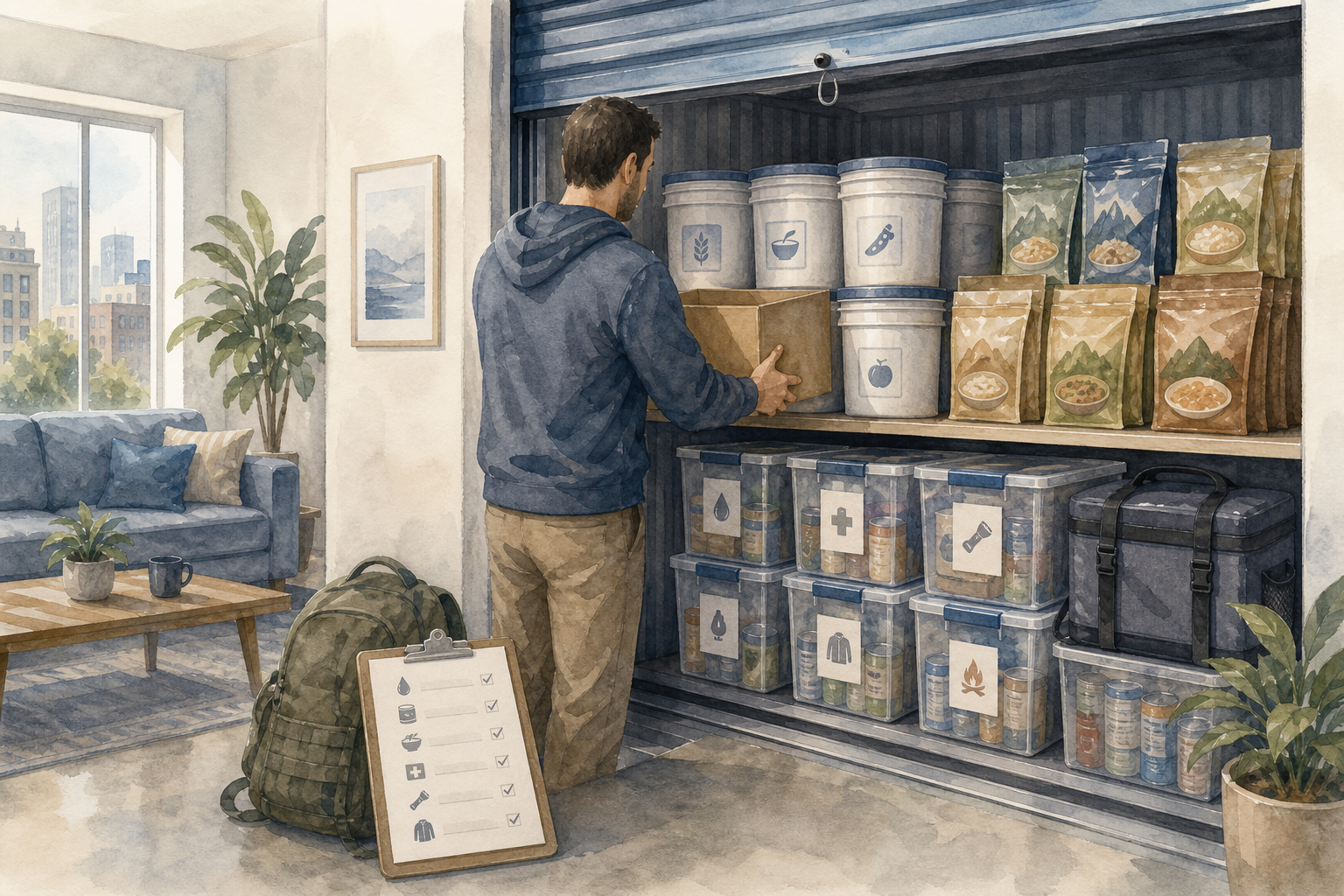
Renting? Use Storage Units to Build Emergency Food Supplies
Jun 22, 2026
Renting? Use Storage Units to Build Emergency Food Supplies
Living in a rental or a small apartment is no reason to skip building an emergency food supply. A nearby storage unit can extend your usable space without changing your lease. This guide walks through how to pick the right unit, pack and protect long-term food, rotate inventory, and time purchases so you buy bulk freeze-dried food, MREs, and other essentials when deals make them affordable.
Step 1 - Decide what to store and how much
Start with a simple plan. Choose one or two goals and match them to volume and shelf life.
- Short term family kit - 3 to 7 days of ready-to-eat food per person (MREs, bars, canned goods).
- Medium term pantry - 1 to 3 months using canned goods, rice, beans, and some freeze-dried pouches.
- Long term core - multi-year freeze-dried buckets or #10 cans for extended outages.
Estimate cubic feet needed and convert to unit sizes below.
Unit size checklist
- 5 x 5 feet - About the size of a large closet. Fits boxes, a few 5-gallon buckets, personal kits. Good for small starter kits.
- 5 x 10 feet - Holds furniture from a studio apartment or several months of groceries for a small household. Fits shelving and stacked buckets.
- 10 x 10 feet - Roughly a single car. Common choice for a family planning medium-term storage and some bulk items.
- 10 x 20 feet - Large garage equivalent. Best if storing large quantities of bulk freeze-dried buckets, pallets, or supplies for multiple households.
Climate control versus non-climate units
Choose based on your region and the foods you plan to store.
- Climate controlled - Keeps temperature and humidity more stable. Recommended in humid or hot climates or if you store frozen or vacuum-sealed goods, dehydrated foods, chocolate, vitamins, and oils. Generally costs more but reduces risk of spoilage and pest problems.
- Non-climate - Lower cost. Acceptable where temperate conditions prevail and for canned goods, sealed buckets, and MREs if properly packed. Use moisture management methods to protect contents.
Facility selection and lease-friendly tips
- Confirm the facility accepts deliveries and packages. Some will sign for boxes; others will not. Get this in writing if you plan direct shipments.
- Check access hours. 24 hour access is convenient but may cost more and is rarely necessary for stored food.
- Ask about security - gates, cameras, lighting, and on-site staff. Security reduces theft risk and can be a deciding factor if you store high-value items.
- Read your rental agreement. Avoid storing prohibited items such as flammables, propane, gasoline, or items restricted by law.
- Verify insurance requirements. Your renter's insurance may cover off-site storage, or the facility may require supplemental insurance. Keep receipts and inventory photos for claims.
- Keep your home landlord informed if your lease restricts commercial use. Framing the unit as personal storage for household goods avoids lease conflicts.
Packing and pest-proofing on a budget
Use inexpensive, effective containers and simple techniques to protect food and maximize space.
- 5-gallon food-grade buckets with gamma lids - Stackable, affordable, and rodent resistant when sealed. Use mylar bags and oxygen absorbers inside for long-term storage.
- Plastic shelving - Keeps items off the concrete to avoid moisture transfer. Metal shelving works too but add plastic trays to avoid rust contact.
- Clear plastic bins - Use for short-term rotation items you check frequently. Clear sides make visual inventory fast.
- Desiccants and silica packs - Small cost, big effect when used inside buckets and bins to control humidity.
- Pallet or plywood - Raise storage off the floor to improve airflow and reduce cold or damp transfer from concrete.
- Rodent deterrence - Avoid cardboard for long-term stacking near walls. Seal any small gaps in containers and do not store food directly on walls or floor.
Labeling and inventory hacks
Simplicity wins. A reliable inventory system prevents overbuying and ensures rotation.
- Label each container with contents and purchase or pack date using waterproof labels.
- Create a master inventory sheet with unit location, container ID, and expiration dates. Keep a copy at home and one with your unit key or digital copy in the cloud.
- Adopt FIFO - first in, first out. Place newest items at the back and oldest in front for easy rotation.
- Use a simple coding system like A1, A2 for shelves and write container codes on lids. This makes checking a quick visual task.
- Attach a clipboard or laminated checklist near the unit door for quick notes during visits.
Rotation and inspection schedule
- Inspect stored food every 6 months. Look for bulging cans, damaged packaging, moisture, or pest signs.
- Rotate canned goods and MREs on a 1 to 3 year timeline depending on manufacturer dates. Freeze-dried goods often last longer but still benefit from periodic checks.
- Replace desiccants and reseal opened buckets after inspection. Note changes on your master inventory.
Smart buying - when to buy bulk freeze-dried food or MREs
Buying at the right time is as important as storing correctly. Watch for these opportunities.
- Seasonal sales - summer sales, Prime Day, Black Friday, and year-end clearance events often drop prices on freeze-dried pouches and bulk buckets.
- Manufacturer closeouts and overstock - brands occasionally discount key items; these are good times to buy larger buckets when storage is ready.
- Stack small discounts - combine coupon codes, cashback, and curated deal alerts to reach 20 to 30 percent off compared with full price.
- Buy to match rotation capacity - do not buy more shelf life than you can reasonably rotate. Storage costs add up so balance unit rent with purchase timing.
Shipping, inspection, and delivery tips
- If possible, have high-value or bulk orders shipped to your home first to inspect for damage. After inspection, transport to the unit to avoid disputes over damage in transit.
- If you must ship directly to the facility, confirm the facility will accept and sign for packages and understand their liability policy.
- Keep packing slips and photos for every delivery. Record serial numbers or batch codes for larger purchases.
Layout and safety inside the unit
- Create aisles for easy access. Avoid stacking above shoulder height to limit injury risk and broken packages.
- Keep a simple fire extinguisher and first aid kit at the front of the unit for accessibility.
- Secure any hazardous items you are permitted to store in accordance with the facility rules and local regulations. When in doubt, do not store it.
Practical 7-step plan you can use this weekend
- Inventory current home pantry and decide target supply size.
- Choose a nearby facility and compare prices for a 5 x 10 and a 10 x 10 unit. Ask about climate control and package acceptance.
- Buy a few 5-gallon food buckets, gamma lids, a roll of mylar, oxygen absorbers, and a couple of shelving units.
- Pack your oldest usable food into labeled buckets and bins. Create master inventory and a clipboard checklist.
- Ship or transport your first bulk purchase after inspecting it at home.
- Set calendar reminders to inspect and rotate every 6 months.
- Sign up for deal alerts to buy freeze-dried goods and MREs when discounts align with your budget and storage capacity.
Many renters skip building reserves because storing food seems complicated. With a small unit, basic packing supplies, and a rotation plan, you can build resilience without changing where you live.
Our founder built the site after seeing how much time people wasted chasing the best prepping prices across multiple stores. Using AI-assisted curation, Best Prepping Deals highlights real discounts on emergency food, buckets, and gear so you can plan purchases around storage readiness instead of guessing when to buy.
FAQ
-
Can I store food in a storage unit long term?
Yes, if it is packed to protect against moisture, pests, and temperature swings. Use food-grade buckets, mylar and oxygen absorbers for long term items. Climate control helps in hot or humid areas.
-
Is it legal to store emergency food in a storage unit?
Generally yes. Read the facility rules and your lease. Storage agreements usually prohibit living in the unit and storing hazardous materials, but personal food and household supplies are permitted.
-
Should I ship bulk orders directly to the storage facility?
Only if the facility accepts packages and signs for them. Inspect higher value shipments at home first when possible to document condition before storing.
-
How much does it cost to store emergency food?
Unit costs vary by size, location, and whether climate control is included. Factor monthly rent into the per-month cost of your stored food when deciding how much to purchase.
Discover More Featured Deals
Explore our hand-picked selection of the best deals, curated daily just for you.