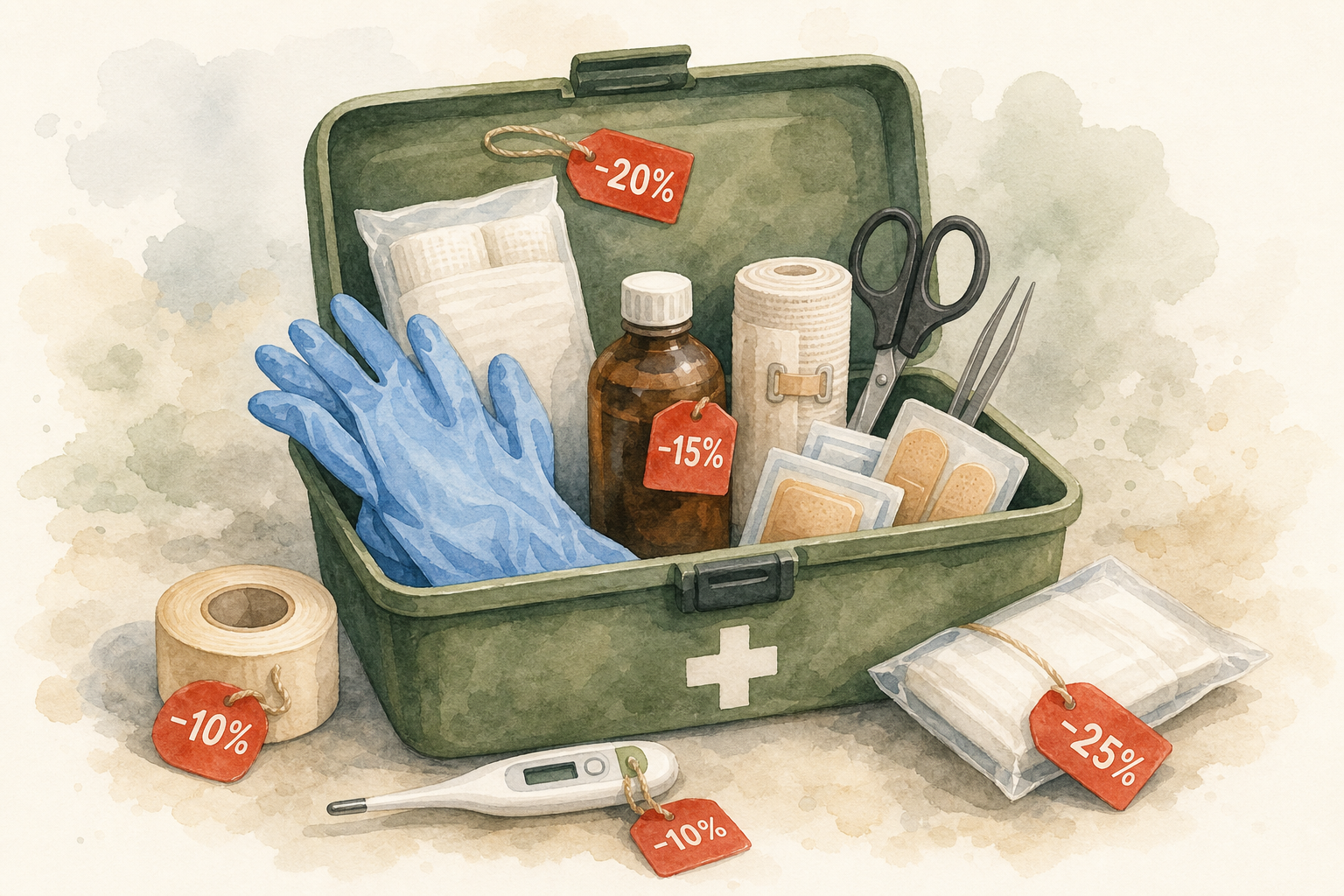
Smart First Aid Kit Deals for Families
Jun 24, 2026
Choosing a first aid kit for your family should be fast, practical, and confidence-building. With thousands of listings online, price-conscious buyers often spend hours comparing products that look similar but vary in quality and useful contents. This guide surfaces three AI-curated buying tracks you can use today: a Basic Bug-In Family Kit, a Compact Bug-Out Add-On, and a Deluxe Home Kit. Each track explains typical discounted price ranges, what to expect inside, page checks to run before buying, shelf life notes, and one-minute upgrades that make the kit family-ready.
How to use this guide
Read the three tracks and choose the one that matches your preparedness plan and budget. Typical discounted price ranges are given so you know what to expect when you find a deal. Before you click buy, run the product-page checks listed for each pick. The goal is speed plus confidence: make a smart purchase in minutes rather than agonizing over every listing.
Track 1: Basic Bug-In Family Kit
Who this is for: Families on a budget building a home first aid stash meant for common minor injuries and short-term household incidents.
Typical discounted price
Typical range: $15 to $35 (often 20 to 50 percent off the original price).
What the kit usually contains
- Assorted adhesive bandages (multiple sizes)
- Sterile gauze pads and roll gauze
- Antiseptic wipes and alcohol pads
- Adhesive tape and elastic wrap (ACE-style)
- Disposable gloves, tweezers, scissors
- Instant cold pack(s) and basic burn dressing
- Simple instruction card or basic first aid manual
Quick product-page quality checks
- Confirm the number of pieces and inspect the contents list in the product description.
- Look for ratings and read 3 to 5 recent reviews that mention contents accuracy or missing items.
- Check the case material and closure type to ensure durability and dryness protection.
- Verify seller or brand reputation; prefer established brands or clearly labeled manufacturers.
Shelf life and expiration tips
- Most consumables like antiseptic wipes and cold packs have expiration dates. Note those for rotation planning.
- Bandages and sterile gauze are long-lasting but keep the kit dry and out of direct sunlight to preserve adhesive.
- Record purchase date and set a yearly review reminder to swap out expired items.
One-minute upgrades to family-ready
- Add a small roll of hypoallergenic tape and a few butterfly closure strips for wound edges.
- Include a pediatric dose pain reliever packet and allergy antihistamine single-dose packets if anyone in the household needs them.
- Label the kit for family use and stash it in a consistent, easy-to-find location.
Track 2: Compact Bug-Out Add-On
Who this is for: Families who already have a basic kit but need a compact, lightweight medical bag optimized for evacuation or grab-and-go scenarios.
Typical discounted price
Typical range: $20 to $60 (often 15 to 40 percent off, depending on included trauma items).
What the kit usually contains
- Compact trauma shears, tourniquet or clotting gauze (for trauma-focused kits)
- Compressed gauze, chest seal (if trauma-focused), and SAM splint or compact immobilizer
- Smaller portion antibiotic ointment, adhesive bandages, and quick-seal waterproof pouches
- Compact CPR mask or face shield and a few pairs of nitrile gloves
Quick product-page quality checks
- Confirm the inclusion of any trauma items you expect, such as a tourniquet or hemostatic gauze, and check for brand names on those items.
- Verify the pack weight and dimensions so it fits inside your bug-out bag or vehicle compartment.
- Read buyer photos in reviews to confirm the actual item size and the real contents versus the advertised list.
- Check whether the kit comes with a storage pouch that is water-resistant and has secure closures.
Shelf life and expiration tips
- Hemostatic products and some adhesive items can have defined expiry dates. Note them and plan rotation into household medical supplies before they lapse.
- Store the add-on in a cool, dry place inside your bug-out bag to maximize useful life.
One-minute upgrades to family-ready
- Slip in a lightweight trauma dressing or an extra pair of heavy-duty gloves.
- Add a compact, single-use emergency blanket and a small roll of duct tape for splinting ad hoc.
- Include one or two sealed, pre-dosed analgesic packets and an epinephrine auto-injector if prescribed for a family member.
Track 3: Deluxe Home Kit
Who this is for: Families who want a comprehensive, long-term home kit that covers minor medical needs and some extended incidents with higher-quality components.
Typical discounted price
Typical range: $50 to $150 (often 10 to 40 percent off depending on brand and extras).
What the kit usually contains
- Extensive assortment of bandages, gauze, adhesive strips, and larger dressings
- Bulk tape, elastic wraps, sterile wound dressings, and burn dressings
- Thermometer, digital blood pressure cuff may be included in premium kits
- Comprehensive tools: quality scissors, forceps, tweezers, splinting materials
- Medications and consumables in larger quantities or with labeled dosage instructions
- Clear inventory list and structured storage case for quick access
Quick product-page quality checks
- Look for a detailed inventory list that matches the photos of the kit contents.
- Confirm presence of critical tools: scissors, tweezers, thermometer, and clear case dividers.
- Check for a warranty or satisfaction guarantee from the seller for higher-ticket kits.
- Read reviews that speak to long-term durability and the usefulness of included consumables.
Shelf life and expiration tips
- For larger kits, note the expiration dates of antiseptics, ointments, and any included medications.
- Create a simple rotation plan: move expiring items into everyday use and replace them annually as needed.
- Store the deluxe kit in a central, climate-stable location away from humidity and extreme heat.
One-minute upgrades to family-ready
- Add a laminated quick-reference first aid card tailored to your family's needs and ages.
- Include sealed single-dose allergy and pain medication packets labeled with ages and dosages.
- Place a compact headlamp and extra batteries in the kit for night-time care without fumbling for light.
Buying fast and smart: a short checklist
- Match the track to your plan: bug-in, bug-out, or deluxe home coverage.
- Verify contents list, seller reputation, and recent buyer photos on the product page.
- Note any expiration dates and plan simple rotation reminders.
- Make one quick upgrade to tailor the kit to children, pets, or specific family medical needs.
Why curated deals matter
Families often know what they need but do not have time to sift through thousands of similar listings. The curated approach saves minutes that add up to real readiness. The feed and selections here focus on discounted kits and verified item lists so decisions are fast and useful, not stressful. The founder’s aim when building the curation system was practical: use automation to highlight only relevant prepping deals so families can buy what they need and move on with confidence.
Find the live deals
Deals move quickly. Use a deal-focused feed to see the latest discounted first aid kits, compare the contents at a glance, and check retailer source and discount percentage before you click. That process trims the research time and lets you act when a good price appears.
Frequently asked questions
-
Q: How often should I check a first aid kit for expired items?
A: Do a quick check once a year and replace any consumables that show expiration dates. For kits stored in vehicles or sheds, check twice a year due to harsher storage conditions.
-
Q: Can I combine kits from different tracks?
A: Yes. A common strategy is a deluxe home kit plus a compact bug-out add-on placed in grab-and-go bags or cars. Combining ensures both daily household coverage and mobility.
-
Q: Are pre-made kits better than building my own?
A: Pre-made kits save time and often include a practical assortment for common needs. Building your own is fine if you have specific medical requirements. The curated deals here prioritize pre-made kits that are easy to inspect and purchase quickly.
-
Q: Should I include prescription medicines in a first aid kit?
A: Do not store long-term prescription medicines in shared kits without following storage and expiration guidance from your pharmacist. Keep a separate, labeled supply and consult a healthcare provider about emergency plans for essential prescriptions.
When you want speed plus confidence, look for a curated deal feed that surfaces verified contents and discounts so you can pick the right kit for your family in minutes. That practical approach is why automation and focused curation work well for prepping purchases: they reduce decision time and keep your family prepared without overspending or overresearching.
BestPrepping.Deals was built to make this process efficient. The site’s AI-assisted curation highlights relevant first aid kit deals, shows discount percentages and retailer sources, and presents the essential details so families can buy quickly and get back to the important work of everyday life and preparedness.
Discover More Featured Deals
Explore our hand-picked selection of the best deals, curated daily just for you.