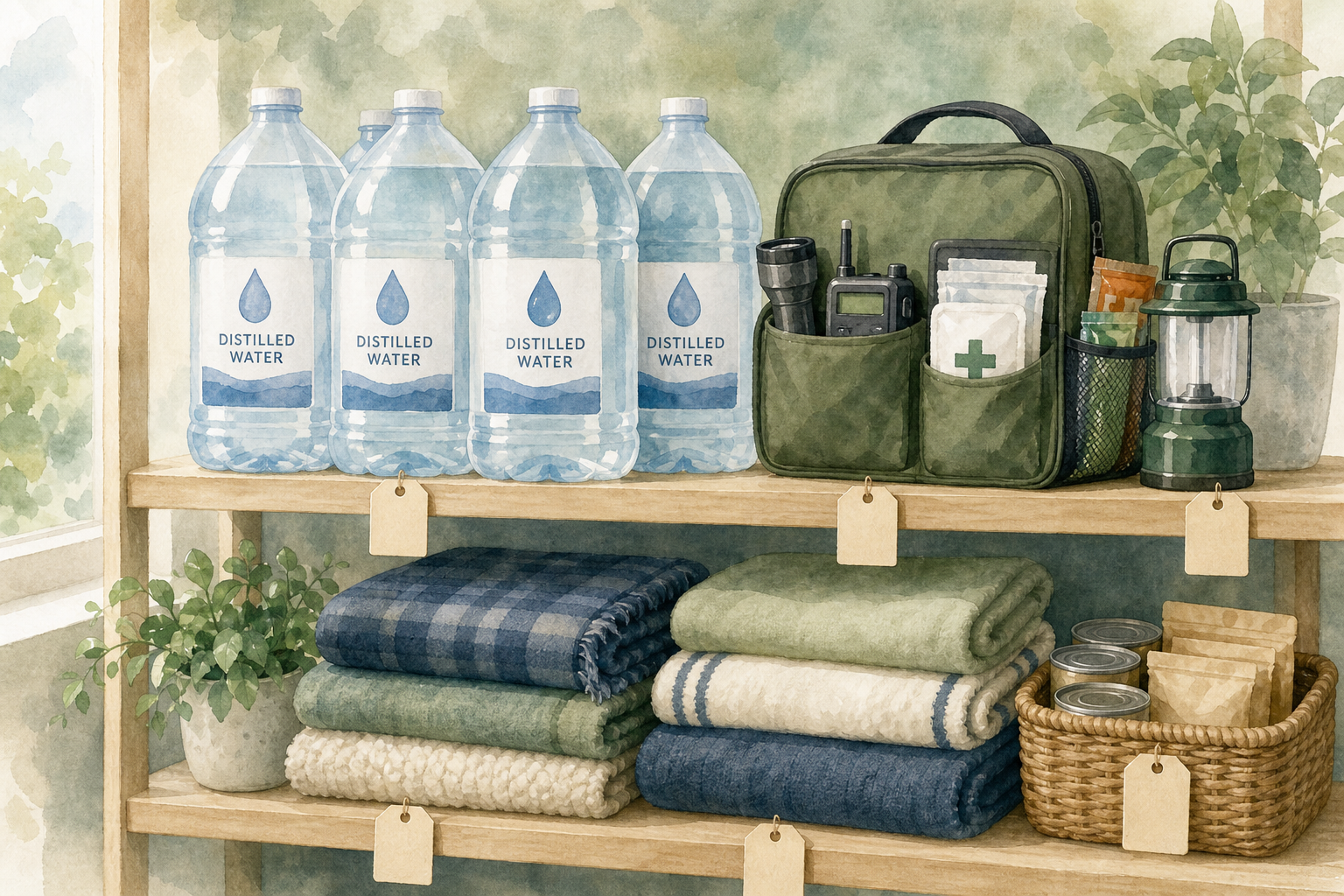
When Preppers Should Buy Distilled Water and How to Save
Jun 29, 2026
Distilled water comes up on prepping lists and forums a lot. Some people treat it as essential, others never use it. This guide cuts through the noise and gives clear, practical advice about when distilled water is actually needed, how much to keep on hand, safe storage and rotation, and realistic ways to buy it without overspending.
What is distilled water and when do preppers need it?
Distilled water is water that has been boiled to vapor and condensed back to liquid, which removes most dissolved minerals and many impurities. That makes it useful for certain devices and medical needs where mineral deposits or contaminants cause problems.
- Essential uses: CPAP machines, humidifiers, steam irons, and other appliances that build up mineral scale. Using distilled water extends appliance life and reduces maintenance.
- Medical and household tasks: Cleaning delicate medical equipment or preparing some first aid solutions where purity matters.
- Batteries and automotive maintenance: Some sealed lead acid battery maintenance and automotive uses call for distilled water to avoid mineral buildup.
- Not normally needed for drinking: Distilled water is safe to drink, but it lacks minerals and tastes flat to some people. For general drinking and cooking in an emergency, potable tap or filtered water is usually fine.
How much distilled water should you store?
Start by separating drinking water needs from distilled water needs. For general emergency drinking supply, use the common guideline of one gallon per person per day for drinking and basic sanitation. Distilled water is a separate line item and typically needed in much smaller quantities.
Household baseline
- If you want distilled water on hand for appliances and basic medical uses, a practical home reserve is 5 to 10 gallons. That covers humidifiers, small cleaning tasks, battery top-offs, and occasional device use without wasting premium water on drinking.
CPAP users
- CPAP machines use water nightly. Expect roughly 100 to 300 milliliters per night depending on settings. That means a single 1-gallon jug can cover several nights to a few weeks. For a household with a CPAP user, keep at least 2 to 4 gallons per user to avoid last-minute shopping during a disruption.
Bug-out and grab-and-go kits
- Pack small, single-use containers of distilled water if you have a specific device in your bug-out bag. A liter or two per person for devices and first-aid tasks is usually enough. Save bulk jugs for home storage.
Proper storage and rotation
- Use original sealed containers: Store distilled water in the sealed containers it came in to maintain sterility and reduce contamination risk.
- Pick the right material: Choose food-grade, BPA-free containers. For bulk storage, HDPE and PET jugs are common and practical. Large water barrels designed for potable water are also fine.
- Keep it cool and dark: Store away from direct sunlight and heat sources. Temperature swings and UV light can affect plastic and encourage algae in non-distilled water.
- Label with purchase date: Add the date you bought or filled the container. That makes rotation easy and reduces guesswork.
- Rotation guidance: Properly sealed distilled water can remain usable for long periods. For best taste and assurance of seal integrity, rotate stock every 1 to 2 years. Once a container is opened, try to use it within a few months and keep the cap clean and resealed between uses.
Money-saving tactics to buy distilled water
Distilled water is an everyday commodity. Smart buying reduces per-gallon cost and saves time so you can focus on other prep priorities.
- Buy bulk jugs. Five-gallon jugs or larger reduce cost per gallon and cut plastic waste. Wholesale clubs and water suppliers often have the best unit prices.
- Shop warehouse stores and auto parts retailers. Big box clubs and some auto parts stores sell distilled water in larger containers at lower prices than single grocery-store bottles.
- Use subscription services. Amazon Subscribe & Save and similar programs can lock in discounts for regular deliveries, useful if you use distilled water for CPAP or humidifiers.
- Watch for multipacks and sale cycles. Distilled water goes on sale periodically. Track price drops, and buy multiple jugs when a good discount appears.
- Compare cost per gallon. Always divide total price by total gallons to compare offers. A low sticker price on small bottles is often worse value than a higher-priced bulk jug.
- Check local refill stations. Some towns have water refill kiosks that offer large volumes at low cost. That reduces plastic and can be cheaper than bottled options if you have transport and containers.
- Consider a home distiller only if it pays off. A countertop distiller can produce distilled water over time, but initial cost and electricity use mean it only makes sense if you use distilled water regularly. Do the math on cost per gallon before buying.
- Buy off-season. Retailers may discount non-peak items during inventory rotations. Keep an eye on deal feeds to catch these windows.
Quick buying checklist
- Confirm seller reputation and packaging integrity.
- Verify the container material is food-grade and BPA-free if relevant.
- Check the total gallons and compute price per gallon.
- Look for sealed caps and clear expiration or best-by dates where available.
- Read recent buyer reviews for reports of damaged shipments or leaks.
Final prepper notes
Distilled water is a specific tool in your prepping toolkit. For most households, potable drinking water and a modest distilled reserve for devices and first aid will cover the typical needs. Avoid overbuying expensive bottled distilled water for tasks that do not require it.
From a practical operations view, tracking price drops and multipack offers saves money and keeps your shelves stocked without frantic last-minute shopping. The site that grew from a founder tired of hunting scattered listings now uses AI-assisted curation to surface deals on distilled water, bulk jugs, home distillers, and related storage gear so you can buy when the price is right.
FAQ
- Can humans drink distilled water? Yes. Distilled water is safe to drink. It lacks minerals present in tap water, so some people find the taste flat. For daily drinking, regular potable water is usually sufficient.
- Can I make my own distilled water? Yes. Home distillation using a proper distiller or a careful pot-and-collection method works, but it uses energy and time. For occasional use it is feasible; for regular supply compare the cost and convenience to buying in bulk.
- Is distilled water just boiled water? Distillation involves boiling water and condensing the steam into a separate container. Boiling for sterilization kills microbes but does not remove dissolved minerals. Distillation removes most dissolved minerals and many impurities.
- What is the difference between distilled and purified water? Purified water is a broader category that includes distilled water, reverse osmosis, and deionized water. Distilled water is produced by condensation of steam and is one common form of purified water.
Make purchasing distilled water part of a larger, efficient prepping plan. Track deals, buy sensible volumes for your actual needs, and store water so it is ready when you need it.
Discover More Featured Deals
Explore our hand-picked selection of the best deals, curated daily just for you.