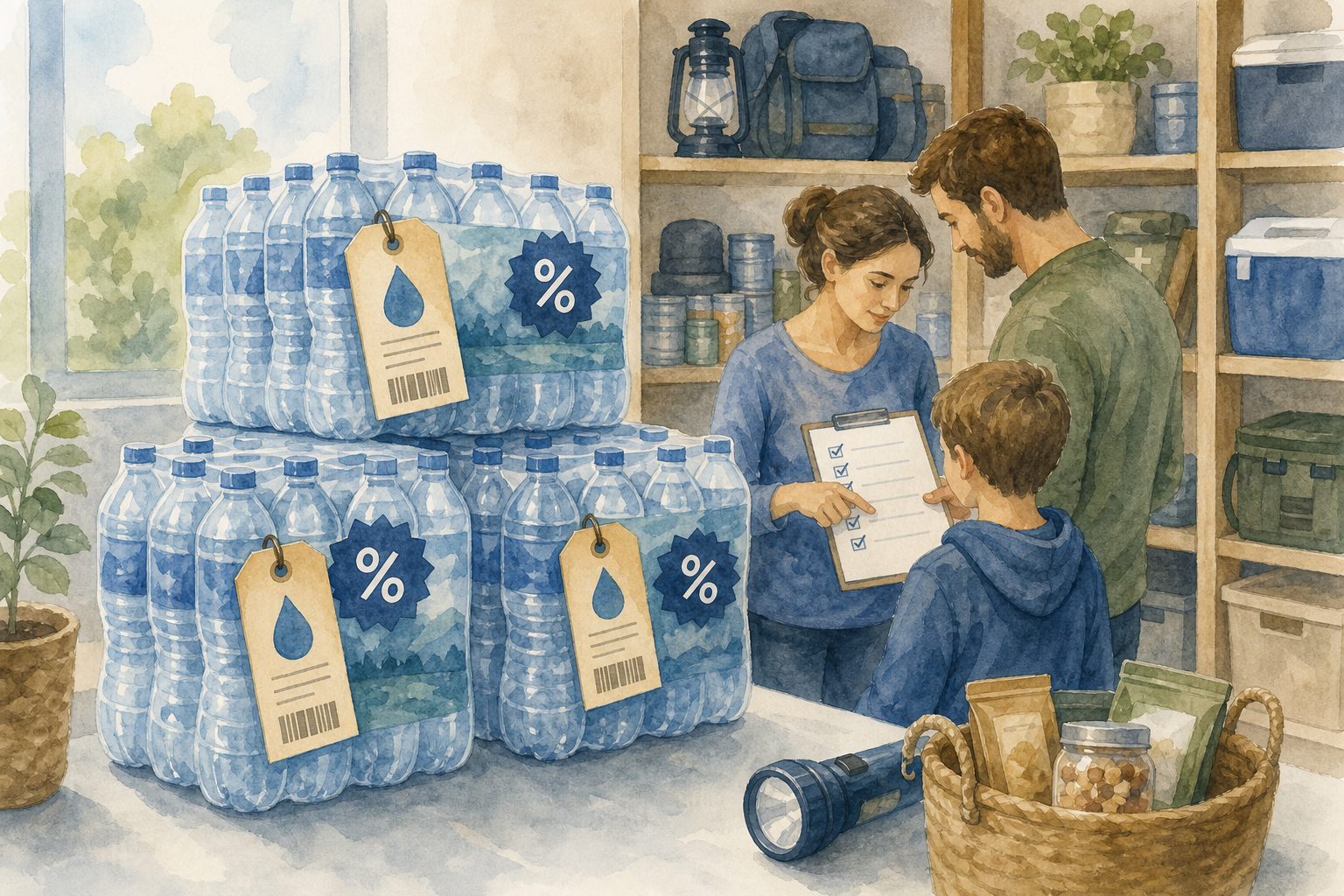
Stock Up: Bottled Water Deals for Family Emergency Kits
Jul 01, 2026
Why bottled water still belongs in a family emergency plan
Bottled water is the easiest immediate answer when tap water is unavailable. For families building a practical emergency kit, the question is not whether to store water. It is how to do it efficiently and without overpaying. This guide turns online discounts into clear buying decisions so purchases actually improve household resilience instead of taking up shelf space.
Quick planning numbers
Use a simple baseline: store at least 1 gallon per person per day and plan for a minimum three day supply. That covers drinking, minimal cooking, and basic hygiene in most short-term outages. Once you know the household target, convert it to common pack sizes to check deals.
Example calculation
Family of 4 for 3 days needs 12 gallons. One gallon equals 128 fluid ounces. If you buy 16.9 ounce bottles:
- Total ounces needed = 12 gallons x 128 oz = 1,536 oz
- Number of 16.9 oz bottles = 1,536 / 16.9 ≈ 91 bottles
- That is about four 24-packs (96 bottles) to meet the minimum target
How to compare deals: cost per gallon, not percentage off
Retailers show percentages that look impressive until you do the math. Convert any offer to cost per gallon to compare apples to apples.
- Steps: multiply bottle ounces by pack count to get total ounces, divide by 128 to get gallons, then divide price by gallons.
- Example A: 24-pack of 16.9 oz at $4.99. Total oz = 16.9 x 24 = 405.6 oz. Gallons = 405.6 / 128 = 3.17 gallons. Price per gallon = 4.99 / 3.17 = about $1.57 per gallon.
- Example B: 40-pack of 16.9 oz at $8.99. Total oz = 676 oz. Gallons = 676 / 128 = 5.28 gallons. Price per gallon = 8.99 / 5.28 = about $1.70 per gallon.
Example A is the better unit price even if the percent discount on Example B looks larger. Always run the unit math before hitting buy.
Pack size tradeoffs
Choose pack sizes with three practical constraints in mind: storage space, handling, and use-case.
- Small bottles (8 to 16.9 oz): Best for grab-and-go kits, kids, and portion control. Easier to distribute but more plastic waste and more shelf space per gallon.
- Multipacks (24 to 40 bottles): Useful for household rotation and short-term outages. Often cheaper per bottle, but check shipping and pallet weight.
- Large jugs (1 gallon, 2.5 gallon, 5 gallon): Lowest cost per gallon and fewer plastic containers to handle. Consider a pump or dispenser for 5 gallon containers and be realistic about lifting and pouring.
Shipping and weight: the hidden cost
Bottled water is heavy. When evaluating an online deal factor in shipping or pickup. A lower sticker price can be offset by a high shipping charge or by the cost and hassle of multiple trips to a store.
- Look for free shipping thresholds, Prime or retailer pickup options, and local inventory availability.
- If a deal saves you money but requires paid delivery, calculate the delivery fee per gallon and add it to the unit price before deciding.
Shelf life and storage basics
Bottled water often carries a manufacturer date or best-by date. Follow the label instructions, and treat bottled water like any other shelf item you rotate.
- Store in a cool, dark place away from chemicals and gasoline. Keep water off direct sunlight and away from heat sources.
- Keep cases on pallets or shelves instead of directly on concrete to reduce temperature swings and moisture exposure.
- Label purchase date and move older cases to the front so you rotate logically.
Rotation strategies so water actually improves resilience
Rotation turns storage into usable supply. A few practical methods keep inventory fresh without waste.
- Mark the purchase month on each case with a permanent marker. Use oldest-first when tapping supplies.
- Plan a yearly swap: buy replacement cases on sale and use older cases for bulk drinking needs, yard work, or events.
- Integrate stored water into routine household use rather than hoarding it until expiration. That reduces waste and keeps supplies current.
When a sale is genuinely worth buying
Buy when a deal passes three checks:
- Unit value: The price per gallon is better than your usual local option after including shipping.
- Storage fit: You have a planned, cool spot to store the order without crowding living space.
- Rotation plan: You will rotate the purchase into regular use within a sensible window so nothing expires unused.
If any of the three fails, skip the impulse and wait for a better deal or buy a more practical pack size.
Checklist before you click
- Calculate cost per gallon for the pack and add estimated shipping per order.
- Confirm package dimensions and whether you can lift and move the case comfortably.
- Verify seller and delivery options. Free pickup is often the most cost-effective choice.
- Note the manufacturer date or best-by date and mark the purchase date on the case for rotation.
Smart buying tactics
- Watch for bundled deals that include other prepping items you need, but still compare unit pricing.
- Trigger buys for multipacks when the per-gallon price falls below your personal threshold for re-stocking. For many families that threshold is around the local supermarket bulk price plus shipping.
- Consider mixing pack sizes. Keep a core of large jugs for daily needs and smaller bottles for grab-and-go kits.
Founder's note on making deals actionable
Best Prepping Deals was built to remove guesswork from buying prepping essentials online. The founder saw time-starved families forced to compare dozens of listings to find a real bargain. Today the focus is simple: surface bottled water offers that pass the unit-price test, call out shipping and handling pitfalls, and make it straightforward to add practical gallons to a household plan without wasting money or space.
FAQ
How long does bottled water last?
Check the label for manufacturer guidance. Many brands indicate a best-by date. Rotate stock regularly and use the label date as the basis for your replacement schedule.
Is it better to buy small bottles or big jugs?
Both have roles. Small bottles are convenient for portability and short-term kits. Jugs are cheaper per gallon and better for household reserves if you can lift and dispense them safely.
Should I worry about plastic taste or chemicals?
If you are storing water long term, keep it in a cool dark place and avoid storing next to chemicals or gasoline. Rotate supplies on a schedule to minimize any off tastes from extended storage.
Can I rely on online deals year round?
Online prices fluctuate with demand. Use unit-price math, watch shipping costs, and treat sale alerts as triggers to buy only when the deal meets your storage and rotation criteria.
When you are ready to act, look for offers that make both logistical and financial sense. A well-timed, math-backed purchase can add days of water to a family kit without the usual hassle of searching dozens of listings. That is the simple value Best Prepping Deals aims to provide: curated, practical opportunities to increase household resilience quickly.
Discover More Featured Deals
Explore our hand-picked selection of the best deals, curated daily just for you.