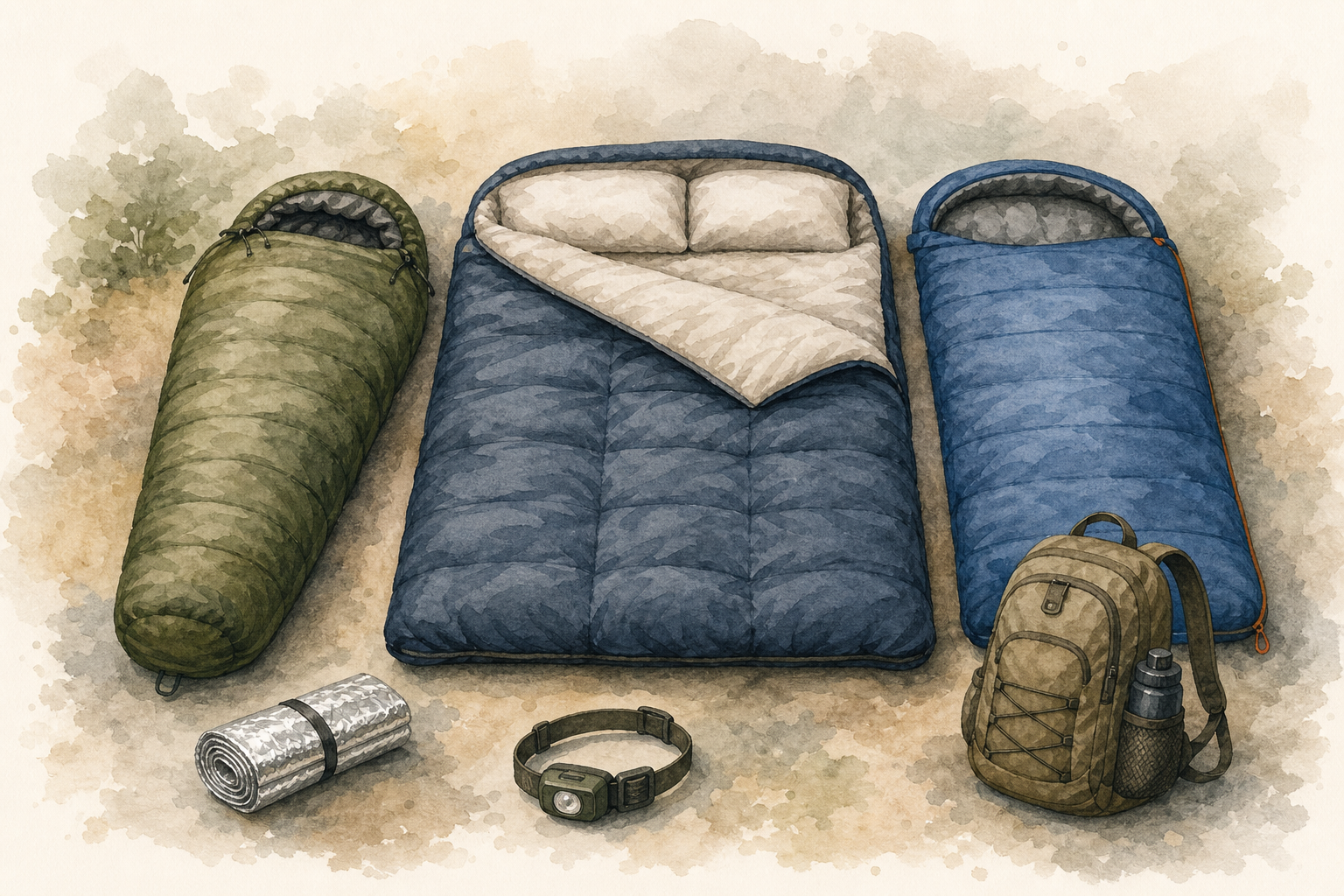
Best Budget Sleeping Bags for Preppers and Emergencies
Jul 06, 2026
Sleeping bags are a core prep item. In an emergency a dependable sleeping bag can mean the difference between staying comfortable and losing sleep when it matters most. This guide focuses on budget picks that actually work for emergency use, not flashy marketing copy. It covers the warmth and durability details preppers care about, practical storage and multi-use tips, and step by step tactics to spot real discounts on Amazon and major retailers.
What preppers need from a sleeping bag
For prepping the priorities are simple: reliable warmth, durable construction, ease of cleaning, and reasonable pack size. Weight and ultra-low temperature ratings matter less for car camping or home bug-in situations, but if you plan to carry a bag for evacuation make those factors primary.
Prepping Warmth Checklist
- Comfort temperature listed by the manufacturer. Use this, not marketing labels.
- Insulation type labeled as synthetic or down and fill weight if given.
- Fit that matches your height and layering plans. A tight fit reduces dead air and increases warmth.
- Hood and draft collar to stop convective heat loss around the head and neck.
- Compatibility with a sleeping pad to prevent conductive heat loss to the ground.
Durability and practical features checklist
- Shell fabric with a listed denier or ripstop description. Thin, vague fabric claims are red flags.
- Stitching and baffle design. Sewn-through baffles are common on budget bags; they limit insulation shift but can create cold spots at extreme low temps.
- Zipper quality and anti-snag features. Two-way zippers add versatility.
- Storage sack and stuff sack included. For long term storage prefer a loose cotton bag rather than constant compression.
- Washability or clear cleaning instructions.
Insulation: synthetic versus down for preppers
Synthetic insulation is the pragmatic choice for most budget prepping uses. It stays insulating when damp, is cheaper and machine washable. Down compresses better for ultralight carry and can last longer if well cared for, but it is more expensive and loses loft if wet. If you live in a humid or wet climate and need a budget bag, choose synthetic.
Temperature ratings and realistic expectations
Temperature ratings are not magic. Look for the manufacturer comfort rating and choose a bag rated slightly colder than the conditions you expect, especially if you sleep cold or plan to use the bag outdoors. For car camping and household outages a bag rated 20 to 40 degrees Fahrenheit comfort is often sufficient for most situations with simple layering.
How to avoid low-quality cheap listings
- Missing temperature rating or vague claims like warm for all seasons.
- Unclear insulation listed as generic fill without type or weight.
- Suspicious pricing that undercuts reputable brands by an implausible margin.
- Only manufacturer photos with no in-use or verified buyer images.
- Few or no verified purchase reviews and a pattern of short, generic comments.
Deal-hunting tactics for Amazon and major retailers
Finding a genuine discount takes more than seeing a lower price. Preppers should treat deals as value checks based on a small set of metadata: discount percent, posted date, previous price, and retailer source. Here are practical steps to lock in a budget sleeping bag that will actually perform.
On Amazon
- Check the seller and Fulfillment. Prefer listings sold by Amazon or by a reputable brand store. Third party sellers with limited return policies are higher risk.
- Verified purchase reviews and user photos are gold. Scan for comments on warmth, zipper quality, and durability.
- Use price history tools or the deal data shown on curated feeds to confirm a price drop is real and not a temporary algorithmic discount.
- Look for Warehouse Deals or Amazon Renewed for deeper discounts on returned or refurbished items if you accept minor cosmetic wear.
- Prime Day, seasonal clearance, and Lightning Deals can produce genuine bargains on name brands that meet prepping standards.
On other major retailers
- Walmart often carries budget synthetic bags in both online and in-store clearance aisles.
- REI Outlet and Backcountry clearance sell last season gear at steep discounts, useful when you want a reputable brand on sale.
- Outdoor specialty stores mark down older models at end of season. Those models usually retain performance and can be better than no-name new listings.
- Sign up for retailer emails and clip coupons. Many stores send targeted discounts for first-time buyers or seasonal sales.
Using curated deal feeds to save time
An AI-curated deal feed filters out noise and highlights offers that match prepping criteria. When a feed lists discount percent, posted date, current price, previous price, and retailer source you can quickly assess whether an item is a sensible purchase. Favor deals where the retailer is reputable and the posted date confirms the discount is recent. A high discount percent on a well-known brand often indicates a clearance or seasonal sale worth acting on.
Storage and multi-use tips
A good sleeping bag should serve multiple roles. Use these tips so your purchase works for car kits, family bug-in, and weekend camping.
- Store uncompressed for long term. Keep the bag in a loose cotton storage sack or hang it in a closet. Compression over months reduces insulation loft, especially for down.
- Use a sleeping pad under the bag for insulation from the ground. A pad is cheaper and more effective than upgrading to a much colder bag.
- Pair with an emergency blanket for added heat in exposure situations. The blanket is compact and multiplies a bag's rated warmth.
- Designate one bag for car and one for home to avoid cross-use wear. Keep a small repair kit for zipper fixes and patching outer fabric.
- Double bag option for families. Two standard bags zipped together or a roomy double-size bag can be more versatile than a single oversized bag.
Care and maintenance
- Follow cleaning instructions. Most synthetic bags are machine washable on gentle cycles. Down often needs specialized detergents or professional cleaning.
- Air out after use before returning to storage to prevent mildew and odors.
- Repair quickly small tears or zipper issues to prevent larger failures later.
Quick buying checklist
- Confirm a clear comfort temperature and insulation type.
- Verify seller reputation and return policy.
- Check recent verified reviews for warmth and durability comments.
- Compare the deal metadata: discount percent, posted date, previous price, retailer.
- Decide on synthetic for wet climates or down for compressibility needs.
- Pick the right size. Add 3 to 5 inches for side sleepers or heavy layers.
Founder note on curated deals
We built our deal feed to surface offers that match these exact prepping criteria. When you see a sleeping bag listing with discount percent, posted date, current price, previous price, and retailer, that metadata was selected to help you decide quickly and confidently. Use it to compare value rather than trusting price alone.
FAQ
Can a budget sleeping bag keep you warm in an emergency?
Yes. A budget sleeping bag with clear temperature ratings and decent synthetic fill can keep you warm for most household outages and car camping needs. Match the rating to expected conditions and add a sleeping pad and emergency blanket for added protection.
What comfort temperature should I choose for family use?
For general household and mild outdoor prep choose comfort ratings between 20 and 40 degrees Fahrenheit for mixed households. If you sleep cold or expect outdoor use in colder weather, step down to lower ratings accordingly.
Synthetic or down for prepping?
Synthetic is the practical, lower maintenance choice for most preppers because it handles moisture and cleans easily. Choose down only if compressibility and weight are critical and you are willing to care for it properly.
How should I store a sleeping bag for long term preparedness?
Store it uncompressed in a cotton or mesh bag in a dry place. Avoid leaving it compressed in a stuff sack for months. Periodically air the bag and inspect for damage.
Buying the right sleeping bag for prepping does not require a big budget. Prioritize clear temperature ratings, known insulation types, and reputable sellers. Use deal metadata to separate real discounts from marketing noise. Curated feeds can speed the process by surfacing only relevant offers that meet prepping standards so you get a practical bag at a sensible price.
When you are ready to shop, check curated sleeping bag deals on the site feed where offers are AI-selected and labeled with discount percent, posted date, current and previous price, and retailer so you can act quickly and with confidence.
Discover More Featured Deals
Explore our hand-picked selection of the best deals, curated daily just for you.