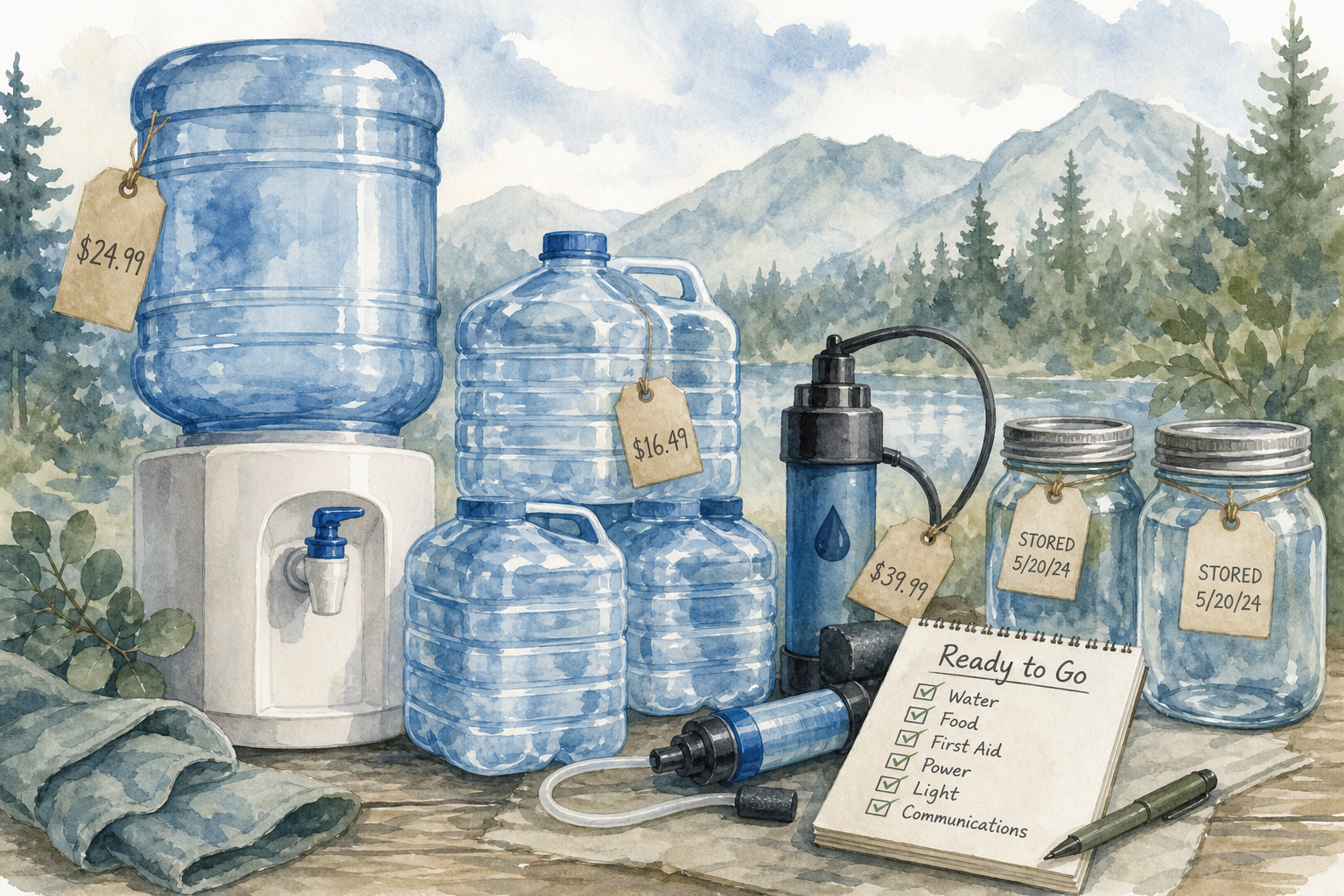
Is Primo Water a Smart Buy for Preppers?
Jul 13, 2026
Is Primo Water a Smart Buy for Preppers?
Water is a top prep purchase. Primo Water is a common choice because of its 5-gallon bottles and home delivery options. This article breaks down when Primo makes sense for emergency readiness, how to compare real costs, storage and rotation tips, portability tradeoffs, and how to spot limited-time Primo deals using an AI-curated deal feed.
What to evaluate before you buy
- Cost per usable gallon. Look beyond the sticker price and include delivery, container deposits or exchange fees, and any dispenser rental.
- Storage needs. Are you building a long-term pantry or short-term, grab-and-go kits?
- Portability. Large 5-gallon bottles are efficient but heavy. Smaller jugs, pouches, or filter systems may fit bug-out scenarios better.
- Rotation and hygiene. Water is not always "set and forget." Decide whether you want to rotate stock with regular drinking use or treat it as long-term stored water.
Per-gallon cost: how to calculate and compare
Use the same formula for any option to make apples-to-apples comparisons.
- Take the total price you pay for a container or delivery cycle.
- Add any recurring fees, delivery charges, or required deposits spread across the water volume received.
- Divide the net cost by the total gallons delivered to get cost per gallon.
Example using round numbers for illustration only: a 5-gallon Primo bottle sold for 7.00 with a 3.00 delivery fee and no deposit would be (7.00 + 3.00) / 5 = 2.00 per gallon. If a store-sold 1-gallon jug runs 1.25 and requires no delivery, that equals 1.25 per gallon. A home filtration system has an upfront cost but lower ongoing per-gallon costs once amortized over years.
Key point: compare total landed cost for the usable water, not just the listing price on a single jug.
Shelf life and storage best practices
- Sealed factory bottles. Properly sealed commercial bottles can be stored for long periods. Manufacturers typically recommend rotating within 1 to 2 years, which helps maintain taste and confidence.
- Opened bottles. Once placed on a dispenser or opened, treat water like other opened food items. Use within a few days to a week if refrigerated or keep caps tightly sealed and rotated regularly.
- Storage environment. Keep water out of direct sunlight, away from chemicals or fuel, and at stable, cool room temperature. Avoid freezing and repeated temperature cycles when possible.
- Container care. If you reuse containers, use food-grade containers only, sanitize with mild bleach solution between uses, and label with fill and rotation dates.
Portability versus pantry water: choose by mission
Match container type to how you plan to use water in an emergency.
- Home bug-in and family supply: 5-gallon Primo bottles or bulk jugs are efficient for storing larger volumes at home where weight is not a daily burden.
- Bug-out or vehicle kits: prioritize smaller, rugged containers, collapsible water carriers, and lightweight filtration solutions you can carry. 5-gallon bottles are impractical for most on-foot evacuations.
- Everyday dual-use strategy: rotate Primo or bulk bottles into household use, then replace them so pantry stocks stay fresh while still saving money compared to single-bottle purchases.
When Primo Water is a smart buy
- You want a low-effort, sealed source for short-term to medium-term home storage.
- You have the space and ability to swap empty bottles or schedule deliveries for rotation.
- Per-gallon landed cost is competitive with local retail bulk water after fees are included.
- You value the convenience of delivery and uniform container sizes for dispensers and stacking.
When to consider alternatives
- If per-gallon cost including fees is higher than local store bulk or discounted gallon jugs.
- If you need highly portable or lightweight options for bug-out plans.
- If you prefer a one-time investment like a home filtration system that yields very low ongoing per-gallon cost.
How to spot limited-time Primo deals using AI-curated feeds
Deal hunting is part craft and part math. Use these steps and filters to quickly see when a Primo offer is prepper-friendly.
- Confirm the total landed price. The deal feed should show current price, previous price, and the retailer. Add any known delivery or exchange fees to the deal price before comparing.
- Calculate per-gallon immediately. Convert the deal into a cost-per-gallon so you can compare with other water options in a single number.
- Look for bundled discounts. Deals that include free delivery, extra bottles, or discounted dispenser units often improve the effective per-gallon cost.
- Watch the discount percentage and date. A high percentage off on a recent post can indicate a genuine short-term sale. The feed should show date posted and discount amount so you can prioritize time-sensitive offers.
- Set alerts and thresholds. Use AI-assisted alerts for offers that drop below a target per-gallon price or exceed a minimum discount percent so you do not have to check manually.
- Compare retailers. The same brand and size can be cheaper at different retailers. Check Amazon, big-box stores, and direct delivery services in the feed before committing.
Quick decision checklist for preppers
- Calculate landed cost per gallon and compare to local bulk options.
- Decide whether the water will be rotated into household use or stored sealed long term.
- Reserve a portion of water in portable containers for evacuation plans.
- Prefer deals that include delivery or multiple bottles to lower the effective per-gallon price.
- Label and date all stored containers and schedule a simple rotation plan.
Practical founder perspective on deal discovery
Our approach to surfacing water deals grew out of the same problem many preppers face: too many listings and not enough time to compare them. Filtering offers by discount, posted date, and per-gallon math makes it easier to spot real savings on Primo bottles and similar options. A curated feed reduces decision time and helps build a resilient, budget-focused water stash.
FAQ
- Is Primo Water safe for long-term storage?
Sealed commercial bottles are suitable for long-term home storage when kept in cool, dark conditions. Plan to rotate within a reasonable timeframe and avoid exposing containers to heat or chemicals.
- How often should I rotate Primo bottles?
Rotation depends on your comfort level and storage conditions. A common practice is to rotate within 12 to 24 months by using older bottles for regular drinking and replacing them with new ones from your supply.
- Are delivery subscriptions worth it?
Subscriptions are worth it when they lower your overall per-gallon cost or save you time. Run the per-gallon math and include any recurring fees to decide if a subscription beats local bulk purchases.
- Can I use a Primo dispenser in an emergency?
Yes for home bug-in situations. For evacuation, transfer water into smaller portable containers or use a filtration device designed for field use instead of relying on a heavy dispenser bottle.
Choosing Primo Water is a practical option for many home preppers when the landed per-gallon cost and the convenience of sealed, uniform bottles match your storage plan. For those focused on portability or lowest possible cost per gallon, combine a mix of bulk purchases, smaller portable containers, and a simple filtration backup. If you want a fast way to compare offers, curated deal feeds that highlight discount percent, price history, and retailer source can save time and money. That is the exact approach used to surface selected prepping offers so readers can make confident choices without wading through hundreds of listings.
Discover More Featured Deals
Explore our hand-picked selection of the best deals, curated daily just for you.