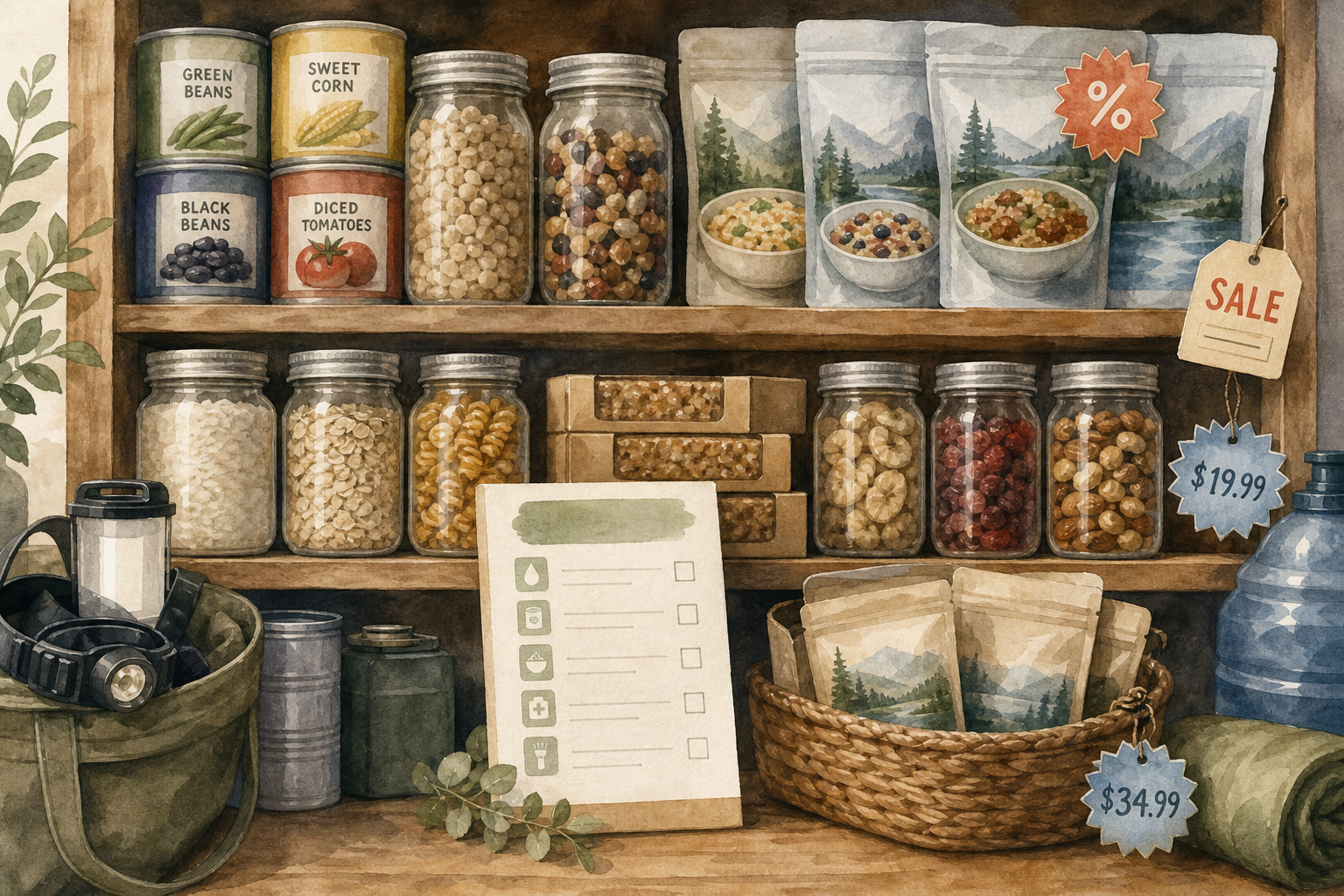
Healthy Food Swaps for Your Emergency Pantry
Jul 17, 2026
Why healthy food matters in your emergency pantry
Preparedness is about choices you can live on for days or weeks. Cheap calories alone are not enough. Prioritizing nutrient-dense, shelf-stable foods reduces fatigue, supports immune function, and makes eating during a disruption feel more normal. This guide focuses on practical swaps and deal-savvy tactics so you can stock a healthier pantry without overspending.
Nutrition priorities for long-term storage
- Calories plus quality Look for items that deliver energy and nutrients. Combine calorie-dense options with protein and fiber to avoid energy crashes.
- Protein Aim for sources that keep well: shelf-stable milk alternatives, canned tuna or chicken, protein bars with whole ingredients, and freeze-dried meats.
- Fiber and complex carbs Whole-grain crackers, instant oats, and lentils provide sustained energy and help digestion.
- Low to moderate sodium Many shelf-stable meals are very salty. When possible, choose lower-sodium versions or balance with low-sodium sides.
- Vitamins and micronutrients Fruit and vegetable pouches, freeze-dried veggies, and fortified emergency meals help prevent deficiencies.
Simple label checks when shopping
When you have limited time, these quick checks separate useful buys from marketing:
- Serving size and servings per container Calculate nutrients per realistic portion, not per tiny serving.
- Protein per serving Look for at least 8 to 12 grams on ready-to-eat meals or bars used as a meal substitute.
- Fiber Aim for 3 grams or more for a snack or side. Higher is better for longer satiety.
- Sugar and added sugars Check total sugars and added sugars. For kids choose lower-sugar bars and pouches.
- Ingredient list Prefer whole food ingredients first: oats, rice, beans, dehydrated vegetables, and named oils over vague terms like hydrogenated fats.
- Expiration and best-by dates Longer shelf life is good, but near-expiry bargains can be rotated into daily use.
Healthy swaps to consider
- Swap sugary breakfast cereals for instant oats Instant oats are cheap, fortified, and store well. Add powdered milk, nuts, or freeze-dried fruit for variety.
- Swap high-sugar snack bars for nutrient-dense emergency bars Look for bars formulated for meal replacement or survival rations that emphasize protein and simple ingredients.
- Swap canned soups with high sodium for low-sodium pouches Ready-to-eat pouches often have better ingredient lists and less sodium than some canned options.
- Swap single-use sugary drinks for powdered electrolyte mixes Powdered mixes keep well and rehydrate without excess sugar.
- Swap isolated carbs for balanced pouches Choose freeze-dried meals or pouches that combine grains, protein, and vegetables.
Kid-friendly shelf-stable picks
Kids need energy and familiar textures. Make purchases that reduce battle time and deliver nutrients.
- Lower-sugar fruit pouches and applesauce cups
- Single-serve peanut or almond butter packets
- Whole-grain crackers and instant oatmeal cups
- Cheese or shelf-stable dairy alternatives designed for kids
- Mild-flavored meal pouches with recognizable protein
How to rotate and use near-expiry buys
- First in, first out Store new purchases behind older ones. Label with purchase date if needed.
- Integrate sales into meal plans If you buy discounted items with shorter shelf life, plan to eat them in the coming weeks and replace them on sale.
- Repackage for space For opened bulk items, transfer to airtight jars or vacuum bags to extend usability.
- Use near-expiry for practice drills Turn rotation into family meal practice so you know how to prepare items under time pressure.
Deal-first tactics to spot healthy food discounts
Finding healthy options at a discount is the sweet spot between nutrition and budget. Use these tactics to find better deals fast.
- Search by discount percent Retail filters that show percent off cut through noise. Look for 20 percent or higher on quality brands.
- Watch Amazon Warehouse and Subscribe and Save Warehouse deals and subscribe discounts can yield big savings on sealed, near-expiry stock.
- Set price alerts Tools like CamelCamelCamel and browser extensions track Amazon prices and show historical lows.
- Check bundle and family packs Per-serving cost often drops substantially in bulk packs; split with a friend or family if needed.
- Follow lightning deals and retailer clearance Quick daily deals often include freeze-dried and MRE-style items. Decide fast and buy when it matches your checklist.
- Compare per-serving cost Divide total price by calories or servings to compare apples to apples across formats.
Example purchase types you will commonly see on sale
- Freeze-dried meals Long shelf life, full meals that rehydrate quickly. Good for balanced calories plus veggies.
- MRE-style bars and meal replacement bars Compact, shelf-stable, often fortified with vitamins and minerals. Use as snacks or short-term meal substitutes.
- Nutrient-dense pouches Tuna, chicken, or ready-grain pouches combine protein and carbs with decent shelf life.
- Emergency food bars Designed for storage and endurance. Check sugar and ingredient lists and prefer higher-protein options.
- Freeze-dried fruit and vegetable packs Use as sides, snacks, or to boost meals with micronutrients.
Sample 72-hour healthy kit built from sale items
This kit is designed for one adult and assumes items were purchased on sale. Swap or scale items for family needs.
- 3 freeze-dried entree pouches (Dinner replacement with protein and vegetables)
- 3 nutrient-dense bars or MRE-style bars (Breakfast or meal substitute with 10 to 15 g protein each)
- 3 instant oatmeal cups (Add powdered milk or nut butter)
- 6 fruit pouches or freeze-dried fruit servings (Snacks and vitamins)
- 3 single-serve nut butter packs (Protein and healthy fats)
- 3 electrolyte packets (Hydration without excess sugar)
- 1 can or pouch of tuna/chicken (Extra protein, use with crackers)
Rotate these items into your kitchen during normal weeks so you use older items first and replace them when you spot deals. This keeps the kit fresh and reduces waste.
Quick shopping checklists
Print or memorize these short checks to speed decisions.
- Label checklist Serving size, protein, fiber, sugars, sodium, ingredient order.
- Deal checklist Percent off, per-serving cost, expiration date, seller reputation, return policy.
- Household checklist Allergens, kid preferences, ability to rehydrate without power, storage space.
Practical note from the founder
Building Best Prepping Deals started with a simple problem: too many listings, not enough time. The editorial approach here is built around that problem. Use the deal tactics above to prioritize healthier choices and keep purchases actionable. Our curation is designed to surface those opportunities so you can click, compare, and buy faster.
FAQ
- Q: Can freeze-dried meals be as nutritious as canned food?
A: Yes. Many freeze-dried meals preserve vitamins and include balanced macronutrients. Check the label for protein, fiber, and added sodium to compare.
- Q: Is it safe to buy near-expiry food on sale?
A: It can be a smart choice if you plan to eat and rotate it quickly. Confirm the seller, packaging integrity, and return policy before buying.
- Q: How much water do freeze-dried meals need?
A: Instructions vary by brand. Many require one cup or less of hot water. Keep a separate list of water needs when assembling kits.
Healthy emergency food is a balance of nutrition, taste, and cost. With tight label checks and a deal-first shopping approach, you can build a pantry that keeps your family nourished and calm when it matters most.
Discover More Featured Deals
Explore our hand-picked selection of the best deals, curated daily just for you.