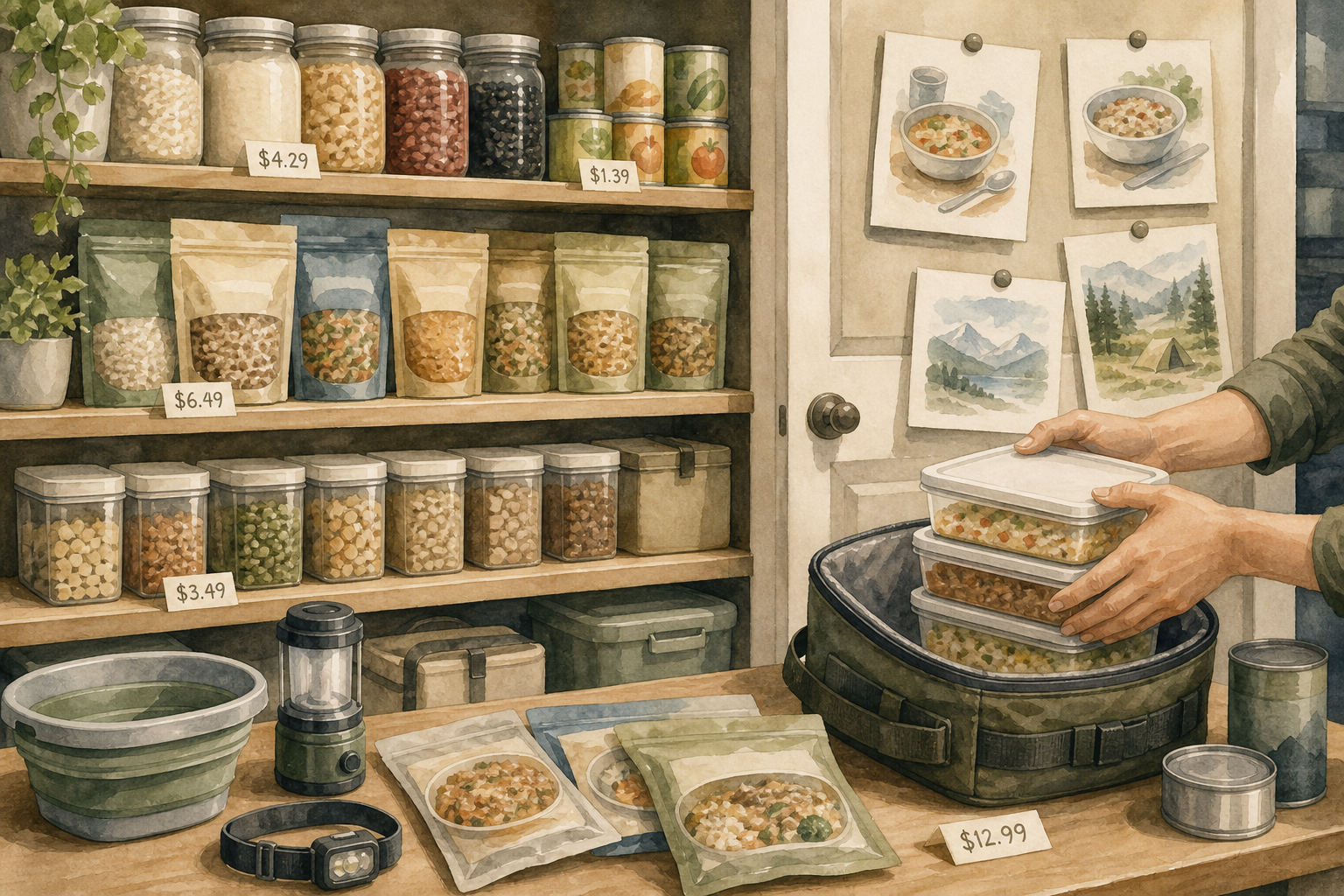
Turn Food Network Recipes into Emergency Meal Kits
Jul 27, 2026
Many home cooks turn to the Food Network for crowd-pleasing dinner ideas. Those same flavors can live in your emergency pantry with a few smart swaps, make-ahead kits, and storage rules. This guide shows how to adapt popular recipes into shelf-stable meals your family will actually eat during an outage, plus a prioritized shopping checklist and deal-hunting tips that keep costs low.
Why adapt Food Network recipes for an emergency pantry
Familiar flavors reduce mealtime friction when stress is high. Instead of relying on unappetizing survival rations, you can create comforting meals that resemble what your family already loves. The goal is practical: preserve taste, simplify prep, and build a pantry that is easy to maintain and afford.
Core substitutions: pantry-first ingredient swaps
- Fresh meat -> canned chicken, canned tuna, canned salmon, freeze-dried meat, or shelf-stable pouches. Use drained canned protein for soups, casseroles, and pasta dishes.
- Fresh vegetables -> canned vegetables, canned tomatoes, freeze-dried vegetables, or dehydrated mixes. Rehydrate or add directly to hot dishes.
- Dairy -> powdered milk, shelf-stable UHT milk, evaporated milk, or canned coconut milk for creamy sauces.
- Butter and cream -> cooking oil, ghee in jars, and powdered creamer for richness.
- Fresh herbs -> dried herbs and herb blends. Use about one third the volume of fresh herbs unless labeled otherwise.
- Fresh lemon -> bottled lemon juice or citric acid for brightness.
- Eggs -> powdered eggs for baking and scrambles when necessary.
- Stock and broth -> bouillon cubes, concentrated bouillon paste, or powdered stock for depth of flavor.
- Perishables in sauces -> canned tomato sauce, tomato paste, or reconstituted tomato powder in place of fresh tomato bases.
Three make-ahead emergency recipes inspired by Food Network favorites
1. Creamy Chicken Noodle (shelf-stable)
- Ingredients: canned chicken, instant egg noodles or quick-cook pasta, powdered milk or evaporated milk, bouillon cube, dried parsley, salt and pepper, canned mixed vegetables.
- Prep: Assemble single-serving or family-size kits in zip-top or vacuum-sealed bags. Include measured pasta, a small pouch of bouillon, powdered milk pre-measured, and a packet of dried vegetables. Add a can of chicken to a separate slot.
- To serve: Boil water and cook pasta. Add bouillon and powdered milk, then stir in canned chicken and vegetables to heat through.
2. Tomato Basil Pantry Pasta
- Ingredients: dried pasta, canned crushed tomatoes, dried basil, garlic powder, olive oil, canned or freeze-dried parmesan or powdered cheese, canned beans for protein.
- Prep: Pack pasta with a small jar or pouch of crushed tomatoes and spice mix. Add a can of beans for protein.
- To serve: Heat tomatoes with water and oil, toss with cooked pasta and beans, finish with rehydrated or powdered cheese.
3. One-Pot Vegetarian Chili
- Ingredients: canned beans variety, canned diced tomatoes, rehydrated or freeze-dried bell pepper and onion, chili powder, cumin, bouillon if desired, and a pouch of instant rice.
- Prep: Layer canned ingredients and a spice packet. Store rice separately so it keeps longer.
- To serve: Heat all canned ingredients and spice packet in a pot. Serve over rice.
Portioning, packing, and labeling for family-friendly meal kits
- Decide servings. Plan by portions per person. For adults, a single meal kit that includes 2 to 3 ounces of dry pasta or 1 cup of cooked rice per serving is a good baseline.
- Use clear containers. Stackable plastic tubs, vacuum-sealed pouches, or mylar bags are easy to store and rotate.
- Label clearly. Put meal name, date packed, and simple reheating instructions on each kit. Include the needed water amount where rehydration is required.
- Organize by access. Keep quick, no-cook options in an easy-to-reach place and more involved meals in a long-term storage area.
- Include a heating plan. If power may be out, store a small camp stove, disposable or solid fuel tabs, and a lightweight pot near your meal kits.
Prioritized shopping checklist with budget tiers
Below are practical tiers to match common budgets. Choose items that map to favorite Food Network recipes so the transition feels familiar.
Starter tier (good for building a basic 2 week kit)
- Dry pasta and rice
- 4 to 6 cans of mixed vegetables and tomatoes
- 4 to 6 cans of protein (tuna, chicken, beans)
- Bouillon cubes or paste
- Small supply of powdered milk and powdered eggs
- Basic spices: salt, pepper, garlic powder, dried basil, chili powder
- One camp stove or boxed cooking method and a manual can opener
Everyday saver tier (expand to a month or family of four)
- Bulk rice and pasta
- 6 to 12 cans of mixed proteins and vegetables
- Freeze-dried vegetables or fruit for variety
- Freeze-dried entrées for convenience
- Emergency food bars and water pouches
- Mylar bags and oxygen absorbers for rotating home-prepared mixes
Comfort-ready tier (focus on long-term shelf life and variety)
- Large packs of freeze-dried entrees and meats
- Multiple cases of canned proteins
- Specialty items like shelf-stable baking mixes, condiments in jars, and powdered cheeses
- Durable cookware set and reliable portable stove
- Water storage containers and water purification options
Deal-hunting tips to keep costs low
- Buy staples in bulk. Unit price often falls as package size increases.
- Shop seasonal sales. Grocery cycles and online promotions often include canned goods and bulk dry foods.
- Set deal alerts. Use curated deal feeds to track price drops on freeze-dried entrees, bulk rice, and canned proteins so you buy at the right moment.
- Compare unit prices. Look beyond sticker price to price per ounce or per serving.
- Rotate and use. Buy a modest amount regularly and rotate items through weekly meal plans to avoid waste.
- Consider multipacks. Emergency food bars, pouches, and multi-serving cans are often cheaper per serving than single items.
Reheating and no-cook options during outages
- For hot meals, a small camping stove or single-burner butane stove heats water quickly. Pre-portion water needs in labeled bottles for ease.
- Many freeze-dried meals rehydrate with boiling water. Keep a kettle or pot reserved for emergency cooking.
- No-cook options include energy bars, nut butters, canned fish on crackers, and ready-to-eat pouches. Keep a week of no-cook meals accessible for immediate outages.
Final checklist and next steps
- Pick three Food Network recipes your family loves and list pantry-friendly substitutes.
- Assemble one week of meal kits using the Starter tier checklist.
- Label kits with date and reheating instructions, then store for easy access.
- Sign up for deal tracking or curate alerts for freeze-dried entrees, canned proteins, and bulk staples so you can buy at discount prices when available.
The site was created by a practical prepper who wanted speed and convenience when building a pantry. Use quick, AI-curated deal feeds to find discounted freeze-dried entrees, water pouches, and bulk canned goods that map directly to the checklist above. That approach saves research time and keeps purchases aligned with real family meal plans rather than generic survival lists.
FAQ
- Can I really recreate Food Network recipes from pantry ingredients?
Yes. The core flavors come from seasoning, stock, and fat. With canned proteins, dried herbs, and bouillon you can approximate many recipes while keeping meals shelf-stable.
- How should I store homemade meal kits for the longest practical life?
Keep dry kits in a cool, dark, and dry place. Use vacuum-sealed or mylar bags for long-term stability and label with pack dates and instructions.
- What is the easiest no-cook comfort meal to keep on hand?
A mix of canned tuna or chicken, crackers, nut butter, and canned fruit offers variety and nutrition without cooking.
- How can I get the best prices on freeze-dried entrees and bulk staples?
Track discounts, buy multipacks during sales, and use curated deal listings to spot price drops instead of shopping every retailer manually.
Discover More Featured Deals
Explore our hand-picked selection of the best deals, curated daily just for you.