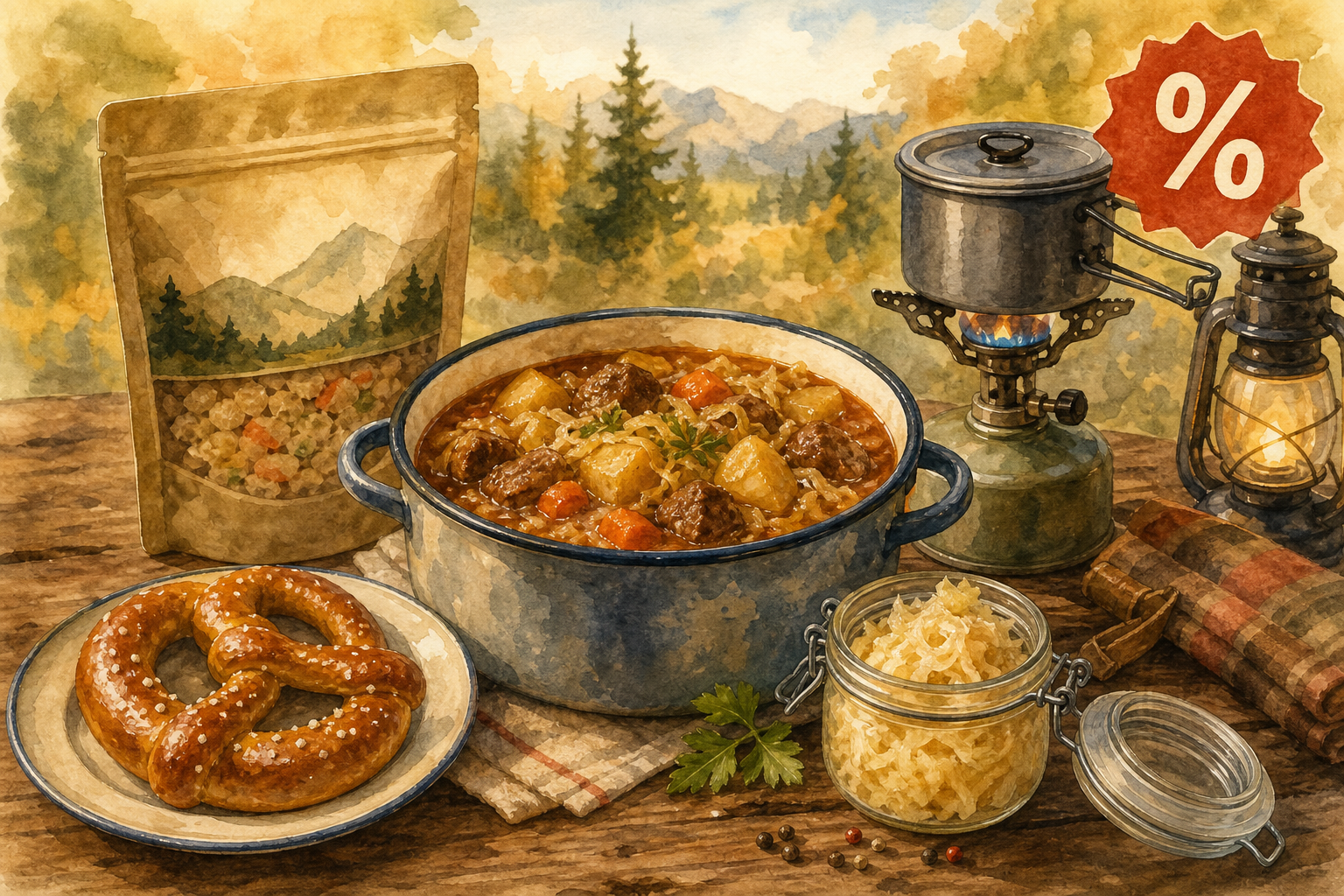
German food for your emergency pantry
Jul 31, 2026
German food is often thought of as fresh sausages, braised meats, and warm pretzels. Those same flavors can be adapted for long-term storage and family-friendly emergency meals. This article explains which German dishes translate well to freeze-dried pouches, MRE-style entrees, and pantry staples, how to evaluate deals on Amazon and other retailers, quick rehydration tips, and simple budget swaps that stretch taste and calories for households.
Why German flavors work for an emergency pantry
Comfort foods matter during stressful situations. German flavors are built on hearty textures, savory gravies, pickled sides, and simple starches. Those traits make them practical for preparedness because they are forgiving during rehydration, mix well with instant bases, and pair with long-shelf ingredients like powdered milk, instant potatoes, and canned meat.
Which German dishes translate best
- Stews and braises - Sauerbraten-style or beef stews rehydrate well from freeze-dried meat-plus-gravy pouches.
- Sausage-style meals - Sliced or powdered sausage blends work in soups, noodles, or reheated canned packs.
- Soups - Potato-leek, lentil, or pea-based German soups are easy to rehydrate and stretch with bread.
- Sides and starches - Spaetzle can be approximated with instant egg noodles or instant dumplings. Instant mashed potatoes are a solid stand-in.
- Pickled sides - Shelf-stable jars of sauerkraut or canned red cabbage bring authentic tang without refrigeration.
- Bakery-style snacks - Soft pretzels do not store well long-term, but pretzel bites or packaged hard pretzels and mustard packets provide the flavor profile.
Suitable packaged formats
- Freeze-dried full meals in pouches for single-serve warmth and texture.
- MRE-style entrees for portability and long shelf life.
- Canned meats and stews for low-cost family portions.
- Vacuum-sealed cured sausages and jerky for protein and German spice notes.
- Jarred fermented foods for flavor and probiotics when available.
How to evaluate Amazon deals and other online offers
Finding a low price is only half the job. Prioritize offers that match prepping criteria so savings are useful during an emergency.
Quick checklist before you buy
- Check the expiration or best-by date - Avoid bundles where the earliest expiration is within months unless you plan to rotate quickly.
- Look at packaging integrity - Vacuum seal or Mylar-style packaging is preferable to reduce oxygen exposure.
- Compare unit price - Price per ounce or price per serving reveals true savings better than headline discounts.
- Review ingredient and nutrition labels - Note sodium, allergens, and calories to ensure family suitability.
- Confirm seller and fulfillment - Buy fulfilled by a major retailer when possible to simplify returns and ensure authenticity.
- Watch for multipacks and subscribe options - Multipacks can lower unit cost and subscribe options may offer steady discounts for rotation stock.
- Read recent buyer photos and reviews - Photos can reveal packaging condition and real rehydrated appearance.
Rehydration tips to preserve German textures and flavor
- Heat matters - Hot water or simmering restores texture faster than cold soak for gravies and meat pouches.
- Use concentrated stock - Beef or vegetable bouillon improves depth for stews and soups without extra weight.
- Layer flavors - Add a splash of vinegar to mimic sauerbraten tang or a dab of mustard to echo Bavarian profiles.
- Restore richness - A teaspoon of powdered butter or oil can improve mouthfeel for rehydrated gravies.
- Thicken intelligently - Instant mashed potato flakes or a small amount of flour slurry re-thicken soupy stews to a gravy-like consistency.
- Portion for family meals - Rehydrate concentrated pouches in a larger pot and combine with shelf-stable sides to feed multiple people at once.
Budget swaps that keep flavor and calories
- Instant mashed potatoes for spaetzle - Use instant potatoes with a beaten powdered egg or egg powder to get a dumpling-like texture with less cost.
- Canned corned beef or canned roast for braised beef - Shredded, seasoned, and simmered with bouillon and vinegar it approximates sauerbraten flavors.
- Freeze-dried vegetable mixes for red cabbage - Rehydrate with apple or vinegar for similar tang and color.
- Smoked paprika and caraway seeds - Small spice jars go far and supply the signature notes of many German dishes.
- Bulk powdered milk and bouillon - These are cheap ways to add creaminess and body to soups and sauces.
Simple panic-friendly German meal ideas
- Hearty beef stew - Rehydrate freeze-dried beef cubes and gravy, add instant potatoes and a splash of vinegar for tang.
- Sausage noodle skillet - Slice shelf-stable sausages, sauté with instant egg noodles and mustard, finish with a jarred sauerkraut side.
- Pea soup with smoked notes - Rehydrate split pea soup mix with bouillon and add smoked sausage or jerky pieces for authenticity.
- Comforting potato mash and canned stew - Combine instant mashed potatoes with a canned meat stew and top with powdered milk for richness.
Packing, rotation, and storage tips
- Store pouches and cans in a cool, dark place to maximize shelf life.
- Label purchase and best-by dates on multipacks so rotation is easy.
- Create family-sized kits that pair one main pouch with two sides and one jarred fermented item.
- Rotate frequently used items into household meals so nothing expires unused.
Practical closing and a note on finding deals fast
German-style comfort foods are practical additions to an emergency pantry because they rehydrate well, pair with common shelf staples, and add familiar flavor that supports morale. As the founder behind the curated feed at Best Prepping Deals, the goal was to save you the repetitive searching so you can spot timely discounts on suitable long-shelf items without sorting thousands of listings. Use the checklists above when you evaluate offers so savings turn into reliable, ready-to-eat comfort for your household.
Frequently asked questions
-
Can sauerkraut be stored long term?
Yes. Shelf-stable jars or vacuum-packed sauerkraut can last well on the pantry shelf when unopened. Check the best-by date and seal integrity and rotate into meals over time.
-
Will freeze-dried German meals taste like fresh food?
Freeze-dried meals will not be identical to fresh, but they retain much of the original flavor. Proper rehydration, hot water, and small finishing touches like mustard or vinegar improve authenticity.
-
Are canned sausages a good prepper protein?
Yes. Canned or vacuum-sealed sausages provide shelf-stable protein and carry the characteristic flavors of German cuisine. Check sodium and preservative notes for family dietary needs.
-
How do I compare unit price for best value?
Divide price by weight or number of servings to find cost per ounce or cost per serving. This reveals true value, especially with different package sizes or multipacks.
Discover More Featured Deals
Explore our hand-picked selection of the best deals, curated daily just for you.