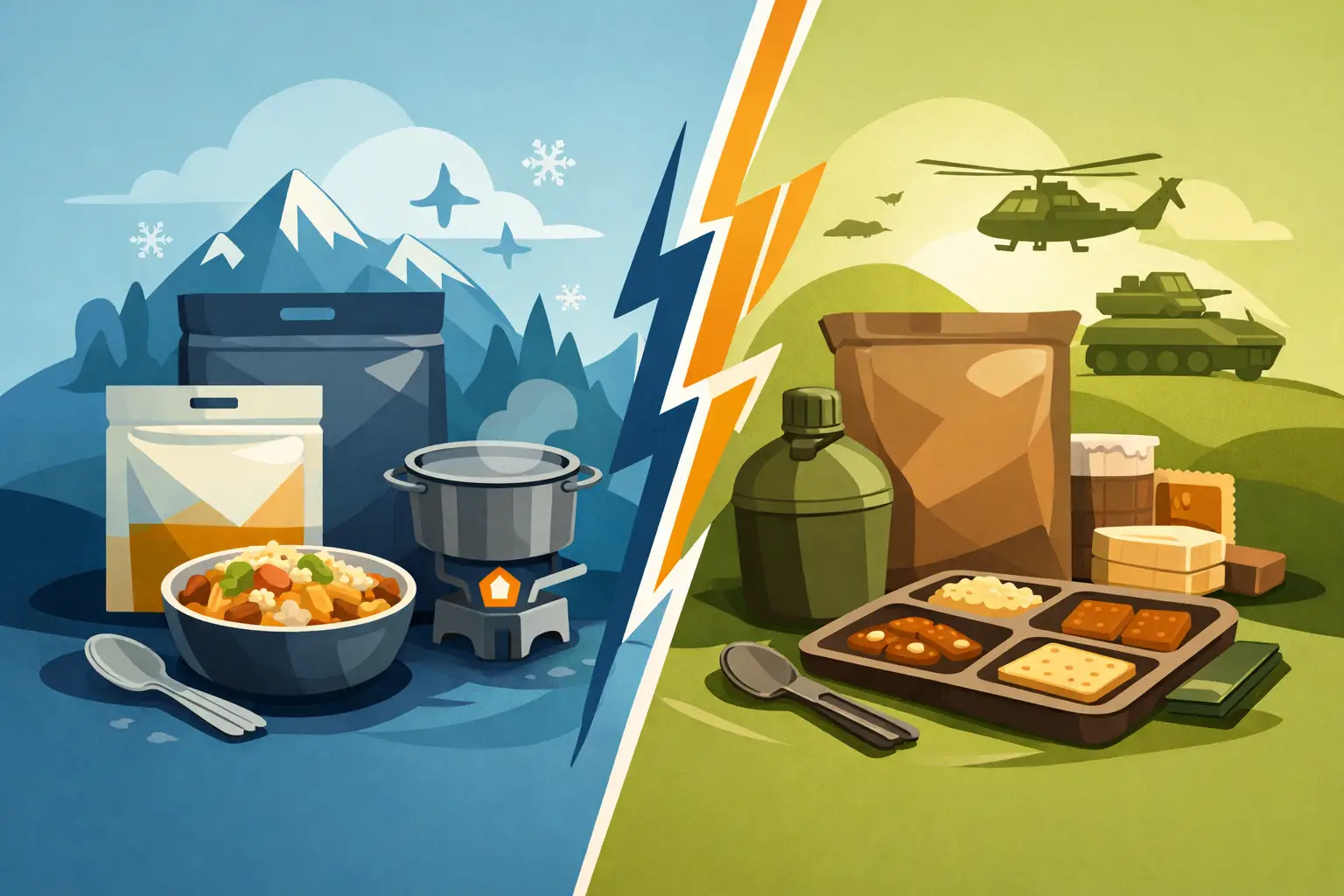
Freeze Dried Meals Versus MRE: Which Wins?
May 02, 2026
A lot of emergency food buying goes sideways at the same point - someone sees a sale, grabs a case, and only later asks whether it actually fits the plan. That is the real question behind freeze dried meals versus MRE. They are both useful, but they solve different problems, and treating them as interchangeable is how you end up with a heavy bug-out bag, an overpriced pantry, or food your family does not want to eat.
If you are building supplies for outages, evacuations, vehicle kits, or longer-term pantry backup, the better choice depends on where the food will be stored, how fast you may need it, and what trade-offs you can live with. Weight, water, shelf life, calories, and cost all matter. So does the simple reality that emergency food only works if you can actually use it when conditions are not ideal.
Freeze dried meals versus MRE: the basic difference
Freeze-dried meals start as regular cooked food with moisture removed through a low-temperature drying process. The result is light, compact food designed to last a long time, but it usually needs water before you eat it. In practical terms, freeze-dried meals are built for storage efficiency and shelf life.
MRE stands for Meal, Ready-to-Eat. These are fully prepared meals sealed in durable packaging and meant to be eaten as-is, hot or cold. Many include an accessory pack and a flameless ration heater, which makes them appealing when you have no stove, no pot, and no clean water to spare.
That difference drives almost every buying decision. Freeze-dried meals trade convenience in the moment for storage advantages over time. MREs do the opposite.
Shelf life and storage: freeze-dried usually wins
If you are stocking food for long-term household readiness, freeze-dried meals have a clear edge. Many are marketed with shelf lives measured in decades when stored correctly. That makes them attractive for emergency pantry use, especially if you want to buy once and rotate less often.
MREs typically have a shorter shelf life, and that shelf life depends heavily on storage temperature. Keep them cool and they can last for years. Store them in a hot garage, car trunk, or attic, and the clock moves much faster. For a lot of suburban households, that matters more than marketing copy.
This is one reason freeze-dried food often makes more sense for bug-in supplies and deep pantry backup. If the goal is a stable reserve for grid issues, storms, or supply disruptions, long storage life gives you more margin and less waste.
Weight and packability: the bug-out bag factor
For portability, freeze-dried meals are hard to beat. Once the water is removed, the weight drops dramatically. That matters if you are carrying several days of food in a pack or trying to keep a vehicle kit from getting overloaded.
MREs are much heavier because the water is already in the meal. One MRE gives you grab-and-go convenience, but a few days' worth adds up fast. If you have ever packed one alongside water, first aid, extra layers, and basic gear, you know how quickly the bag stops feeling realistic.
That does not mean MREs are bad for mobile use. It means they are best when mobility is limited or short-term. A truck bag, a boat kit, a work locker, or a get-home setup can all justify a couple of MREs. A lightweight evacuation bag for miles on foot usually points toward freeze-dried meals instead.
Water and prep needs: MREs win when conditions are rough
This is where MREs earn their place. You can open one and eat it immediately. No boiling water, no cup, no stove, no cleanup beyond the packaging. In a power outage, roadside delay, or chaotic first 24 hours of an emergency, that simplicity is worth a lot.
Freeze-dried meals need water, and usually hot water if you want the best texture and taste. Some can be rehydrated with cold water, but results vary and patience helps. If your emergency plan already includes stored water, a stove, and a way to heat it, freeze-dried meals are easy enough. If your scenario involves disrupted utilities, uncertain water access, or rapid movement, that extra step becomes a real limitation.
This is the part buyers sometimes miss. Food is not just food. It is food plus the fuel, water, and equipment needed to make it usable.
Calories and satiety: compare the label, not the category
People often assume MREs are automatically more substantial. Sometimes they are, but the safer move is to compare actual calorie counts and serving sizes. A full MRE is designed as a complete field meal, so it may include sides, spreads, snacks, desserts, and drink mixes. That can make it feel more filling right away.
Freeze-dried meals vary a lot. Some pouches look like a dinner but only deliver a modest calorie count. Others are intentionally high-calorie and built for backpacking or emergency use. The packaging can be misleading if you do not check the details.
For household preparedness, focus less on whether the food is freeze-dried or an MRE and more on how many usable calories you are getting per dollar, per tote, and per person per day. Families building emergency food on a budget usually do better with that math than with brand hype.
Taste, texture, and menu fatigue
Neither option is gourmet, but both have improved. Freeze-dried meals can taste surprisingly good when prepared correctly, especially dishes that rehydrate well, like pasta, rice-based meals, soups, and scrambled egg mixes. The downside is texture. Some ingredients bounce back better than others.
MREs tend to be more consistent because the food is already hydrated and cooked. The trade-off is that many have the familiar dense, shelf-stable feel that reminds you this was built for function first. Some people like that. Some get tired of it quickly.
Menu fatigue is not a small issue in emergencies. If you are feeding kids, a spouse, or anyone picky, variety matters. A mixed pantry usually works better than going all-in on one format.
Cost: freeze-dried meals versus MRE is not a simple price check
At first glance, MREs can look expensive per meal, while freeze-dried meals can look expensive per pouch. Neither number tells the whole story.
Freeze-dried meals often bring better value for long-term storage because you are paying for lighter weight and longer shelf life. But you also need water and sometimes fuel, which are part of the real cost. MREs are more self-contained, but you pay for that convenience in weight, bulk, and usually shorter storage flexibility.
For deal-focused shoppers, timing matters. Emergency food pricing swings a lot. Cases of MREs may look attractive during a temporary markdown, while freeze-dried buckets or pouches may offer better long-term value when bought during seasonal promotions. If you track preparedness deals regularly, which is exactly how many BestPrepping.Deals users shop, you will notice that the smarter buy is often the one that matches the use case, not the deepest percentage off.
The best use case for each
Freeze-dried meals make the most sense for long-term pantry storage, bug-in planning, and lightweight carry situations where you can count on water. They also work well if you want to build a layered food reserve without constantly rotating stock.
MREs make the most sense for short-term emergencies, vehicle kits, immediate-use supplies, and situations where cooking may not be possible. They are strong as convenience insurance. You grab one, eat, and move on.
For many households, this is not an either-or choice. It is a split decision. Keep freeze-dried meals as the long-haul backbone and add a smaller number of MREs for fast access and no-cook scenarios.
How to choose without overbuying
A simple way to decide is to match the food to the scenario. For a 72-hour bag, lean toward weight savings and realistic carry loads. For a car kit, prioritize immediate usability. For home backup during storms or outages, shelf life and storage efficiency matter more.
Then think about your weak points. If your water storage is thin, buying a large stack of freeze-dried meals before solving that problem is backwards. If your only emergency food is MREs stored in a hot shed, that is not much of a plan either.
Start with a small amount of both if you are unsure. Test one freeze-dried meal at home. Eat one MRE on a day when you are busy and tired. The better choice becomes obvious once you use them under less-than-perfect conditions.
Preparedness shopping works best when it is specific. Not dramatic, not random, and not based on whatever case is on sale this week. Pick the food that fits the job, and your storage shelf will start making a lot more sense.
Discover More Featured Deals
Explore our hand-picked selection of the best deals, curated daily just for you.