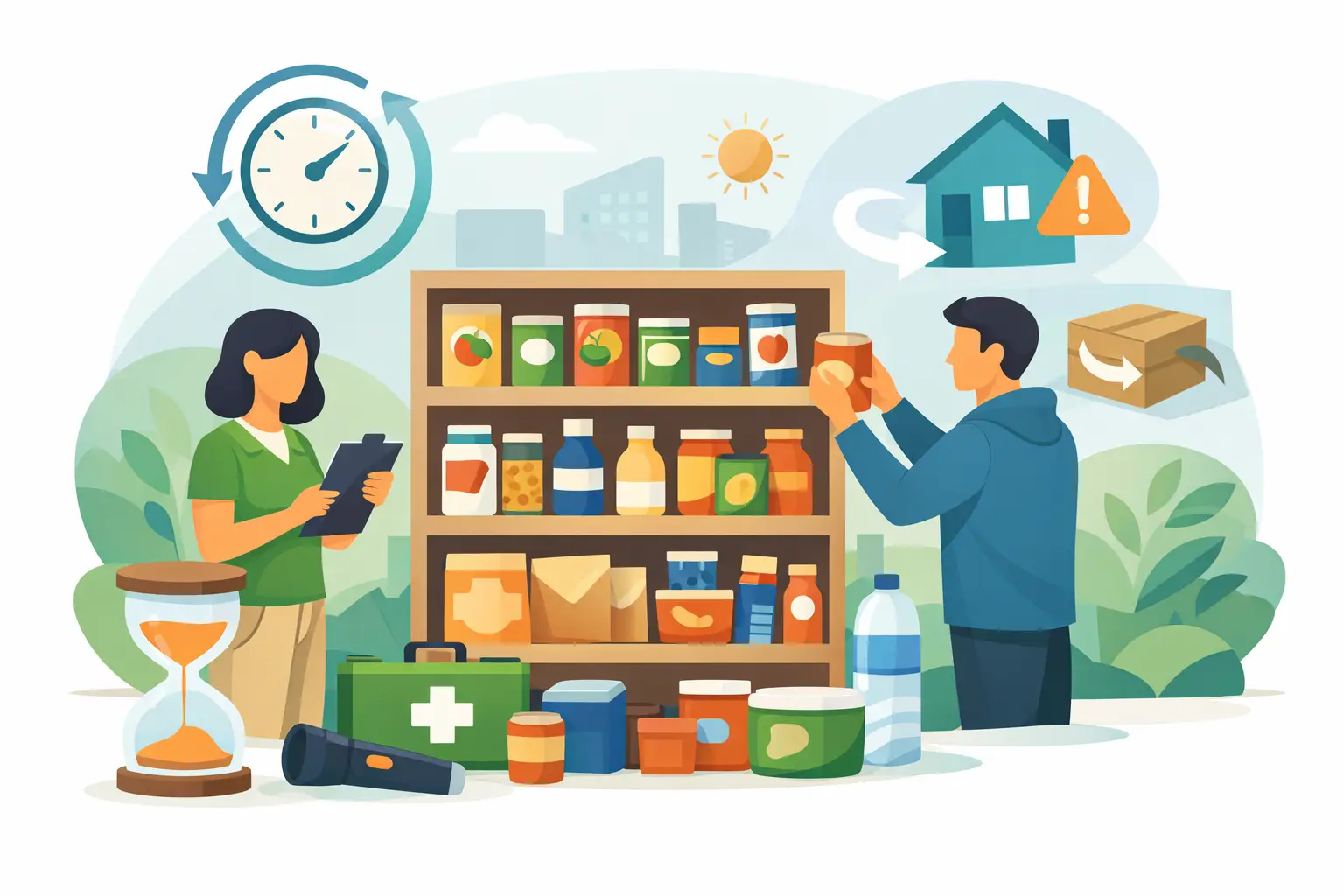
Guide to Emergency Pantry Rotation
May 22, 2026
The expensive mistake usually happens after the shopping is done. You build a solid emergency food stash, stack cans in a closet, add rice, oats, soup, maybe a few freeze-dried meals, and feel covered. Then six months or two years later, you find dented cans in the back, duplicate items up front, and a few foods nobody in the house wants to eat. A good guide to emergency pantry rotation fixes that before it turns into wasted money.
Emergency pantry rotation is not about making your storage look perfect. It is about keeping useful food in the house, reducing spoilage, and making sure your backup supply stays practical for real outages, job loss, storms, and supply hiccups. If you shop for preparedness with a value mindset, rotation matters even more. A discount is only a good deal if the food gets used in time.
What emergency pantry rotation actually means
At the simplest level, rotation means older items get used first and newer items go to the back. But that basic rule only works if your pantry is built around food your household already eats. If you store random survival food because it was cheap, rotation turns into a chore. If you store normal pantry foods with a long shelf life, rotation becomes part of regular meal planning.
That is the key shift. Your emergency pantry should not sit outside your life. It should overlap with it. Canned chicken, beans, pasta, peanut butter, broth, oats, shelf-stable milk, and ready-to-eat meals are easier to rotate than a pile of novelty items bought in panic mode.
There is also a difference between rotating for quality and rotating for safety. Many shelf-stable foods remain usable beyond the printed date if stored well, but taste, texture, and nutrition can decline. Rotation keeps you from having to make that judgment under stress.
Build your guide to emergency pantry rotation around real use
The best system is the one you will follow without needing a spreadsheet you hate. For most households, that means combining a few simple habits.
Start by sorting food into working groups. Everyday staples are items you already use weekly or monthly, such as canned vegetables, pasta, rice, cereal, cooking oil, and soups. Shorter-window pantry items include granola bars, crackers, nuts, jerky, and boxed mixes, which often need closer attention. Long-term emergency foods, such as freeze-dried meals or sealed buckets of staples, may rotate more slowly but still need periodic checks.
Once you group food by how often it is used, the rhythm becomes clearer. Your weekly-use items should live in the most accessible space. Your monthly-use items can sit behind them or on higher shelves. Your long-term reserve can be separate, but not forgotten.
For most beginners, a three-layer pantry works well. Layer one is your normal kitchen pantry. Layer two is your backstock of the same foods, stored nearby. Layer three is deeper emergency food for extended disruptions. Rotation happens constantly in layers one and two, while layer three gets checked on a schedule.
First in, first out works - with a few limits
You will hear the phrase first in, first out a lot, and it is still the foundation. Put new purchases behind older ones. Pull from the front. Label purchase month and year if the packaging is hard to read. If you buy in bulk during a good sale, break cases down so older cans do not get buried.
Still, first in, first out is not magic. Some foods age differently depending on storage conditions. Heat is the biggest problem. A can of soup kept in a cool basement is in much better shape than the same can stored in a garage that swings from freezing winters to hot summers. Humidity, pests, and light matter too.
That means rotation is not only about date order. It is also about location. If part of your pantry is in a harsher environment, move through that section faster.
What to rotate most often
Not every item needs the same attention. Focus your effort where waste usually happens.
Canned goods are generally easy to manage, but they still get ignored. Acidic foods like tomatoes and fruit usually deserve faster turnover than canned beans or broth. Oils, nut butters, whole wheat flour, brown rice, and nuts can go rancid sooner than people expect, especially in warm storage. Snack foods and emergency bars often have shorter best-by windows and are easy to forget because they feel like backup-only items.
Water is its own category. Commercially bottled water can store well for a long time if kept in stable conditions, but rotation is still smart. Large emergency containers and water treatment supplies should be checked on a schedule, not assumed to be fine forever.
Freeze-dried foods and long-term packaged staples can have impressive shelf life, but that does not mean zero maintenance. Packaging can fail. Buckets can crack. Pouches can get punctured during moves. The longer the claimed shelf life, the easier it is to stop paying attention.
A rotation schedule that normal people can keep
You do not need to inspect every can every weekend. A simple schedule is enough.
Every time you unload groceries, place the newer items behind the older ones. Once a month, do a quick shelf scan for anything nearing date, damaged packaging, or items you overbought. Every three to six months, do a deeper review of your emergency section, especially if it is stored outside the main kitchen. Once a year, check your total inventory against what your household actually eats and what you would want during a real outage.
That annual review matters more than people think. Emergency planning changes. Kids stop liking certain foods. Diets shift. A pantry built around old habits becomes dead storage.
If you like tracking tools, keep it light. A note on your phone, a dry-erase list inside a pantry door, or a basic inventory sheet is usually enough. The goal is visibility, not admin work.
How to avoid buying food that will not rotate well
A lot of pantry waste starts at the deal stage. A steep discount can still be a bad buy if the product has a short date, poor calories for the price, or no fit with your household's actual meals.
When deciding whether a preparedness food is worth stocking, ask three questions. Will we eat this without forcing it? How long will it last in our storage conditions? Can we use it in a normal week, not just in a blackout?
This is where budget-minded preparedness gets smarter. Buying a case of discounted canned chili that your family already eats is usually a better move than buying a trendy emergency food item that will sit untouched. The practical win is not just savings up front. It is turnover.
For readers who shop curated preparedness deals, this is the filter that matters most. BestPrepping.Deals helps cut through product noise, but the pantry only works if the deal matches your rotation plan.
Common rotation mistakes
The biggest mistake is storing too many one-off foods. The second is treating expiration dates like the only system you need. Dates matter, but so do storage conditions, packaging damage, and whether anyone will actually eat the item.
Another common problem is overconcentrating calories in foods that require too much water, fuel, or prep time. Dry beans are great value, but if your outage plan does not reliably cover water and cooking fuel, they should not carry the whole load. A well-rotated emergency pantry includes a mix of ready-to-eat food, easy-cook staples, and longer-term reserves.
People also underestimate container failure. Bags tear. Cardboard attracts pests. Home-packed dry goods need proper sealing and labeling. Rotation is easier when storage is sturdy and visible.
A practical standard for a well-rotated pantry
A healthy emergency pantry is not the one with the most food. It is the one where you know what you have, can reach the older items first, and can feed your household without a major menu shock. If you had to rely on it for three days or three weeks, the food should still make sense.
That means some variety, some comfort foods, and enough flexibility for power outages and low-energy cooking. It also means accepting trade-offs. The cheapest calorie is not always the easiest to rotate. The longest shelf life is not always the best everyday fit. The most compact storage is not always the food your family wants under stress.
A good system feels almost boring. Groceries come in, older food moves forward, near-date items get worked into meals, and the backup supply stays current without much drama. That is what you want.
Preparedness works better when it behaves like a habit instead of a project. Build a pantry you can actually cycle through, and you will waste less, spend smarter, and have food you trust when the lights go out.
Discover More Featured Deals
Explore our hand-picked selection of the best deals, curated daily just for you.