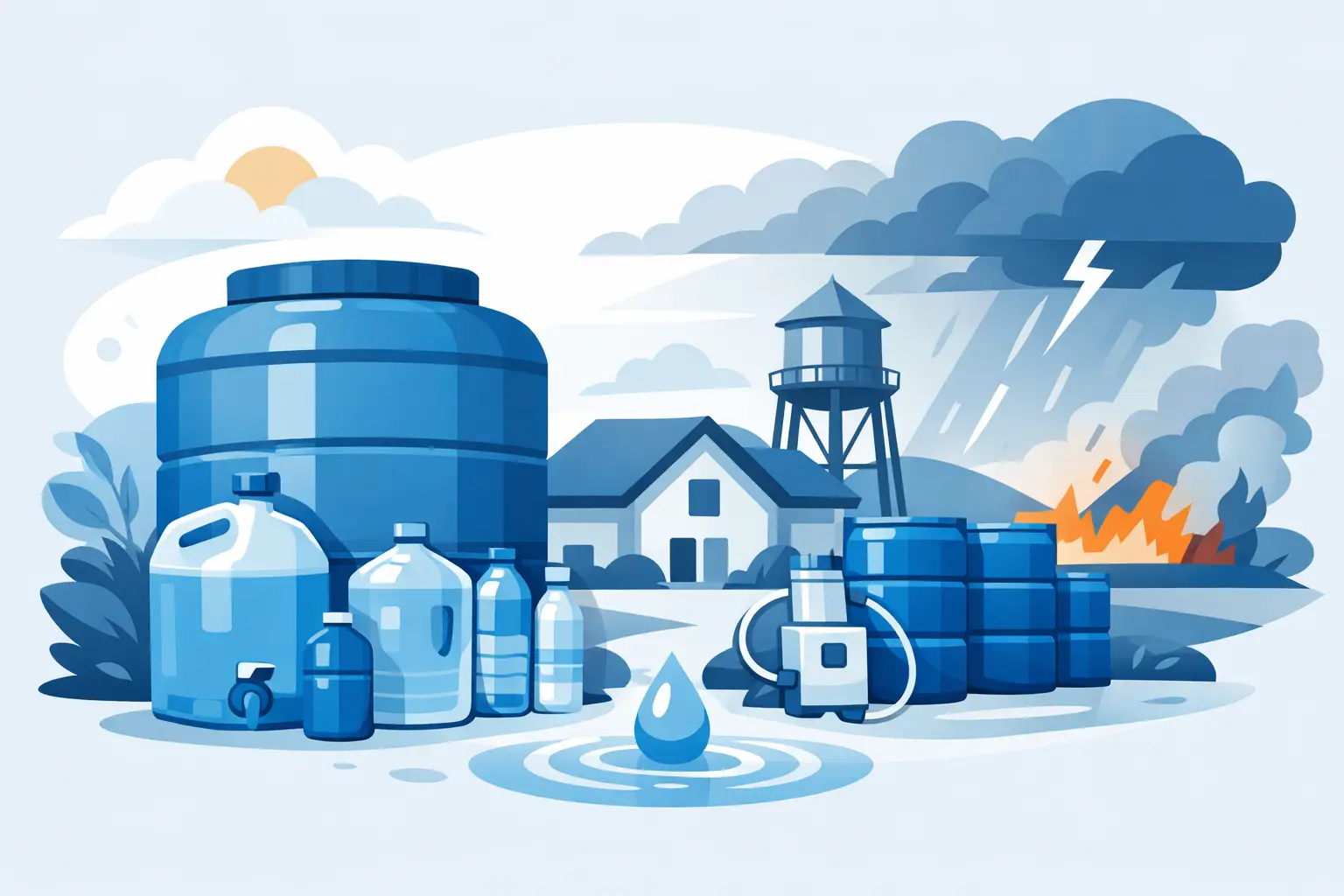
Best Home Water Storage for Real Emergencies
May 16, 2026
Most people don’t realize their water plan is weak until they try to picture day three of an outage. A case of bottled water disappears fast, especially if you’re cooking, washing up, or covering more than one person. If you’re looking for the best home water storage, the right answer usually isn’t one product. It’s a setup that matches your space, household size, budget, and how long you want to stay self-sufficient.
This is where a lot of buyers waste money. They either go too small and end up with expensive, short-term storage, or they go too big and buy containers they can’t move, fill, or maintain. The better approach is practical: cover immediate access, medium-term storage, and long-term backup without turning your garage into a warehouse.
What the best home water storage actually looks like
For most households, the best home water storage is layered. You want a small amount of grab-and-go water, a larger supply stored in durable containers, and a way to treat or rotate it without a lot of hassle. That mix gives you flexibility during a storm outage, boil-water notice, supply disruption, or longer emergency.
Single-use bottled water works for convenience, but it’s rarely the best value per gallon and it creates a lot of packaging waste. On the other end, a massive fixed tank can store a lot of water cheaply over time, but it asks for space, planning, and regular maintenance. Most people land somewhere in the middle with stackable water bricks, 5 to 7 gallon jugs, or food-grade barrels.
The trade-off is simple. Smaller containers cost more per gallon but are easier to carry, rotate, and fit into closets or shelves. Larger containers are cheaper per gallon and better for serious preparedness, but they get heavy fast and are less forgiving if your storage area is tight.
Start with how much water your household really needs
A common baseline is one gallon per person per day for drinking and basic sanitation. That’s useful, but it’s also the minimum. If you live in a hot climate, have kids, pets, medical needs, or expect to cook from shelf-stable food, actual use climbs quickly.
A family of four trying to cover two weeks at the one-gallon minimum needs 56 gallons. Add pets and normal household friction, and 70 to 84 gallons is a more realistic target. That sounds like a lot until you realize it can be handled with one or two barrels, a row of stackable containers, or several portable jugs split across the house and garage.
This is why buying random water containers as deals pop up can leave gaps. Capacity planning first, products second, usually saves money.
Best home water storage options by setup
Bottled water cases
These are fine for short-term backups and fast deployment. They’re easy to stack, easy to hand out, and useful if you need something ready today. The downside is cost, fragility, and limited shelf confidence once cases get bumped around in hot garages.
They work best as your front line, not your whole plan.
1 to 3 gallon handled containers
These are easy to carry and useful for apartments, elderly households, and anyone who can’t wrestle with heavier jugs. They also fit well in closets and under utility shelving. The drawback is efficiency. You’ll need more containers to reach serious capacity, and filling or rotating them takes longer.
If mobility matters more than price per gallon, they make sense.
5 to 7 gallon jugs
This is the sweet spot for a lot of homes. They store enough water to matter, they’re still portable for most adults, and they don’t demand a permanent installation. You can keep them in a pantry corner, basement, garage, or under a workbench.
The catch is weight. A full 7 gallon container is heavy enough that some people won’t want to lift it regularly. If your plan depends on carrying water up stairs, test that before you buy a full stack.
Stackable water bricks or modular containers
These are one of the most practical choices for suburban homes. They use space efficiently, stack cleanly, and let you distribute weight instead of dealing with one massive container. They also make rotation easier because you can refresh a few units at a time.
You’ll usually pay more upfront for the convenience and design, but they solve a lot of real storage problems. For many readers, this is the best balance between preparedness and livability.
15 to 55 gallon food-grade barrels
Barrels are where storage starts becoming serious. They offer strong value per gallon and can cover a family for much longer than small containers. If you have garage or basement space and want a better buffer against service interruptions, barrels deserve a look.
But placement matters. Once filled, they are not casually moved. You need a stable surface, reasonable temperature control, and a way to dispense water, usually with a siphon pump or spigot system. A barrel is great if you treat it like infrastructure, not just another container.
Large tanks and cisterns
For homes with land, long-duration planning, or water insecurity concerns, large tanks can make sense. They offer scale and can pair well with rain catchment where legal and properly filtered. They also require the most planning, the most money, and the most attention to local rules and water quality.
For the average beginner, this is usually phase two or phase three, not the starting point.
Material matters more than people think
Food-grade plastic is the standard choice because it’s practical, affordable, and widely available. Opaque or darker containers are usually better than clear ones because they reduce light exposure, which helps limit algae growth. Containers made specifically for water storage are safer bets than repurposed buckets or used drums with an uncertain history.
Stainless steel is durable and excellent for some use cases, but it’s expensive and less common for high-capacity home storage. Glass works for small indoor amounts, not bulk emergency storage.
The cheapest container is not always the cheapest plan. A low-cost jug with a weak cap, awkward shape, or poor stackability can become dead space you stop using.
Where you store water changes how usable it is
Cool, dark, stable environments are best. Heat speeds up wear, and direct sunlight creates problems you don’t want. Garages are common storage spots, but they’re not equal everywhere. A shaded garage in a mild climate is different from a hot attached garage in Arizona.
If your only option is a warm area, rotate more often and choose containers built for storage, not thin retail packaging. Keep water off bare concrete when possible by using shelves, pallets, or boards. It’s a simple step that helps with temperature transfer and container wear.
Also think about access. Water you can’t reach easily during a power outage is less useful than the smaller supply stored where you actually live.
Do you need to treat stored water?
If you fill containers with municipally treated tap water, store them in clean food-grade containers, and seal them properly, you’re already in decent shape. Some people add water preserver products for longer intervals between rotations, which can make sense if you want lower maintenance.
If you’re filling from a questionable source, treatment becomes much more important. Even with stored water, a backup filtration or purification method is a smart layer. Containers solve storage. They do not solve every water quality problem.
This is one of those areas where redundancy is worth it. Stored water plus a way to purify more water is a stronger plan than either one alone.
Common mistakes that make a water stash weaker
The most common mistake is storing too little. The second is storing water in formats that don’t match the household. A lot of people buy bulky containers because they look efficient, then realize nobody in the house wants to move them.
Another frequent problem is forgetting dispensing. A sealed container with no practical way to pour or pump water is annoying on day one and a liability on day five. Rotation also gets ignored. You don’t need an obsessive schedule, but you do need a simple system with dates and a realistic refresh routine.
And then there’s overbuying the wrong category. Spending heavily on premium small containers when a modest barrel plus a few portable jugs would cover more ground is a very normal prepper shopping mistake.
A practical setup for most homes
If you want a realistic target, build in layers. Keep a few cases of bottled water or a few small containers for immediate use. Add enough 5 to 7 gallon jugs or stackable containers to cover at least two weeks for your household. If you have the room and want better resilience, add one food-grade barrel as your cost-effective reserve.
That approach gives you convenience, portability, and depth. It also lets you shop smarter. If you follow deal-driven preparedness buying, this is one category where patience helps. Good prices come and go on containers, pumps, and treatment supplies, and buying the right mix beats buying the flashiest item.
Preparedness works better when it fits your actual home and your actual habits. The best home water storage is the setup you’ll fill, maintain, and still trust when the tap stops working.
Discover More Featured Deals
Explore our hand-picked selection of the best deals, curated daily just for you.