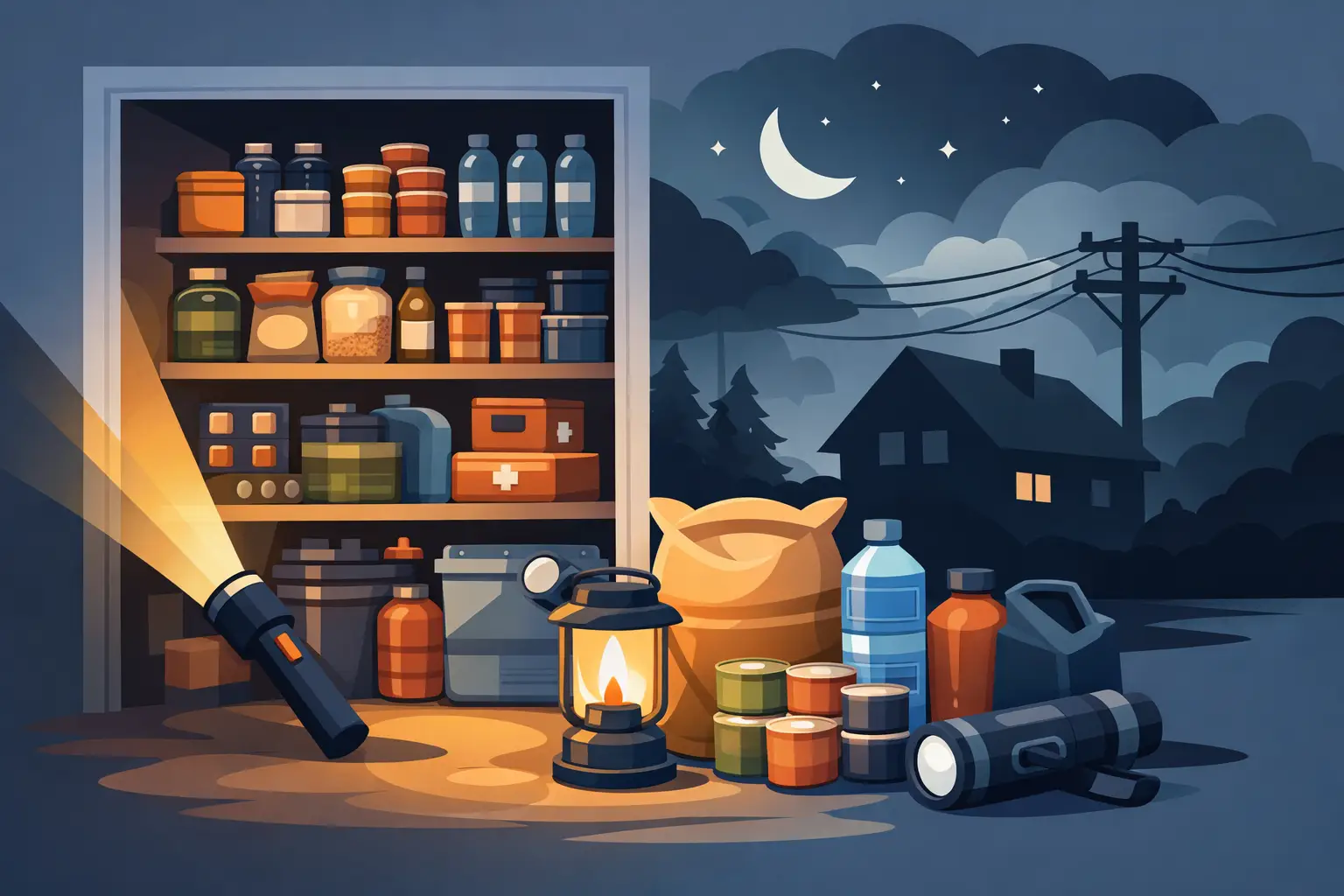
How to Build a Blackout Pantry That Works
May 10, 2026
A power outage gets expensive fast when your fridge warms up, the microwave is useless, and dinner turns into a scavenger hunt. If you're figuring out how to build blackout pantry storage, the goal is simple: keep your household fed, hydrated, and functional for a few days without relying on electricity.
That sounds obvious, but most pantries are built for normal life. They assume you can refrigerate leftovers, boil water on demand, run to the store, and replace what you use tomorrow. A blackout pantry is different. It has to work when the store is crowded, the roads are messy, and your kitchen suddenly loses half its tools.
What a blackout pantry is really for
A blackout pantry is not the same thing as a long-term survival stockpile. You are not trying to solve every emergency in one closet. You are building a short- to medium-term food and household buffer that works during power outages, storms, grid issues, and temporary supply disruptions.
For most households, that means planning for 72 hours at minimum and ideally 1 to 2 weeks. The right number depends on your region, your budget, and how often outages happen. If you live where ice storms, hurricanes, wildfires, or summer grid strain are common, a deeper pantry makes more sense than a bare-bones setup.
The big mistake is buying impressive-looking emergency food and forgetting the basics. During a blackout, convenience matters more than novelty. Food that your family will actually eat beats food that only looks good on a preparedness checklist.
How to build a blackout pantry without wasting money
Start with your real household, not an internet fantasy version of it. Count how many people you need to feed, whether anyone has food allergies, and how much cooking you can realistically do without power. If you have a gas stove that can be lit safely, your options are wider. If you live in an apartment with no backup cooking setup, your pantry should lean much harder on ready-to-eat foods.
The smartest approach is to build in layers. First, cover calories and hydration. Next, make sure you can prepare and serve food. Then add comfort items and backup depth. This keeps you from spending money on specialty gear before you have the boring essentials handled.
Start with food that needs little or no cooking
The core of a blackout pantry should be shelf-stable food that can be eaten cold, warmed easily, or prepared with very little water and fuel. Canned meats, canned beans, nut butter, crackers, tortillas, oats, cereal, applesauce, canned fruit, shelf-stable milk, protein bars, and ready-to-eat soups all earn their place because they are flexible.
Dry staples like rice and pasta are cheap, but they are not always efficient during an outage. They require water, fuel, cookware, and cleanup. That does not make them bad choices. It just means they should not be the only choices. A blackout pantry works better when it includes both easy calories and low-effort meals.
If you are feeding kids, older adults, or anyone with dietary restrictions, test your pantry against real life. Can they eat it cold if needed? Can you open it without electric tools? Will they reject it after one meal? Practical readiness is usually less dramatic and more repetitive than people expect.
Store water like you mean it
Food gets most of the attention, but water is the system that fails hardest. You need drinking water and a little extra for basic food prep. A common baseline is one gallon per person per day, though hot climates, pets, and medical needs can push that higher.
For a blackout pantry, keep water storage simple and visible. If your water is buried in a garage corner behind holiday bins, it is not really part of your working plan. Smaller containers are often more usable than one giant tank, especially if you may need to move them or hand them out across a household.
If your budget is tight, start with a few days of stored water and build gradually. This is one category where buying steadily on sale can make a meaningful difference over time.
Build around meals, not random cans
One of the easiest ways to improve your pantry is to stop thinking in individual items and start thinking in complete meals. A shelf of miscellaneous deals can look impressive while still leaving you with no breakfast, no easy lunch, and nothing that goes together.
A better system is to build 10 to 15 repeatable blackout meals your household already likes. Think tuna and crackers, canned chili with tortillas, oatmeal with dried fruit, soup with shelf-stable bread or crackers, peanut butter on tortillas, cereal with shelf-stable milk, or pasta meals if you know you can cook them. Once you have those meal patterns, stocking gets easier and waste drops.
This also helps with rotation. If your blackout pantry overlaps with foods you already use, it is much easier to cycle older items into regular meals and replace them before they expire. That is better for your budget than creating a dead storage shelf full of food nobody touches.
Don’t forget the tools that make the food usable
A pantry fails when the food is there but the support items are missing. Manual can openers matter. Disposable plates can matter. So can paper towels, trash bags, wipes, and basic dish-cleaning supplies if water access is limited.
Lighting belongs in this setup too. You do not want to search for dinner ingredients with a phone flashlight at 8:30 p.m. Keep a lantern or headlamp near the pantry so the whole system works together. This is also where a small camp stove or other backup cooking method can upgrade your options, but only if you can use it safely and already have the fuel on hand.
There is always a trade-off here. The more you rely on cooking, the more your blackout pantry becomes a pantry-plus-cooking-fuel system. Some households are fine with that. Others are better off keeping things nearly no-cook.
Organize your blackout pantry for speed
If the power goes out tonight, you should be able to find what you need in a minute or two. That means grouping items by use, not by whatever happened to fit on the shelf.
Keep ready-to-eat meals together. Keep water and drinks in one area. Put cooking support items, utensils, and your can opener where they are visible. Label bins if you need to. If you are storing supplies in a basement or garage, think about temperature swings and moisture before you load up on food that degrades faster in heat.
A simple inventory helps more than people think. You do not need a complicated spreadsheet unless you want one. A note on your phone or a paper list taped inside a cabinet door is enough if it tells you what you have, what is running low, and what expires next.
Buy in phases and watch for deal timing
The cheapest way to build a blackout pantry is usually not one giant shopping trip. It is a series of smart, boring purchases made over time. Buy a few extra shelf-stable items during regular grocery runs. Add deeper discounts when seasonal sales hit. Stock up more aggressively on items your household already uses.
This is where a prepper-minded deal feed can actually save money if you stay disciplined. The trick is to buy categories you need, not just products with a big percentage off. A discount on emergency food bars is useful if your pantry lacks portable calories. It is less useful if what you really need is water storage or easy family meals.
Budget shoppers do best when they set rough targets first. Decide how many days of food and water you want, then fill the gaps in order. That keeps your pantry from turning into a pile of random preparedness purchases.
Common mistakes when learning how to build blackout pantry storage
Most blackout pantry problems are not about effort. They are about mismatch.
People buy foods their family does not eat, so nothing gets rotated. They store only dry goods and forget how much water and fuel those require. They focus on calories but ignore caffeine, comfort foods, and familiar snacks that help keep a rough night manageable. They also underestimate packaging. Large bulk containers can be cost-effective, but smaller units are often easier to ration, share, and use before spoilage.
Another common mistake is planning around one type of outage. A winter blackout and a summer blackout do not feel the same. In winter, warm drinks and easy hot meals matter more. In summer, heat-sensitive food, hydration, and no-cook options become more valuable.
Make it boring enough to maintain
The best blackout pantry is not the most extreme one. It is the one you will keep stocked, organized, and usable six months from now. That usually means familiar food, clear storage, and a realistic budget.
If you want a simple benchmark, aim for a pantry that can cover at least three days with no refrigeration, minimal cooking, and no immediate store run. Then expand toward one or two weeks as money and space allow. That pace is more sustainable than trying to build a perfect setup in one weekend.
Preparedness works best when it lowers stress instead of adding more of it. Build a blackout pantry that matches your household, your outage risk, and your spending limits. When the lights go out, the smartest setup is the one that still feels easy to use.
Discover More Featured Deals
Explore our hand-picked selection of the best deals, curated daily just for you.