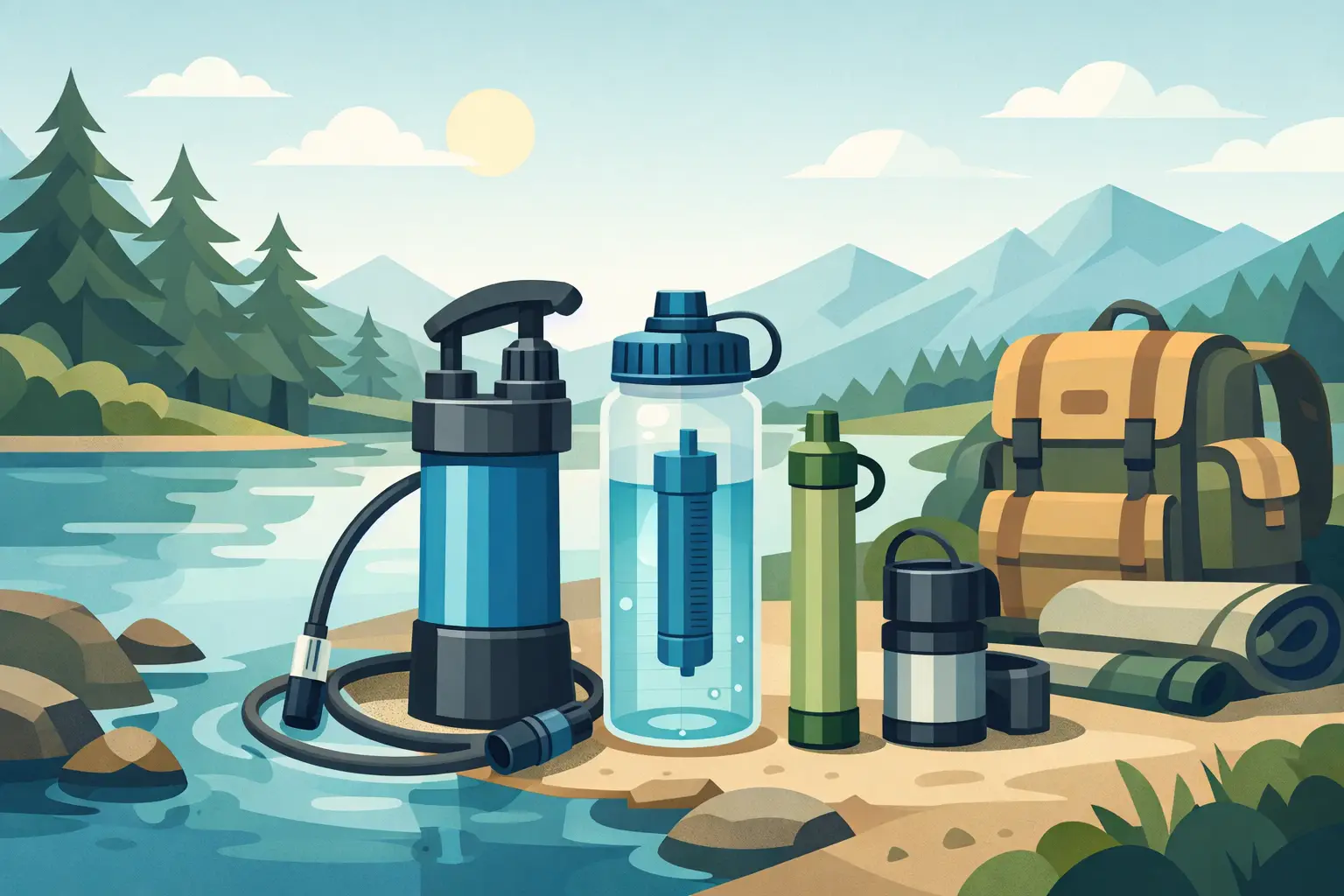
Portable Water Filter Review for Preppers
May 26, 2026
A portable water filter can look great on a product page and still be the wrong call for your go-bag, car kit, or home backup stash. That is the real value of a portable water filter review - not just naming a winner, but figuring out what actually works for the way you prepare.
For most preparedness buyers, the question is not whether you need water filtration. You do. The question is which format gives you the best mix of speed, reliability, shelf life, and price. A solo hiker can tolerate slower flow and smaller capacity. A family dealing with a storm outage usually cannot. That gap matters more than branding, packaging, or whatever claim is printed in bold on the box.
What a portable water filter review should actually measure
A lot of reviews stop at basic specs. That is useful, but not enough. In real use, portable filters live or die by four things: what they remove, how fast they work, how easy they are to keep running, and how annoying they become after the first few uses.
Removal claims are the first checkpoint. Most portable filters are built to remove bacteria and protozoa. Not all are rated for viruses. That distinction matters if you are filtering backcountry stream water versus dealing with uncertain water sources after a disaster. In much of the US, wilderness use and emergency home use are not identical scenarios, so a filter that is excellent for camping may not be your best emergency pick.
Flow rate is the next reality check. On paper, a straw-style filter sounds compact and efficient. In practice, drinking directly from a source is limiting. It works when you are alone and mobile. It works a lot less well when you are trying to fill bottles, support two adults and kids, or process water while staying in place.
Maintenance is where many buyers get surprised. Some filters need regular backflushing to keep flow usable. Others are more forgiving but heavier or more expensive. None of this is a dealbreaker by itself. It just changes who the product is really for.
The main filter types and their tradeoffs
The best portable water filter review will compare categories before comparing brands, because format often matters more than model.
Straw filters
Straw filters are cheap, light, and easy to stash almost anywhere. They make sense for minimalist kits, glove boxes, and backup layers. If your budget is tight, this category is usually the lowest-cost way to add some water treatment capability fast.
The downside is convenience. You typically have to drink directly from the source or pair the straw with another container setup. That can be awkward with shallow water, muddy banks, or contaminated puddles. Straw filters also tend to be less practical for group use.
Squeeze filters
Squeeze systems hit a useful middle ground. They are still compact, but they let you collect water in a pouch and either drink from it, squeeze into another bottle, or gravity-feed in some setups. For bug-out bags and weekend kits, this is often the most flexible category.
The weak point is durability and patience. Soft pouches can wear out, threads are not always universal in the way buyers expect, and flow can drop hard if the filter is not maintained. Still, for many preppers, squeeze filters offer the best value per ounce.
Pump filters
Pump filters are more old-school, but they remain relevant for a reason. They are usually easier to use with shallow sources, and they can process water into containers without requiring you to crouch at the edge of a creek and improvise. If you expect repeated use rather than just emergency backup, pumps deserve a serious look.
You pay for that convenience in bulk, weight, and price. A pump filter is rarely the cheapest option, and it is not the first thing most people want in an ultralight setup. For family preparedness, though, the higher output can justify the extra size.
Gravity systems
Gravity filters are excellent when you are staying put. Fill the dirty bag, hang it, and let time do the work. For a household emergency, campsite, or temporary shelter, that is a strong setup because it reduces effort and handles larger water volumes with less hassle.
The catch is portability in the strict sense. Gravity systems can be packable, but they are not always grab-and-go in the same way as a straw or squeeze filter. If your plan is movement first, they may be a second-line item rather than your primary filter.
Portable water filter review criteria that matter most for preparedness
Preparedness buyers should look at product pages a little differently than outdoor hobbyists. A few details carry more weight when the filter is meant for outages, evacuation, or backup storage.
Filter lifespan matters, but not just the headline number. A long-rated filter life is useful only if the unit stores well, replacement parts remain available, and the performance does not fall off quickly with silty water. Marketing numbers often assume ideal conditions. Floodwater, pond water, and sediment-heavy runoff are not ideal conditions.
Packability matters too, but context matters more. A tiny filter for one person can be perfect in a day bag and weak in a home emergency bin. Before buying, it helps to ask one blunt question: who is this for on day two of a water problem? If the answer is more than one person, speed and output become harder to ignore.
Cold weather is another overlooked factor. Some hollow-fiber filters can be damaged if they freeze after use. That does not make them bad products. It means winter storage and field use need more care. If your gear may sit in a vehicle during freezing temperatures, you need to know whether that filter design tolerates it.
Water taste also affects compliance more than people admit. If a filter handles organisms but does nothing for chemical taste or odor, some users will drink less or avoid the setup unless they have no choice. In an emergency, that is not ideal. Filtration and purification are related, but they are not the same thing.
How to choose the right filter for your setup
If you are building a basic emergency kit for one person, start simple. A compact squeeze or straw filter is usually enough if you understand its limits and pair it with backup treatment like tablets. This keeps cost down and gives you redundancy without overcomplicating the kit.
If you are buying for a household, a pump or gravity setup usually makes more sense. Families need water in containers, not just at the source. They also need less fiddling and less waiting. A filter that feels efficient for one person can become frustrating fast when several people need clean water at the same time.
If you are shopping strictly on value, avoid focusing only on the lowest upfront price. A budget filter with awkward maintenance, fragile accessories, or expensive replacement parts can stop being a bargain pretty quickly. For the BestPrepping.Deals audience, the best buy is not the cheapest listing. It is the product that holds up, fits the scenario, and still makes sense when discounted.
Common mistakes buyers make
One common mistake is assuming any portable filter covers every risk. Many do not address viruses. Many do not improve chemical contamination. Some are best treated as one piece of a water plan, not the whole plan.
Another mistake is buying based on size alone. Small is good until it slows you down too much. Lightweight is good until it means tiny dirty-water bags, fiddly connectors, or poor group capacity. Preparedness gear should earn its space, but it still has to work under stress.
The last mistake is skipping practice. Even the best-rated filter can feel clumsy if you only open it when the tap stops running. A dry run in normal conditions tells you a lot about setup time, flow, cleanup, and what extra containers you actually need.
So what earns a strong review?
A strong portable water filter review should reward products that stay useful outside perfect conditions. That means clear filtration claims, realistic flow, manageable upkeep, and a format that fits the user’s actual plan. For most solo kits, squeeze filters are the best balance of cost and flexibility. For households and fixed-location backup, gravity and pump systems often provide a smoother experience.
There is no single best option for everyone, and that is the point. The right filter depends on whether you are preparing for a trail day, a roadside delay, a boil-water notice, or a multi-day outage at home. Buy for the problem you are most likely to face, not the one that looks coolest in the product photos.
Clean water gear is one of those categories where smart buying pays off twice - once at checkout, and again when you actually need it.
Discover More Featured Deals
Explore our hand-picked selection of the best deals, curated daily just for you.