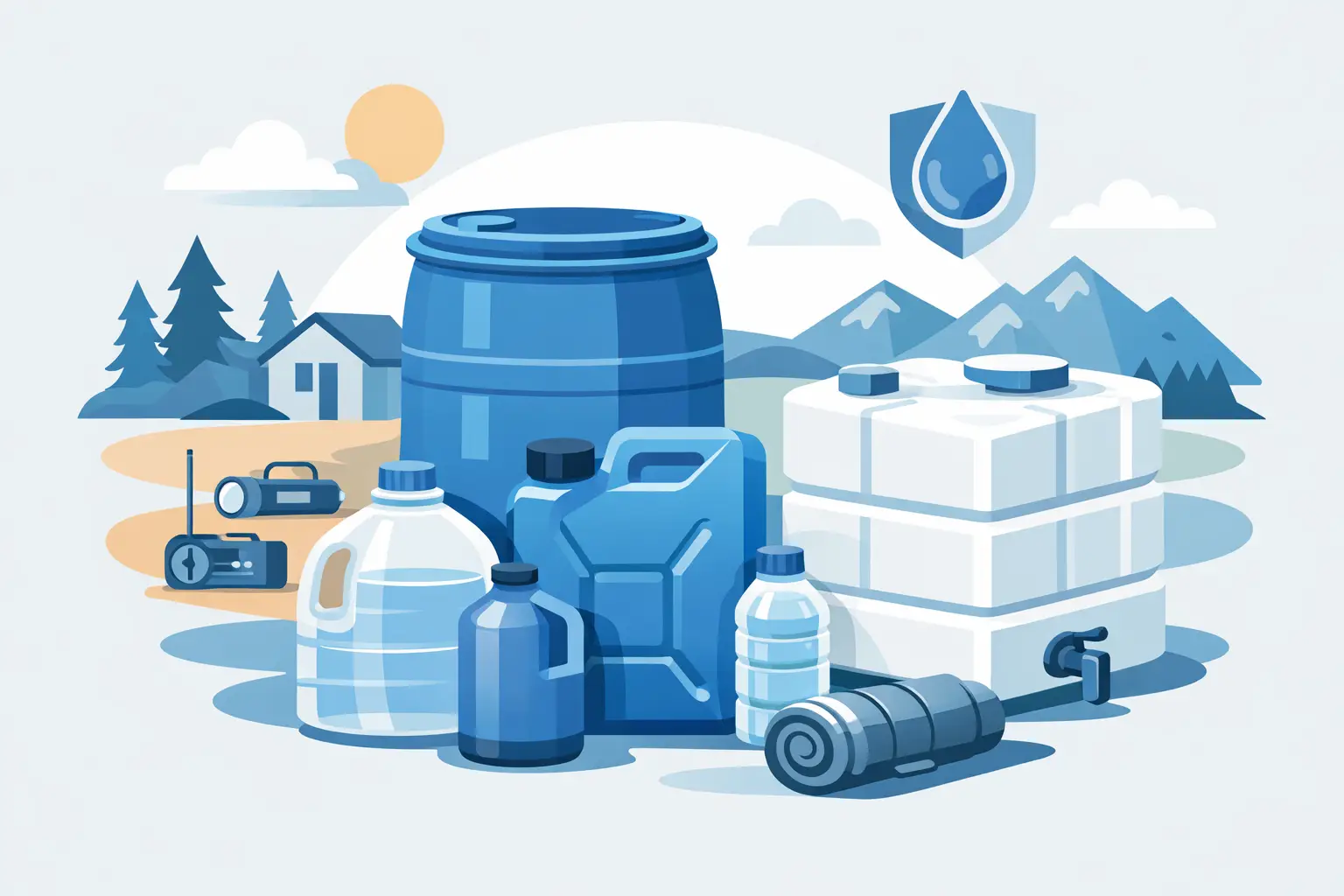
Water Storage Container Guide for Preppers
Jun 05, 2026
A lot of water storage mistakes start the same way: somebody buys the cheapest big container they can find, fills it, shoves it into a garage corner, and assumes the job is done. Then they try to move it, discover the plastic smells odd, or realize they stored a month of water with no practical way to pour it. A good water storage container guide is less about buying more plastic and more about choosing the right format for how you actually live.
If you are building emergency supplies on a budget, water storage deserves more thought than it usually gets. Water is heavy, space-hungry, and surprisingly easy to mishandle. The right setup depends on your home size, how many people you are storing for, whether you are planning for short outages or longer disruptions, and how much lifting you can realistically do.
What this water storage container guide should help you decide
Most people do not need one perfect container. They need a mix. Small containers are easier to carry, larger ones are more space-efficient, and specialty options make sense only in certain situations.
For short-term emergency backup, portability matters. If a storm knocks out utilities for two or three days, it helps to have water you can move from storage to kitchen to bathroom without needing a pump, cart, or second person. For longer-term storage, efficiency matters more. You want stable containers that stack or sit securely, use space well, and hold enough volume to matter.
That is why the first question is not “What container is best?” It is “What problem am I solving?” Apartment backup, suburban garage storage, bug-out transport, and cabin water reserve are all different use cases.
Start with size before material
People often obsess over BPA-free labels and food-grade specs before they think about weight. Weight is the issue that shows up first in real life. Water weighs about 8.34 pounds per gallon, so a 5-gallon container weighs more than 40 pounds when full. A 7-gallon container pushes close to 60 pounds. A 55-gallon drum is well over 450 pounds before you count the drum itself.
That does not mean large containers are bad. It means they need a permanent home. If you fill a drum in the garage, plan on it staying there. If you live in a second-floor apartment, a cluster of smaller containers may be more realistic than one oversized option.
For many households, the practical sweet spot is a layered setup. Keep some 1- to 2.5-gallon containers for grab-and-go use, some 5- to 7-gallon containers for medium storage, and then consider larger tanks or drums only if you have the space and a clear reason. That mix costs more upfront than buying one type only, but it usually works better when you actually need the water.
Material matters, but only after the basics
In any water storage container guide, material still matters because not every plastic container is built for long-term potable water storage. You want food-grade containers intended for drinking water, not random utility bins or repurposed chemical containers.
High-density polyethylene, often called HDPE, is common because it is durable, affordable, and widely used in water storage. Opaque or darker containers have an advantage if they are stored anywhere with light exposure, since light can encourage algae growth. That said, even a good opaque container should be kept in a cool, dark place if possible.
Rigid plastic containers are usually the default choice for home preparedness because they strike the best balance between price, durability, and ease of use. Collapsible containers save space when empty and can be useful for travel or temporary backup, but they are often less durable over time and not always the best fit for long-term storage. Stainless steel can work in some cases, though it is usually more expensive and less common for bulk emergency water.
The shortcut here is simple: if a container is not clearly made and marketed for potable water storage, skip it.
The most common water container types
Small jugs and handled containers are the easiest place to start. They are manageable for most adults, easier to rotate, and useful during power outages when you may need to move water around the house. The trade-off is space efficiency. Ten small containers take up more room and create more surfaces, caps, and failure points than one larger container.
Stackable 3.5- to 7-gallon containers are a strong middle-ground option. They fit many garages, closets, and utility spaces, and they are still somewhat portable. For families, this size often makes more sense than drums because it lets you distribute storage and access part of your supply without disturbing all of it.
Water bricks and similar modular containers appeal to organized preppers because they stack neatly and make odd spaces more usable. They are usually more expensive per gallon, but they can be worth it if storage space is tight or you want a cleaner, more controlled layout.
Large drums and tanks give you serious storage capacity at a lower cost per gallon. The downside is commitment. They are hard to clean, impossible to casually move once filled, and often need extra accessories like pumps, siphons, or drum wrenches to be practical. They make the most sense in garages, sheds, basements, or dedicated preparedness setups where bug-in planning is the priority.
Bathtub liners are different from all of the above because they are temporary emergency storage, not long-term storage. If you have warning before a storm or service interruption, filling a clean bathtub liner can give you a large short-term reserve fast. It is a smart supplement, not a replacement for stored water.
Placement is where good plans turn bad
A container that is technically safe can still be poorly stored. Heat, sunlight, and contamination risk matter. Garages are common storage locations, but they can also get brutally hot in many parts of the US. That does not automatically make garage storage useless, but it does mean you should think about placement carefully. Against an interior wall is usually better than near a sunny garage door or hot attic-like corner.
Avoid storing water directly next to gasoline, pesticides, solvents, or anything with strong chemical fumes. Even sealed containers are better off away from that kind of exposure. You also want a stable surface. A full container tipping over is not just annoying. It can crack, leak, or become a genuine hazard.
If you are storing indoors, think beyond “where it fits.” Think about whether you can reach it during a power outage, whether it blocks anything important, and whether the floor can comfortably handle the weight.
Filling, treating, and rotating
If you are using commercially sealed water, storage is simple. Keep it in a suitable location and follow the manufacturer guidance. If you are filling containers yourself, sanitation matters. Clean and sanitize the container first, use safe drinking water, and seal it properly.
Some people rotate every six months no matter what. Others stretch longer when using treated municipal water in quality containers. This is one of those areas where it depends. Local water quality, storage temperature, container quality, and your own risk tolerance all matter.
A practical approach is to label every container with the fill date and source. That alone solves a lot of confusion later. If your system is large enough that you cannot remember what was filled when, you need labeling, not better memory.
Do not ignore access and dispensing
Stored water is only useful if you can get it out without making a mess. This is where many budget buys fall short. A giant container with a flimsy spigot or awkward opening becomes frustrating fast.
Before buying, think about how you will dispense from it. Will you pour directly? Use a hand pump? Elevate the container on a shelf? Siphon into smaller jugs? The bigger the container, the more this matters. A well-priced storage drum may still be a bad deal if using it requires extra gear you did not plan for.
This is also why a mixed setup usually wins. Large-volume storage handles the reserve. Smaller containers handle daily use during an outage.
How to buy without overspending
Preparedness shoppers waste money when they buy for fantasy scenarios instead of likely ones. If your realistic goal is three days of household backup water, you probably do not need a full drum system right away. Start with enough safe storage to cover the basics, then expand as space and budget allow.
Price per gallon matters, but not by itself. Durability, stackability, included spigots, and actual fit in your home all affect value. The cheapest option is not a bargain if it leaks, warps, or forces you to replace it in a year. On the other hand, the most tactical-looking container is not automatically better either.
For value-driven buyers, this is one of those categories where watching for deals makes sense. BestPrepping.Deals is built around that exact kind of filtering, which helps when you want preparedness gear without paying lazy full-price markup. Still, a discount only helps if the container is the right type for your plan.
A simple way to choose
If you are new to this, buy for usability first. Choose at least one container you can comfortably carry, one storage solution that uses your available space efficiently, and one method for dispensing water cleanly. That gets you farther than chasing the biggest capacity number.
Water storage does not need to look impressive. It needs to work on an ordinary bad day, in your actual home, with your actual budget and strength. If your setup fits those realities, you are already ahead of most people.
Discover More Featured Deals
Explore our hand-picked selection of the best deals, curated daily just for you.