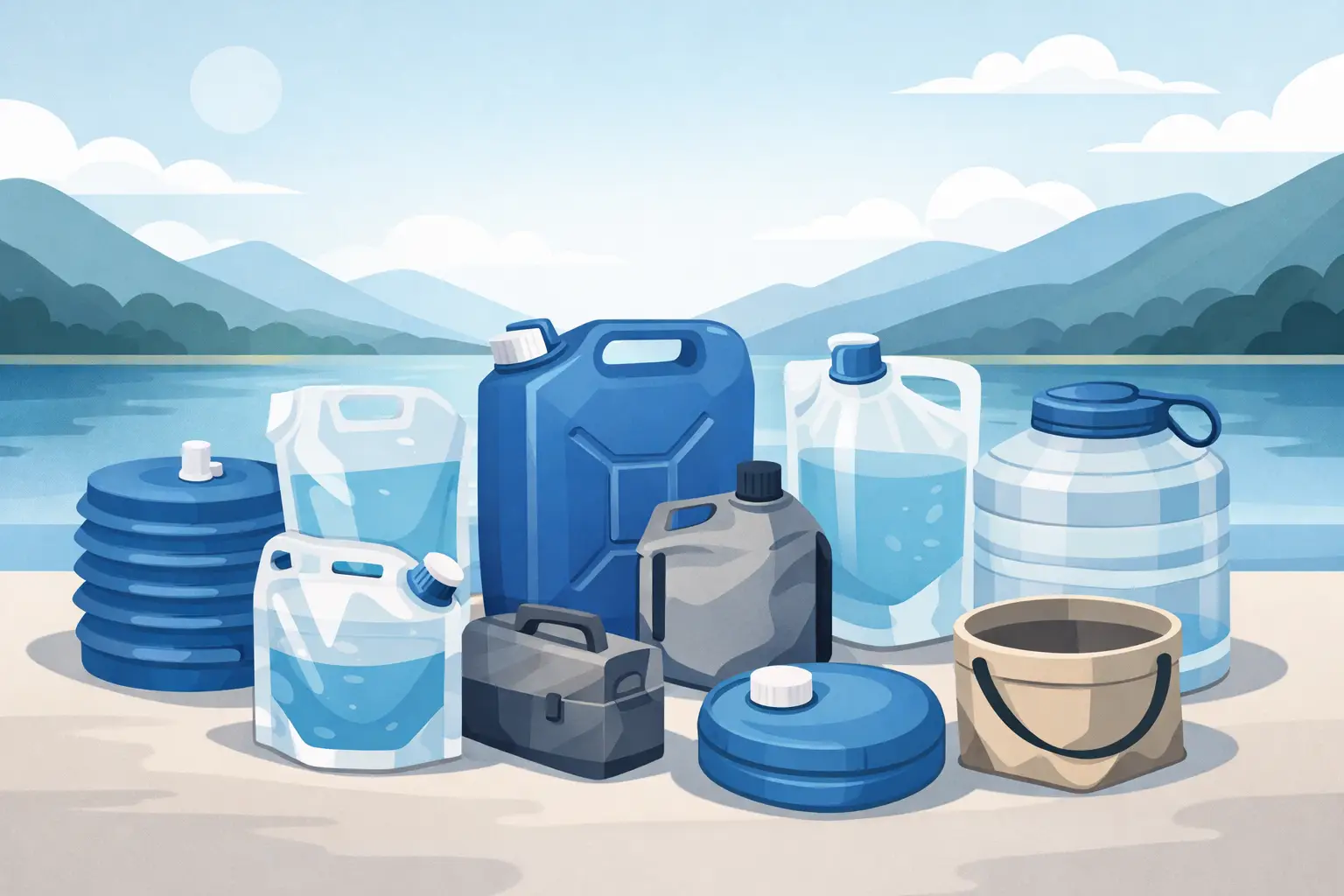
9 Best Emergency Water Carriers
Jun 11, 2026
A case of bottled water works until it doesn’t. The minute you need to fill from a tap before a storm, move water from a community source, or carry extra supply to a campsite or blackout setup, you find out fast why the best emergency water carriers are not all the same.
Some are built for storing water in place. Some are made for hauling it from point A to point B without splitting at the handle. Some look compact online and turn into dead weight once filled. If you are buying for preparedness, the right choice depends less on marketing claims and more on capacity, material, handle design, and how you actually plan to use it.
What makes the best emergency water carriers worth buying
A good emergency water carrier solves a specific problem. It gives you a sanitary way to collect, move, pour, or stage water when normal access is limited. That can mean filling before a hurricane, storing extra water during a boil advisory, loading a vehicle for evacuation, or carrying treated water from a filter setup back to camp.
The first trade-off is simple: more capacity means fewer trips, but it also means more weight. Water weighs a little over 8 pounds per gallon. A 5-gallon container weighs more than 40 pounds when full. That is manageable for some people and unrealistic for others, especially if stairs, distance, or bad weather are part of the equation.
Material matters too. Food-grade plastic is still the standard for emergency carriers because it is affordable, light, and durable enough for repeated use. Rigid containers hold shape better and stack more easily. Collapsible models save space, but they are usually better as backup or short-term transport than as your main long-term option.
Then there is the opening and spout design. A wide mouth is easier to fill and clean. A narrow spigot is easier to pour but can be harder to sanitize. If a container is hard to dry, awkward to carry, or leaks after a few uses, it stops being a preparedness tool and becomes garage clutter.
The best emergency water carriers by use case
There is no single winner for every household. The better approach is to match the container to the job.
For home backup: rigid 5 to 7 gallon jugs
For most suburban households, this is the sweet spot. A rigid 5 to 7 gallon jug gives you meaningful capacity without pushing into the size and weight of a full barrel or tank. These are practical for garage storage, utility room staging, and filling ahead of forecasted disruptions.
Look for molded handles on more than one side, thick walls, and a cap that seals tightly without needing special tools. Stackability helps if you are trying to build a water reserve in a small space. If your plan includes rotating stored water every few months, a container that is easy to rinse and refill is more useful than one with a fancy shape.
The downside is weight. A 7-gallon jug can push past 58 pounds. If only one person in your home can lift it, you may be better off with multiple 3-gallon or 5-gallon units instead.
For bug-out kits and vehicles: collapsible carriers
Collapsible water carriers earn their place because they store flat and give you surge capacity when you need it. They make sense in a trunk, evacuation kit, or camping tote where every inch matters. If you need to collect water unexpectedly, a folded carrier is far better than no container at all.
That said, most collapsible carriers are not what you want as your only water solution. Seams and flexible plastic are more vulnerable to puncture and wear. Handles can be awkward under full load. Spigots on cheaper versions tend to be the first failure point.
For emergency planning, think of collapsible carriers as a lightweight second layer. They are great for temporary transport and space-saving storage. They are less ideal for repeated rough handling.
For frequent transport: jerry-can style containers
If you expect to move water regularly, jerry-can style containers are often the most practical option. Their shape rides well in a vehicle, stores cleanly against a wall, and usually includes a better handle arrangement than budget cubes or bargain camping jugs.
This style is especially useful when your water plan includes hauling from a pickup point, a neighbor’s well, or a community distribution site. The form factor is efficient, and a good cap reduces slosh and leaking during transport. Some also pour more cleanly than wide-body utility containers.
The trade-off is cleaning access. A narrow opening can make it harder to scrub the inside. If you choose this style, prioritize a model with a large enough mouth to clean properly or be ready to use cleaning tools designed for bottles and cans.
For base camp or group use: dispenser-style containers
When several people need access to the same water source, dispenser-style containers are convenient. They usually sit upright, have a built-in spigot, and let you fill bottles, cups, or cookware without lifting the whole container every time.
These are useful for outage prep at home, family camping, and temporary shelter setups. The best ones have stable bases, protected spigots, and vents that allow a smooth pour. The weaker ones leak slowly, wobble when full, or crack around the faucet mount after a season of use.
If you buy a dispenser-style model, test it before you need it. Fill it, let it sit, and use the spigot repeatedly. A bad seal is annoying on a camp table and a real problem during a water disruption.
How to choose the best emergency water carriers for your setup
Start with your likely scenario, not the biggest container you can find. If your main concern is sheltering at home for a few days, rigid storage-friendly jugs are usually the better buy. If your concern is evacuation or keeping reserve gear in the car, collapsible carriers make more sense. If you routinely camp, overland, or expect to transport water by vehicle, jerry-can designs are hard to beat.
Think about who will carry the water. This gets overlooked all the time. A full container that is technically durable but physically unmanageable is a bad fit. Two smaller containers often work better than one large one, especially for families, older adults, or anyone dealing with stairs and limited storage.
Cleaning should be part of the decision. Emergency gear that cannot be cleaned easily tends to get neglected. Over time, that means odor, residue, or uncertainty about what is safe to use. Wide-mouth openings, simple caps, and uncomplicated shapes are usually worth paying a little more for.
Storage footprint matters too. Boxy containers use shelf and vehicle space better than round ones. Collapsible carriers disappear when empty, but rigid containers are more reliable when full. That is the constant trade-off: efficiency in storage versus confidence in use.
Features that matter more than brand hype
The strongest buying signals are not flashy. Food-grade materials, reinforced handles, a cap that seals consistently, and a design you can actually sanitize are what matter. If a container includes a spigot, that spigot should feel solid, not like an afterthought.
Opaque or low-light-blocking materials can help reduce algae growth if the container sits in bright conditions, though proper storage location matters more. Measurement marks are useful but not essential. Extra accessories are fine if the core container is solid. If the basics are weak, accessories will not save it.
One practical filter for shopping is to ignore product photos and ask four plain questions. Can I carry this when full? Can I clean it fully? Will it fit where I plan to store it? Can I trust the cap and spout not to leak in a car or closet? That gets you closer to the best emergency water carriers than most product descriptions do.
Common mistakes buyers make
A lot of people buy for capacity alone. Bigger sounds smarter, until a full container is too heavy to move or too awkward to pour. Others buy the cheapest collapsible option they can find and assume all flexible carriers perform the same. They do not.
Another mistake is skipping a test run. Fill the carrier. Lift it. Pour from it. Leave it sitting overnight on a towel. That tells you more than a dozen spec sheets. It also gives you time to return a bad buy before it becomes part of your emergency plan.
Price matters, especially if you are building supplies on a budget. But value is not the same as cheapest. A dependable container that lasts through years of storm prep, camping use, and water rotation is usually the better deal. That is the same logic behind how BestPrepping.Deals approaches gear in general: useful products at the right price beat impulse buys every time.
Where most households should land
For most people, the smartest setup is not one carrier. It is a mix. A few rigid 5-gallon containers for home reserve, plus one or two collapsible carriers for vehicle kits or overflow use, covers a lot of ground without overcomplicating your plan.
If you camp often or expect to move water by vehicle, add a jerry-can style container and call it done. If your emergency planning is mainly home-based, focus on containers that are easy to stack, clean, and rotate. Fancy features are optional. Reliability is not.
The best emergency water carrier is the one you will actually fill before a storm, store without frustration, and trust when the tap stops being convenient.
Discover More Featured Deals
Explore our hand-picked selection of the best deals, curated daily just for you.